












Arabic version: دواء جديد داراكسونراسيب يحسن بشكل كبير من بقاء مرضى السرطان
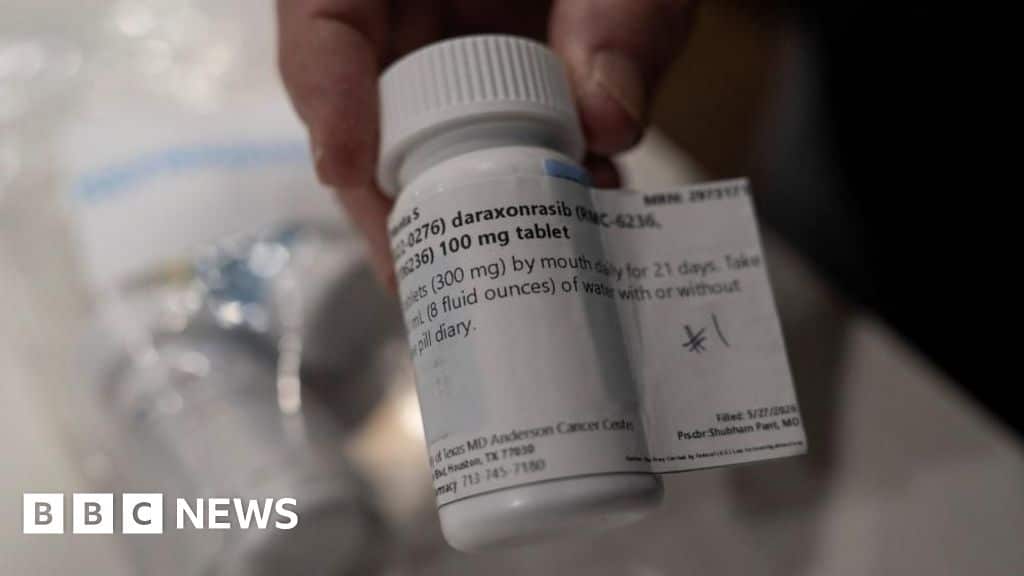
A new medication, daraxonrasib, has been found to almost double the survival time for patients suffering from advanced pancreatic cancer, with experts hailing the trial results as revolutionary. The drug targets the mutated KRAS gene, present in more than 90% of pancreatic tumors, effectively inhibiting cancer growth.
According to BBC News, the clinical trial involved 500 patients across North America, Europe, and Asia. Results showed that patients treated with daraxonrasib had an average survival time of 13.2 months, compared to just 6.6 months for those receiving standard chemotherapy. Furthermore, daraxonrasib was associated with fewer side effects.
Rachna Shroff, chief of the division of haematology/oncology at the University of Arizona Cancer Centre, stated that these findings are landscape-changing for patients with metastatic pancreatic cancer who have a KRAS mutation. The trial, presented at the American Society of Clinical Oncology annual meeting in Chicago, included 248 patients receiving daraxonrasib and 252 on chemotherapy, most of whom had specific KRAS gene mutations.
Pancreatic cancer is notorious for being diagnosed late, contributing to its high mortality rate. In the UK, there are approximately 11,500 new diagnoses each year, with around 10,200 resulting in death. Anna Jewell, director of services, research, and innovation at Pancreatic Cancer UK, emphasized the importance of ensuring that promising new treatments like daraxonrasib are accessible in the UK, noting that “more time with those we love most is truly priceless.”