













Reading in English | Read in العربية (Arabic)
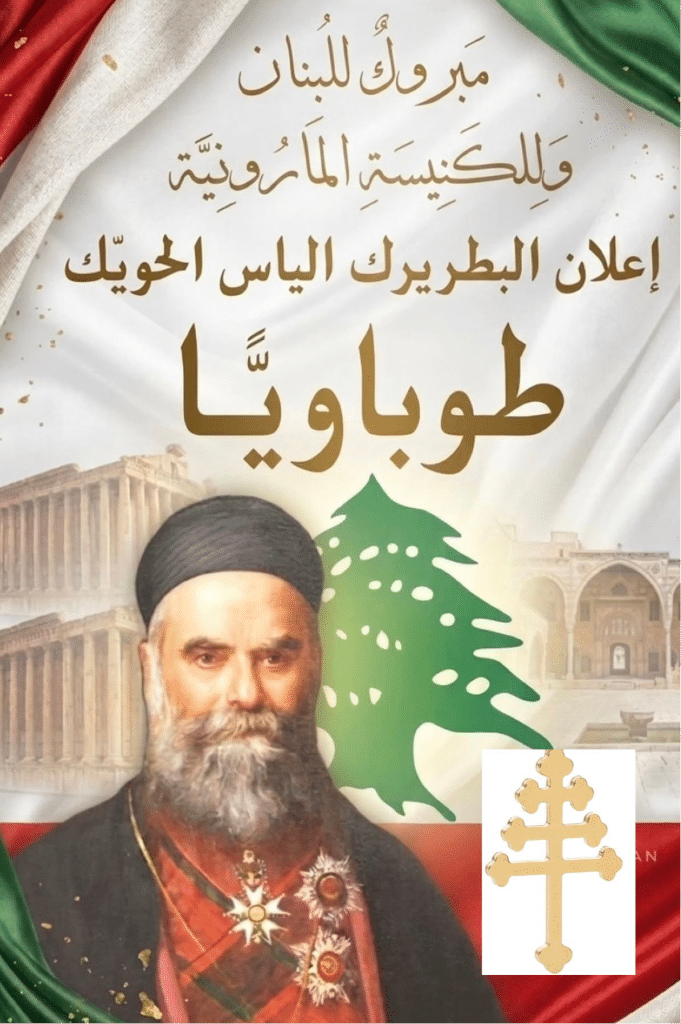
In a blessed historical moment eagerly awaited by faithful hearts with joy, prayers, and tears of hope, and with a pride that exceeds words, the Lebanese Congregation of Maronite Sisters of the Holy Family, especially in Sydney, proudly announces the beatification of its founder, Patriarch Elias Hwayek, the patron of families, priests, and Lebanon. This news comes after His Holiness Pope Leo XIV delivered the joyful announcement of his beatification on May 22, 2026, with the date for the beatification ceremony expected to be determined soon in July, coinciding with the feast of his patron, Saint Elias. It is a glorious day for Lebanon, rooted in the heart of holiness, and a blessing from the heavens for a living mission that has extended from Lebanon to various parts of the world, including Australia, carrying the light of faith, service, and love.
Congratulations to our esteemed Sisters, the Maronite Sisters of the Holy Family in Sydney, exemplifying true faith, dedicated love, and a service filled with mercy and generosity. They have faithfully lived the spirituality of their founder, Patriarch Elias Hwayek, carrying his message with love and humility, and following his teachings with a spirit of service and giving. Their achievements stand as a living testament to the success of their mission, resulting in blessed and valuable work that bears witness to the gospel of true service. This includes the establishment of schools in Sydney, such as St. Maroun’s College and the Maronite College of the Holy Family, which have illuminated the paths of generations with knowledge and faith, contributing to the preservation of the Arabic language, our customs, and our Maronite ecclesiastical heritage.
Additionally, the Maronite Sisters of the Holy Family Village, located in Marrickville and Dulwich Hill, have embraced individuals with care and dignity, serving as a living extension of the message of mercy and service that the sisters have carried with dedication and commitment. Thus, they have left a mark of goodness and generosity wherever they have settled, and their works testify to a sincere love that translates into a living faith and noble humanitarian service.
The beatification of Patriarch Elias Hwayek represents a tribute to a journey of sanctity and giving, and a message of hope for a nation proud of its national, spiritual, and humanitarian heritage. Patriarch Hwayek is viewed in Lebanese history as a pivotal figure who combined religious leadership with national action during the establishment of the Lebanese entity. He carried his homeland, his church, and his people in his heart, prayers, and sacrifices, blending holiness with history, emerging not only as a churchman but as one of the foremost architects of modern Lebanese identity. He played a crucial political role in establishing Greater Lebanon in 1920, forming a national reference that united all sects and communities, bringing hearts together around the values of faith and patriotism, leaving a lasting mark on the history of modern Lebanon.
It is customary for Maronite patriarchs to be buried in the patriarchal residence. However, the Maronite Sisters of the Holy Family insisted on transferring the remains of Patriarch Hwayek from Bkerke to their motherhouse in Ibreen due to the deep spiritual connection he had with them. Patriarch Doueihi expressed his special affection for this monastery by stating, “My heart is in Ibreen.” The sisters persisted in their desire to fulfill this wish for five years until the remains were transferred on May 12, 1936. When the coffin was opened in preparation for the transfer, those present were astonished to find the body remarkably preserved, showing no signs of decay, which left a significant impact on the believers. Thus, contrary to the established custom, Patriarch Hwayek was buried in the motherhouse of the order he founded.
The miracles attributed to him began to appear ten days after his death. However, the Catholic Church, in its meticulous process for declaring sanctity, requires the recognition of a documented and verified miracle. A miracle attributed to his intercession was confirmed by the Holy See in Rome in 2005, which had occurred with Naif Abu Aasi, a member of the Lebanese army belonging to the Druze sect from the town of Hasbaya in southern Lebanon. This incident holds special significance, as it reflects the spiritual and national message of Patriarch Hwayek, who never differentiated between Lebanese people but viewed all of them with a universal paternal love that transcends sectarian affiliations.
He is the great patriarch sent by divine providence to our homeland, bearing numerous titles: “Man of Greatness,” “Patriarch of Independence and Greater Lebanon,” and “Father of Greater Lebanon.” He summarized his national and spiritual approach by saying, “I am the Patriarch of the Maronites, but I am the Patriarch of Lebanon,” expressing his belief in the unity of the homeland and the mission of coexistence. He believed that the nation embraces everyone, Christians and Muslims alike. Patriarch Hwayek fought tirelessly for Lebanon and aimed to teach us how to love our homeland. As Lebanese, regardless of our challenges, we cannot sacrifice this unique nation and its mission in the East.
He is known for his famous saying, “My sect is Lebanon.” During his meeting with French Prime Minister Georges Clemenceau in 1919, just before representing Lebanon at the peace conference demanding the independence of Greater Lebanon, the French officials, surprised by his defense of those outside his sect, asked him why he was advocating for them. He responded with his historical phrase: “I am the Patriarch of the Maronites; my sect is Lebanon, and I am for all Lebanese.” He thus defined allegiance to the nation not by religion or sect but by citizenship. Today, we are in dire need of Lebanese leaders of that caliber, who carry Lebanon in their hearts before their sects, who do not yield to external forces, who owe loyalty only to Lebanon, to halt its bleeding and restore its dignity, sovereignty, free decision, and its role among nations.
We thank the Lord for the legacy that Patriarch Hwayek left for Lebanon, and blessed is this day that filled the hearts of believers with joy and elation, especially the Sisters of the Holy Family, to whom I bear all love, esteem, and gratitude. You are candles of hope and a living message of love that carry the spirit of your founder with pride and fidelity. This blessed mission will remain a burning light for generations to come, guiding paths, nourishing faith, and cementing the values upon which Lebanon’s mission is built.
We are all hopeful and confident that this beatification will be a step preceding the declaration of his sainthood soon, adding his name to the list of saints who illuminated the paths of the church and our beloved homeland, Lebanon.