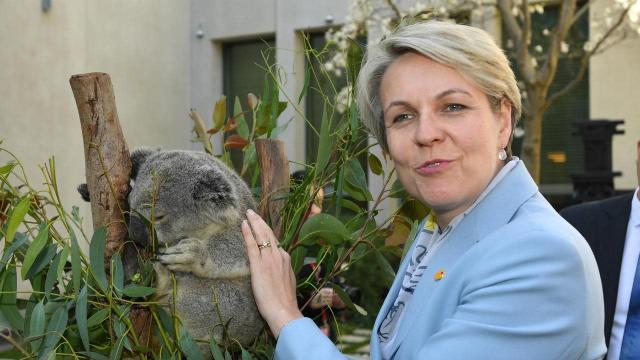














The government’s plan to halt the extinction crisis will begin with the targeting of 110 priority species, including many of Australia’s best-known native animals.
Independent scientists have compiled a collection of threatened animals and plants, as well as 20 “priority places” such as Kangaroo Island and Kakadu.
It is hoped that by boosting the prospects of these locations, both threatened species and other native plants and animals will also get a let-up.
Environment Minister Tanya Plibersek released the plan at the same time she added 15 new species and three ecological communities to the list.
She said the threatened species action plan included ambitious targets such as the prevention of any further extinction of plants or animals and the protection and conservation of at least 30 per cent of Australia’s land mass.
Independent scientists were responsible for choosing the 110 priority species, including koalas, wombats, multiple species of possum, the red-tailed black cockatoo, the Australian sea lion and the brush-tailed rock-wallaby.
Fish, frogs, reptiles and 30 plants are also on the list, and the list of 20 priority places includes the Blue Mountains, the Australian Alps, Kakadu and West Arnhem, Tasmania’s giant kelp forests and Kangaroo and Norfolk islands.
Ms Plibersek said the action plan would guide species protection efforts over the next decade.
“Our current approach has not been working. If we keep doing what we’ve been doing, we’ll keep getting the same results. Australia is the mammal extinction capital of the world,” she said.
“The need for action has never been greater. By prioritising 110 species and 20 places, the plan will drive action where it is needed most and will deliver flow-on benefits to other threatened plants and animals in the same habitats.”
New species added to the threatened list include the parma wallaby, a small rock-dwelling species found along the Great Dividing Range and the western beautiful firetail, which took a huge hit in the Kangaroo Island bushfires.
The three new threatened ecological communities include the Mount Kaputar land snail and slug community, which is now listed as endangered.
Only known to be found at Mt Kaputar in northern NSW, the community features the iconic Kaputar giant pink slug.
It is threatened by feral pigs, climate change and was extensively affected by the 2019 bushfires.
The minister will formally launch the action plan at Sydney’s Taronga Zoo on Tuesday.
– AAP
The post Priority species plan to halt extinctions appeared first on The New Daily.