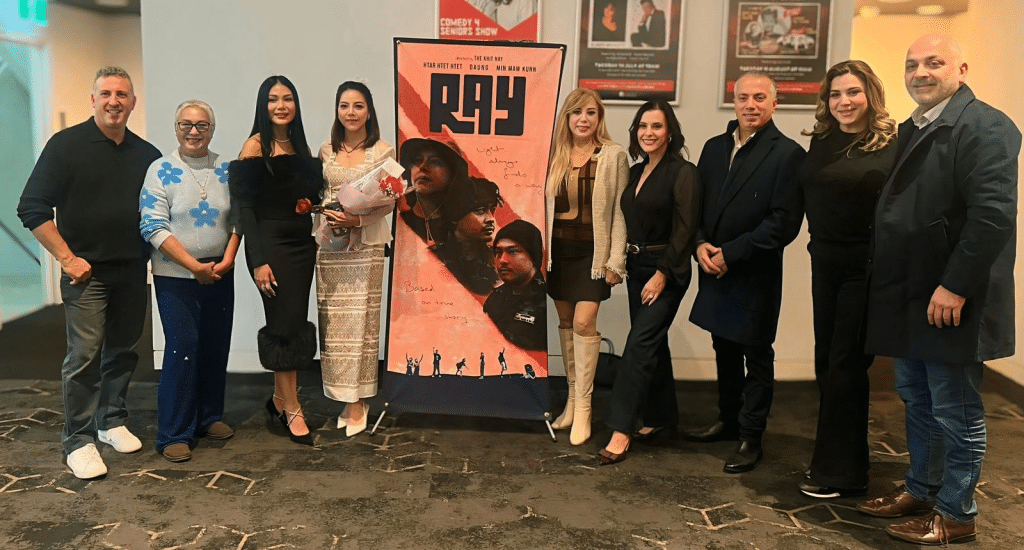













On June 21, 2026, a special screening for journalists and media representatives was held for the launch of the film “RAY,” organized by executive producers Robert and Sofia Sarkis at the Bran Brown Theater in Bankstown, New South Wales, Australia.
The film is inspired by a touching true story, one of countless narratives that reflect pain, resilience, and the struggle for freedom and human dignity. It also captures voices that are often silenced to obscure the truth and keep it from public awareness. The film serves as a voice for the oppressed and a platform for truth in the face of obscurity. It is not merely an artistic work but a human testimony that highlights the suffering of the people of Myanmar, who continue to face harsh conditions and ongoing struggles to this day.
Among the attendees were Members of Parliament Julia Finn, Dr. David Saliba, Linda Voltz, and Deputy Mayor of Canterbury-Bankstown Rachel Hrih. The event also welcomed representatives from the Arab media, including OzArab Media, Remi and Linda Wahbi, Charbel and Christina Tadros, and journalist Josline Charbel, alongside members of the Australian media such as Michael Ruffles, Deputy Editor of the State Affairs Section of The Sydney Morning Herald, television journalist and actress Carol Ferroni, and director Dylon Chow, who traveled from the United States for the event. Leaders from the Myanmar community, supporters, friends, and volunteers were also present, as well as the director The Khit Nay and the cast members.
The story of Raymond and Sofia is one of destiny, having left two war-torn homelands, Raymond from Lebanon and Sofia from Myanmar (formerly known as Burma), their paths converging in Australia. This chance meeting marked the beginning of their journey, with love being the first step towards a successful marriage and a beautiful family, as well as forging a partnership that extends into national issues and the hopes of their peoples.
Both hail from different countries, cultures, religions, and backgrounds. However, a common thread unites them: a love for their homeland and loyalty to its people. Their countries have long suffered from war, corruption, displacement, and human suffering, witnessing countless heartbreaking stories of death, injustice, and the absence of fairness. Despite the physical distances and years of exile in a peaceful, stable, and prosperous country, their homelands remain vividly present in their hearts. Raymond and Sofia have not forgotten the struggles and hopes of their peoples.
Sofia, deeply connected to Myanmar, continues to advocate for her country’s issues and the suffering of its people. Raymond, out of love for her and their shared life, has also joined in this humanitarian and national concern. Since the military coup in Myanmar in 2021, Sofia has worked to convey her people’s plight to her friends and community, amidst widespread ignorance about the current situation and the ongoing violations faced by the Myanmar people. Her efforts have included countless meetings, demonstrations, campaigns, and events. It is from this deep sense of national responsibility and empathy that she supported the production of this film, giving voice to those whose stories deserve to be told and heard, especially at a time when justice seems elusive. Public opinion and the media do not adequately spotlight this issue, which continues to suffer from marginalization and neglect. The injustice and suffering endured by this people do not receive the attention they deserve, nor is the issue taken seriously enough to seek genuine and effective solutions.

Myanmar (Burma) has been experiencing a complex humanitarian and political crisis since the military coup on February 1, 2021. Peaceful protests against the military rule have escalated into a fierce civil war between the military council and opposition forces, backed by a large segment of the population seeking to end military rule and establish democracy. This has resulted in the displacement of over 4 million people and a severe economic downturn, alongside forced recruitment, a collapse in healthcare and the economy, and ongoing violence. The United Nations classifies the crisis as one of the worst humanitarian crises in the world.
The plot summary of the film reveals that the protagonist, Htar Htet Htet, is the real-life figure behind the story, portraying her personal and realistic experiences on screen under the title “RAY.”
In Myanmar, in February 2021, Ray, a former gymnast turned beauty queen, abandons her athletic dreams and the life of luxury and security that fame and wealth provided, finding herself amidst the turmoil following the military coup. As violence escalates and conditions in the country deteriorate, she becomes embroiled in the struggle for freedom and dignity, joining the Spring Revolution in an effort to overthrow the harsh military dictatorship, no matter the cost. She faces life-changing decisions that could alter her future forever. Through her personal journey, the story unveils the suffering of a people still enduring severe hardships.
Producer Sofia Sarkis opened her speech by welcoming the audience and expressed her gratitude to her husband and life partner, who has not only supported her journey but has also been genuinely moved by her homeland’s struggles, becoming a partner in carrying and defending her humanitarian message.
She added, “I was born in Myanmar, and no matter where life takes me, my heart is always connected to my homeland. Like many Burmese people around the world, I have watched with a heart full of pain as my country’s situation deteriorated following the military coup on February 1, 2021. Over the past five years, many of us have done everything we can to keep the world’s attention focused on Myanmar. We organized protests, met with politicians, spoke to the media, and raised our voices at every opportunity. However, as time passed, international interest waned, headlines diminished, and the discourse around Myanmar slowed. Yet, the suffering of the people did not stop, nor did the sacrifices, and neither did hope.
“For a long time, I wondered how we could continue to tell Myanmar’s story in a way that touches people’s hearts. Then the film ‘RAY’ came into our lives. When Robert and I first heard about this project, we immediately realized that there was something extraordinary about it. It was not just a film; it was a human story, a story of courage, resilience, sacrifice, and one that reflects the experiences of countless individuals whose lives have been forever changed.
“We understood that sometimes politics cannot reach the places where storytelling can. And sometimes, numbers and statistics in wars do not stir people’s emotions as much as a sincere personal story can.
“Thus, we believed that cinema could be another means of raising awareness, enhancing understanding, and awakening human empathy. This is why we chose to support the film ‘RAY’.”
Sofia then expressed her gratitude to two very special individuals: Htar, who played the role of Ray, and her husband, thanking them for their trust and willingness to share their story with her. She remarked, “Htar, your courage and resilience have inspired us from the very first moment. What you have endured, and what you represent today, embodies the strength of many who have lived through unimaginable circumstances. And to your husband, I would also like to extend my thanks. When I listened to your vision for this film, I saw something that touched my heart deeply. I saw a husband wanting the world to know his wife’s story…”
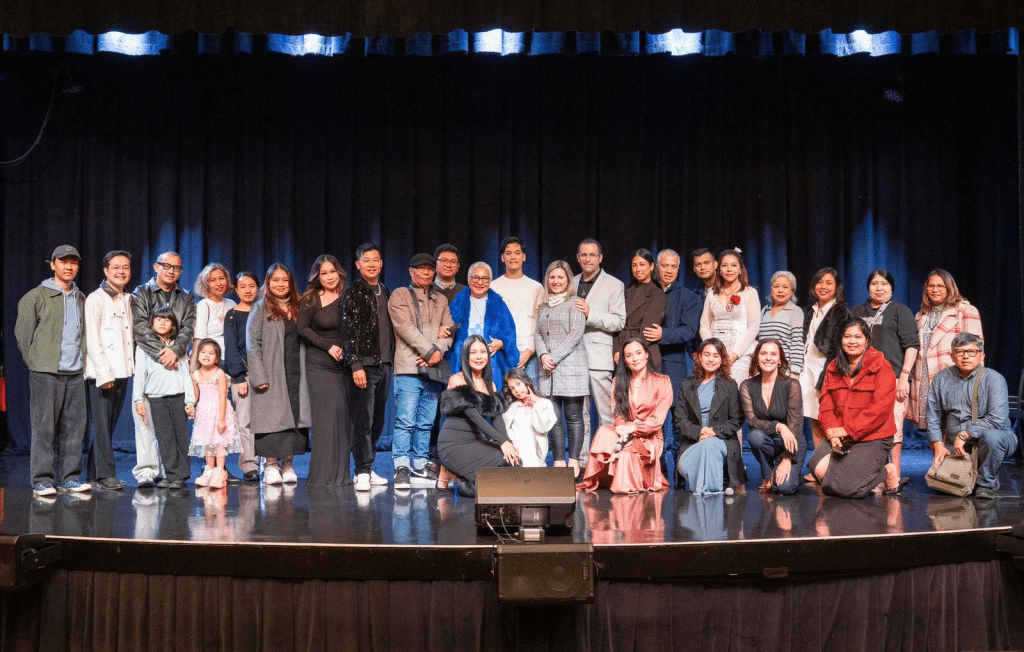
In conclusion, Sofia Sarkis dedicated this film to her revolutionary comrades steadfast in Myanmar in their fight against military dictatorship. In this way, the activist Sofia has transformed human pain into art, making cinema the voice of the voiceless.