












Arabic version: شرطة سيدني تستخدم رذاذ الفلفل على المتظاهرين خلال زيارة هرتسوغ
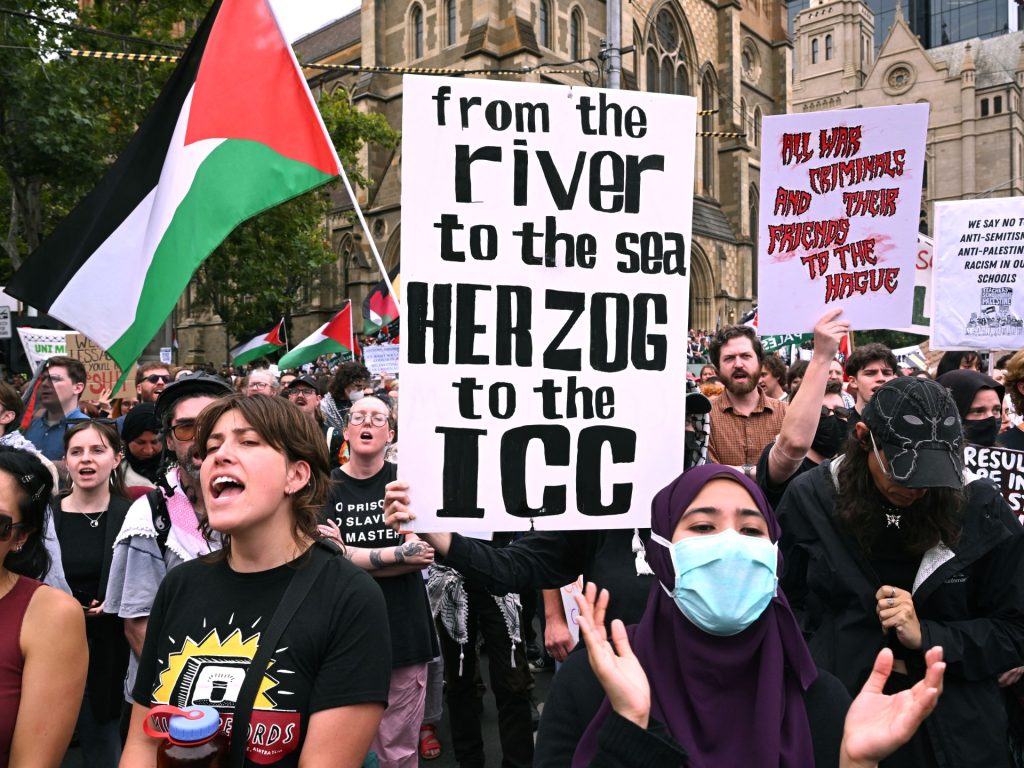
Sydney witnessed a significant escalation in tensions as police resorted to pepper spray to disperse protesters during the visit of Israeli President Isaac Herzog. The protests erupted outside the Sydney Opera House, where Herzog was attending a function. Demonstrators gathered to voice their opposition to Israeli policies and actions in Palestine, reflecting broader global frustrations regarding the ongoing conflict. Witnesses reported that the situation intensified as police attempted to manage the crowd, leading to confrontations that resulted in the deployment of pepper spray. Several protesters were treated for exposure to the spray, and some were taken into custody. The event has sparked outrage among human rights advocates, who argue that the use of force was excessive and violated the right to peaceful assembly. The protests were organized by various groups, including Palestinian solidarity organizations, which called for an end to military support for Israel and a reevaluation of Australia’s foreign policy in the region. In response to the unrest, police defended their actions, stating that they were necessary to maintain public order. The incident highlights the growing divide in public opinion regarding Israel and Palestine, with many Australians increasingly vocal about their stance on the issue. As the protests unfolded, supporters of Herzog and the Israeli government expressed their discontent with the demonstrations, labeling them as anti-Semitic. The situation in Sydney reflects a broader global trend, where protests against Israeli actions have become more frequent, particularly following recent escalations in violence in the region. The Australian government has faced pressure to address these concerns, with calls for a balanced approach that considers the rights and perspectives of both Palestinians and Israelis. As Herzog’s visit continues, it remains to be seen how the Australian government will navigate the complexities of public sentiment on this contentious issue.