












Reading in English | Read in العربية (Arabic)
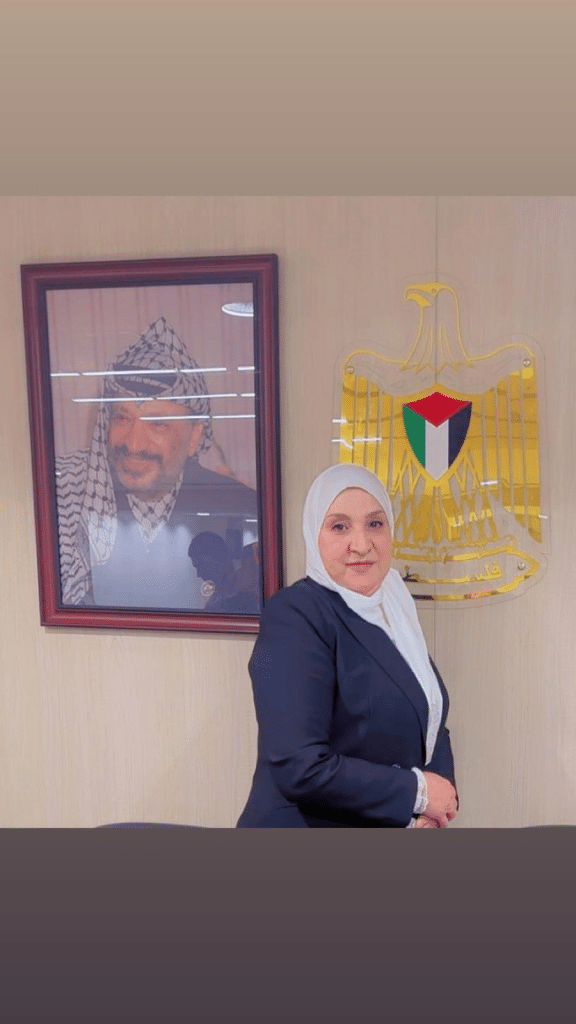
Dr. Rania Marwan Sabano, an expert in Syrian international law and an international arbitrator, as well as the head of the Arab and Syrian Women’s Leadership in Britain, praised the decision of prominent journalist Osama Sharshar, a member of parliament, media figure, and editor-in-chief of the Al-Nahar newspaper and website, to author his new book “Me and Yasser Arafat.” She described this choice as brilliant and full of national and Arab significance. It brings attention back to the symbolism of Abu the Resistance and the Palestinian national struggle, embodied by the late President Yasser Arafat, who represented the Palestinian national dream since the inception of the national struggle, particularly through the Fatah movement.
Dr. Sabano emphasized the importance of raising awareness among the new generations across the Arab world, from the Atlantic to the Gulf, regarding the sacrifices and dedication of President Yasser Arafat in pursuit of the Palestinian people’s dream of a homeland that reunites them and the recognition of a Palestinian state on all Palestinian territories in the West Bank and Gaza Strip, with East Jerusalem as its capital. She also stressed the need to implement United Nations Security Council resolutions 242 and 338, which call for the complete withdrawal from occupied Arab lands.
In her statements to the press in Cairo, Dr. Sabano expressed her deep appreciation to journalist Osama Sharshar for the kind invitation to attend the book signing event at the Egyptian Journalists Syndicate, a bastion of freedoms. She highlighted that the encyclopedic nature of his book serves as a historical record documenting the resilient Arab figure of the late Palestinian leader Yasser Arafat. Furthermore, she considered the book a practical response to Zionist electronic brigades that seek to distort and undermine the history of Arab struggle and to dilute essential truths and national symbols.
Dr. Rania Marwan also noted the impressive turnout of ambassadors and strategic thought experts from the brave Egyptian Armed Forces, alongside representatives from various Arab and international missions, including the Turkish embassy. This strong presence of journalists and academics contributed to a cultural celebration of excellence.
She urged Arab countries to adopt the approach of the Arab thinker Osama Sharshar by shedding light once again on all national Arab leadership across the 22 Arab states. This aims to preserve Arab heritage and identity, which are under deliberate Western attacks. Additionally, she called for the translation of valuable works with significant Arab national meanings into foreign languages, especially English, French, German, and Spanish, to create robust connections between the younger generations of Arab emigrants—those of the second, third, and perhaps fourth generations—and the knowledge of Arab national leadership figures such as Yasser Arafat. She extended her heartfelt thanks to Osama Sharshar and his esteemed colleagues.