











Reading in English | Read in العربية (Arabic)
The 94th Ordinary General Assembly of the Lebanese Football Association was held this afternoon, Wednesday, 12 August 2026, in the “Ballroom Mistral” at the Movenpick Hotel. A full quorum was present: 47 clubs out of the 50 that comprise the General Assembly, along with LFA President Hashim Haidar, members of the Executive Committee, Secretary General Jihad Al-Shahaf, and several media representatives.
After the national anthem, the General Assembly approved its agenda. President Hashim Haidar then delivered his speech, beginning by welcoming the assembly members and journalists, and extending a special welcome to West Asian Football Federation Secretary General Khalil Al-Salem, who attended specifically to take part in the meeting, as well as to AFC representative Karim Haidar.
Haidar thanked the Asian Football Confederation and the West Asian federation, and through them FIFA, for their continued support and assistance to the Lebanese association, underlining the importance of this cooperation for the continuity and development of Lebanese football.
He reflected on the difficult circumstances Lebanon has endured, noting that “for years, whenever we have met at the General Assembly we mentioned the country’s hardships and their impact on public life, including sport. This time, however, what has happened surpasses everything before it—it almost equals all the calamities the country has experienced combined.”
He added that the destruction and displacement have reached unprecedented levels, exhausting Lebanon on every front, and that the sporting sector is inevitably part of that. He stressed that although this is a sporting meeting, one cannot overlook what has occurred and continues to occur.
In this context he paid tribute to the people in the south and in many other areas who endured Israeli attacks and remain steadfast, and he offered heartfelt thanks to everyone who helped receive and shelter the displaced—so many that it is difficult to count them all.
Haidar affirmed that the Lebanese people have once again shown they are one body and spirit, resistant to attempts to sow hatred, division, or resentment. He thanked football clubs—their presidents, members, administrators, and players—for their cooperation in completing the league despite everything that has struck the country and their clubs.
On football affairs, he renewed his gratitude to FIFA and the AFC, saying their ongoing assistance was essential to the federation’s ability to continue its work.
On the domestic front, Haidar announced that, given the current reality and after consultations with the clubs, he promises that the competition format will be on the agenda of the first Executive Committee meeting for reconsideration—specifically regarding the registration of foreign players and the proposal to postpone the relegation of the four clubs to the next season.
He noted that despite the tragedies the country has faced, the federation carried out the required administrative and technical work, and he reviewed several files that had seen development during the past period.
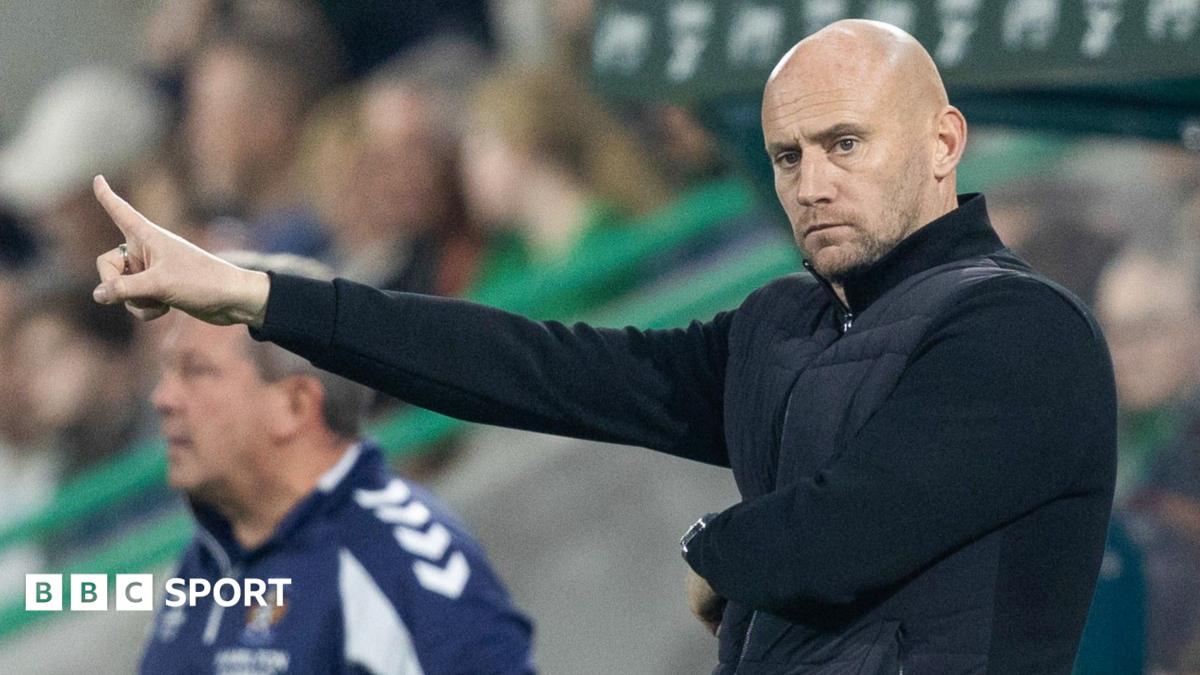
Regarding the senior national team, Haidar mentioned the signing of Algerian coach Majid Bougherra, who has introduced a bold new strategy focused on renewing the squad through young local talents and attracting more Lebanese players who are active abroad.
He explained that the coach described the coming period as a difficult transitional phase that will require patience, after which the national team will emerge in a way that meets ambitions. He called on everyone to be patient with the new team being built, and he thanked all the players who have represented the national team over recent years and whose time with the team has now concluded.
On refereeing, Haidar confirmed that the LFA has continued its support for the refereeing department, maintaining cooperation with international instructor Tamer Mahmoud as the development officer in the Referees Committee. He said work has progressed notably on both technical and administrative levels and described the season as “very good” in terms of refereeing.
For the third consecutive season, VAR technology was used in the First Division, and it was adopted this season in the Second Division for the top four clubs and the bottom three—an initiative that contributed to the correctness of refereeing decisions.
He added that the international list was refreshed with three new referees: Wael Haidar, Ali Barakat, and Mohamed Alaaeddine.
Regarding women referees, Haidar noted an increased presence for Lebanon, highlighting the participation of international referee Dumou’ Al-Baqar in officiating matches at the AFC Women’s Championship—the first time in Lebanon’s history—and likewise the participation of international referee Noor Shaeito in the AFC Futsal Championship.
Turning to the technical department’s work, Haidar described securing approval to hold the AFC Pro Diploma as one of the department’s foremost achievements this season.
He explained that the program was originally due to start in July but was postponed because of security conditions in Lebanon; it is now set to begin in October. The diploma represents the highest level of coach education in Asia and reflects the AFC’s confidence in the Lebanese Football Association’s ability to implement advanced educational programs.
He also noted that, in cooperation with UEFA and the AFC, the technical department launched a program to increase participation among girls aged 5 to 8, which included publishing a story titled The Fallen Star as an educational tool.
Haidar concluded his speech by emphasizing the need for cooperation to overcome the difficult circumstances: “There is no doubt the situation is hard and we must overcome obstacles—and this only happens through our collective cooperation, which, thank God, is always present thanks to the unity of the football family. We wish you success in all your work. Together we rise… football unites us.”
After the president’s speech, West Asian Football Federation Secretary General Khalil Al-Salem delivered a speech praising the progress of Lebanese football, commending the cooperation between WAFF and the LFA, and stressing the importance of continuing joint work and exchanging expertise to help develop and elevate the game at all levels.
The General Assembly’s proceedings continued according to the planned agenda in an atmosphere that reflected the unity of Lebanon’s football family and the determination of the federation and clubs to keep working despite the challenges, while strengthening cooperation with the AFC, WAFF, and FIFA in service of Lebanese football’s future.