












Reading in English | Read in العربية (Arabic)
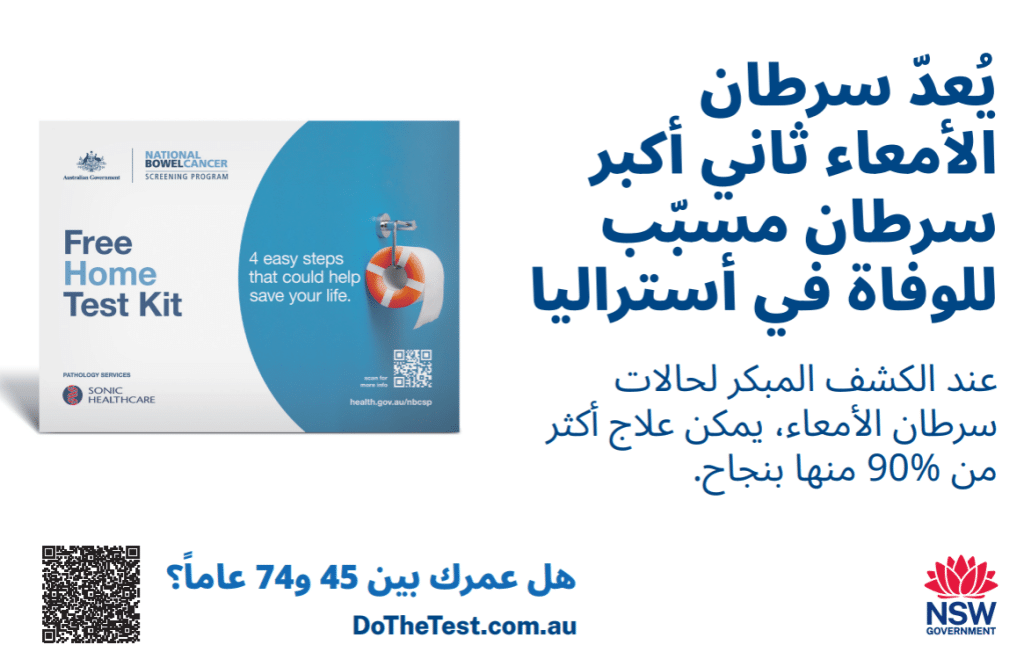
The quick and easy bowel screening test is available for those aged between 45 and 74 years. The test is the easiest way to detect the early signs of bowel cancer, leading to improved outcomes. It can also stop cancer before it even starts by finding changes in the bowel, known as polyps that can lead to cancer.
‘There’s a Lot We Can Do’ campaign shares important information with multicultural communities, including those who speak Arabic.
The campaign includes a new video of Dr Mariam Joseph speaking in Arabic about the importance of bowel screening.
Multicultural communities can face significant barriers accessing cancer screening services and care, often due to language barriers, low awareness, trauma and cultural stigma and beliefs.
NSW Chief Cancer Officer and Chief Executive Officer Cancer Institute NSW, Professor Tracey O’Brien AM said early detection is critical when it comes to many cancers, including bowel cancer.
“Bowel screening is one of the most powerful ways we can reduce cancer risk. It can detect cancer early, and it can also find early signs in your bowel that can be removed before they become cancer,” Professor O’Brien said.
“When bowel cancer is found early, more than 90 per cent of people can be successfully treated. The test is free, simple, done at home and doing it could save your life.”
Professor O’Brien said Cancer Institute NSW is focused on supporting all multicultural communities, including those from Arabic-speaking backgrounds to access cancer screening services that can save lives.
“Awareness campaigns are just one of the initiatives to improve cancer outcomes for our Arabic speaking-communities. Recently we supported a World Cancer Day event in Fairfield, in which information was shared about bowel cancer and the importance of cancer detection,” Professor O’Brien said.
Arabic-speaking Multicultural Health Officer from the Multicultural Health Service in South Western Sydney Local Health District, Paul Gorgees, led that event and said continued education about cancer and early detection is important to save lives.
“A particular powerful highlight was hearing survivors sharing their journey, it was a reminder of the importance of continued support and education. These events are important because they spread vital information about prevention and early detection, strengthen the community and remind us that no one faces cancer alone.”
Unfortunately, Australia has one of the highest rates of bowel cancer in the world, with more than 1,700 people expected to lose their lives to bowel cancer in NSW this year. Bowel cancer rates are increasing in people under 50 years of age.
People aged 45–49 can request a free kit online here: www.ncsr.gov.au/boweltest, or by calling 1800 627 701 or speak to their regular doctor if they have any symptoms.
Call Translating and Interpreting Service (TIS) 13 14 50 if you need an interpreter to help you order the kit from the hotline. Do not hang up when you hear a recorded message. Say the language you speak clearly and wait until you hear an interpreter’s voice.
People aged 50–74 will receive a bowel screening kit in the mail every two years.
Find out more about bowel cancer screening in NSW here:
م بإجراء الفحص الكشفي لسرطان الأمعاء المجاني | Cancer Institute NSW
How to do the test (2018) – National Bowel Cancer Screening Program – Arabic translation
More information about cancer can be found here: