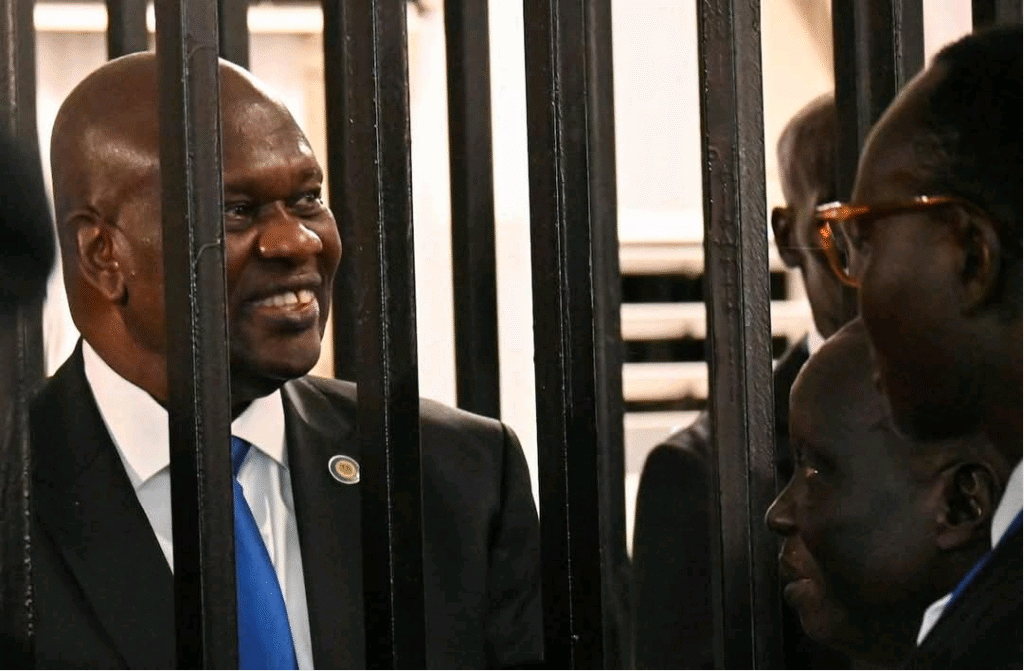













On Tuesday, South Sudan’s Supreme Court indefinitely adjourned the second hearing session concerning First Vice President Dr Riek Machar, pushing proceedings to Wednesday. The adjournment was attributed to the government’s legal team failing to present sufficient evidence.
During the session, Machar’s defence team raised serious challenges to the court’s jurisdiction and trial procedures. They argued that the court lacked legitimacy to prosecute a sitting vice president, insisting the case was unconstitutional and unlawful. The defence further emphasised that Machar, like other high-ranking officials, holds immunity while in office.
Lawyers for the defence also maintained that even the president lacks unilateral power to dismiss the vice president without a two-thirds parliamentary majority, as outlined in peace agreements. However, the government’s legal team rejected this interpretation, insisting the court was qualified to prosecute Machar and his co-accused. They argued that attempts to block the trial undermined South Sudan’s sovereignty.
Alongside Machar, seven other officials appeared in court on Monday, including Petroleum Minister Puot Kang Chol, Hon. Gatwick Lam Pouch, and General Duop Lam Puls. The group has been detained for seven months following clashes in Nasir County between youth militias, known as the White Army, and forces loyal to President Salva Kiir.
This latest political showdown comes despite the 2018 peace agreement, signed on 12 September in Addis Ababa and mediated by Sudan. That accord formally ended years of civil war which displaced thousands and claimed tens of thousands of lives. It also reinstated Dr Machar as First Vice President within the Transitional Government of National Unity.
The United Nations has since weighed in, with the Security Council issuing a statement noting it is closely monitoring the proceedings. The UN urged South Sudan’s judiciary to uphold professionalism and ensure that the trial meets international standards of fairness, transparency, and accountability.