














Reading in English | Read in العربية (Arabic)
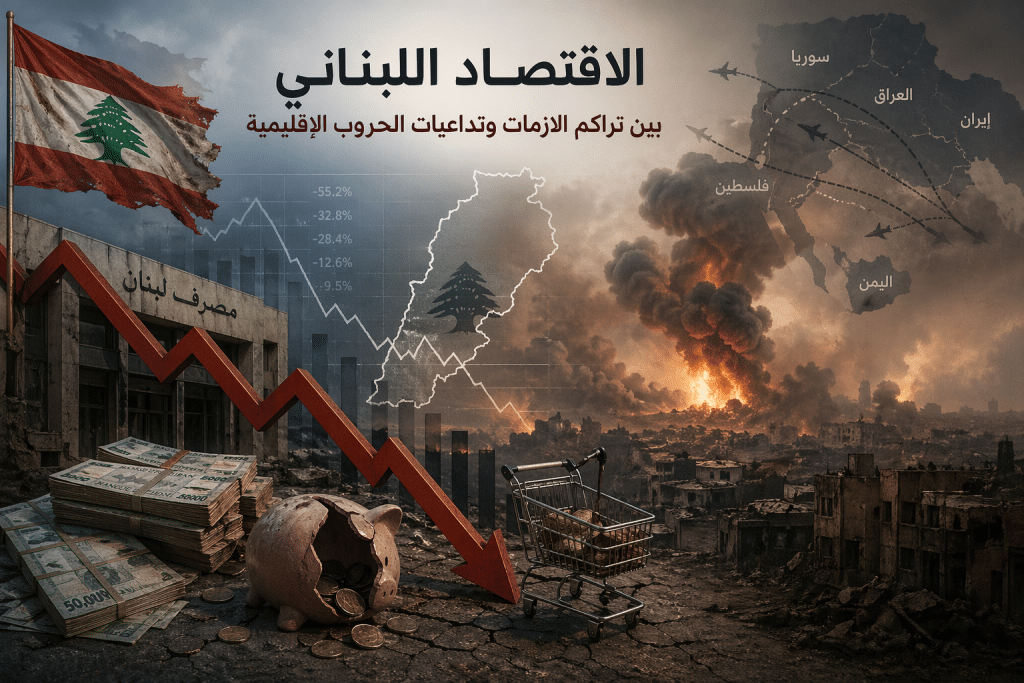
The Lebanese economy has been accumulating consecutive losses since the end of 2019, exacerbated by its structural imbalances and the complexities of its financial and economic crises, with no serious signs of a sustainable solution on the horizon. In this troubled context, Lebanon and its economy are now facing a new crisis stemming from Israeli aggression as part of the Iran support war, which is likely to surpass the economic and humanitarian impacts of the crises the country has endured over the past years.
**Sequential Crises**
The financial and economic crisis that erupted in 2020 resulted in a financial gap estimated at around 80 billion US dollars. This crisis was accompanied by the depletion of Lebanese savings in local banks, a sharp collapse of the national currency, and the subsequent erosion of purchasing power alongside rising rates of inflation, poverty, and unemployment. The COVID-19 pandemic further deepened the national economic crisis, leading to significant contraction.
Just as the Lebanese economy began to recover, the explosion at the Port of Beirut on August 4, 2020, intensified the collapse, causing material losses estimated between 10 and 15 billion US dollars. The human toll was severe, with over 220 people killed and more than 7,000 injured, along with widespread destruction in the capital, making it one of the largest non-nuclear explosions in history.
With the outbreak of the Gaza support war on October 8, 2023, and its escalation into 2024, the ongoing economic collapse since 2019 worsened, leading to estimated losses between 11 and 14 billion US dollars. This conflict also inflicted severe damage on agricultural, industrial, and commercial sectors, resulting in over 4,040 fatalities and around 16,000 injuries. Approximately 317,000 housing units were reported to be partially damaged, while about 51,000 units were completely destroyed, particularly in the southern suburbs, Bekaa Valley, and border villages.
The recent Israeli aggression against Lebanon, occurring within the context of the Iran support war since early March, has inflicted additional economic losses estimated by the Ministry of Economy at between 60 and 80 million US dollars per day, potentially rising to over 100 million dollars with renewed Israeli attacks. This aggression has led to widespread destruction and losses exceeding 10 billion dollars, along with a high human cost, with around 1,500 fatalities and over 4,640 injuries according to official reports.
**Escalating Economic Costs**
The burden of this war and its economic toll is exacerbated by its coincidence with regional escalations, particularly the war on Iran, which has led to disturbances in the global economy. The disruption of navigation in the Strait of Hormuz has caused chaos in global supply chains, increasing oil prices, shipping costs, and insurance rates, all of which directly affect the prices of goods and services. These developments have contributed to disruptions in fertilizer supplies and rising prices, as well as heightened air transport costs, casting a shadow over global tourism activities.
Amid these changes, the Lebanese economy is facing compounded and complex internal challenges, as it is directly affected by any external disturbances, especially those impacting the countries that attract Lebanese labor. As security risks rise in Gulf nations, any financial support from these countries to Lebanon becomes less likely, negatively impacting remittances from expatriates and further increasing pressure on the national economy and balance of payments.
Additionally, the phenomenon of imported inflation is worsening due to Lebanon’s heavy reliance on foreign goods. The country imports oil and its derivatives, which constitute about 25% of total imports, and depends on imports for around 85% of consumer goods. This reliance means that any increase in global prices directly translates to higher local prices, exacerbating inflationary pressures and eroding citizens’ purchasing power.
**Conclusion**
The most significant challenge facing the national economy remains the cost of repeated Israeli aggressions, particularly those connected to the recent war, which adds to the burdens of the Gaza support war and previous crises, all while Lebanon struggles to secure funding sources for reconstruction. Moreover, the linkage of international aid to political and security conditions, especially concerning Hezbollah’s arms, complicates the situation and delays recovery efforts.
Ultimately, the ongoing Israeli aggressions have drained the Lebanese economy through consecutive support wars, exacerbated by its profound structural vulnerabilities that make it incapable of absorbing repeated shocks, both internal and external.
As Lebanon remains a battleground for conflicts amidst ongoing regional tensions and a lack of a clear reform vision, the country is at risk of further economic and social decline unless the state adopts a comprehensive reform path supported by genuine political will and effective international support to halt the ongoing descent into crisis.