











Arabic version: محكمة بريطانية تقضي بأن حظر حركة فلسطين كمنظمة إرهابية غير قانوني
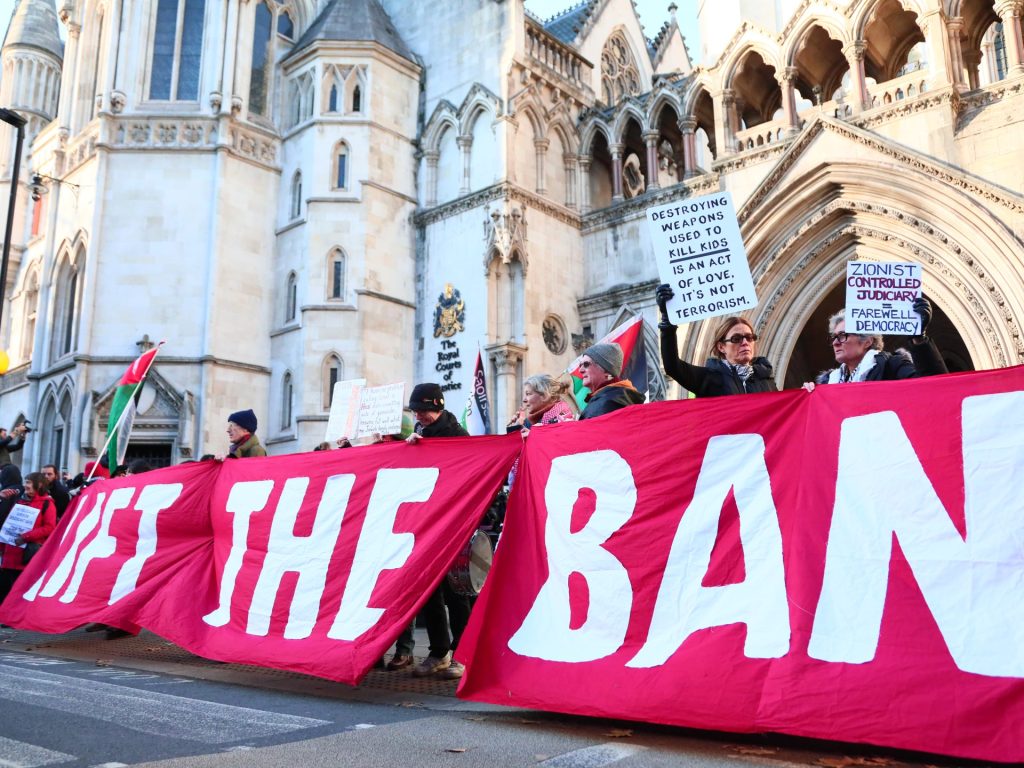
A UK court has declared the government’s decision to classify Palestine Action as a terrorist organization as unlawful. This ruling comes after Palestine Action, a group known for its direct action against Israel’s military operations and the arms trade in the UK, challenged the designation in court. The group argued that the government’s decision infringed on their rights to free speech and assembly.
The court’s decision has sparked mixed reactions. Supporters of Palestine Action hailed the ruling as a victory for human rights and freedom of expression, emphasizing that the group’s actions are aimed at protesting against what they describe as the oppression of Palestinians. Meanwhile, critics argue that the group’s tactics, which have included vandalism and disruption of arms manufacturing facilities, are harmful and should be condemned.
The UK government had previously justified the ban by citing concerns over national security and public safety. However, the court found that the government’s evidence did not sufficiently support the classification of Palestine Action as a terrorist group. The ruling raises questions about the balance between national security and the right to protest, particularly in the context of the ongoing Israeli-Palestinian conflict.
Legal experts believe this decision may have broader implications for how activist groups are treated under anti-terrorism laws in the UK. The ruling could set a precedent for other groups facing similar designations, potentially leading to a reassessment of how the government defines and approaches domestic terrorism.
Palestine Action has stated that it will continue its campaign against the arms trade and for Palestinian rights, emphasizing its commitment to nonviolent protest. The group plans to use the court’s ruling to further its cause and raise awareness about the plight of Palestinians. As the situation evolves, it remains to be seen how the UK government will respond to the court’s decision and whether further legal challenges will arise from this significant ruling.