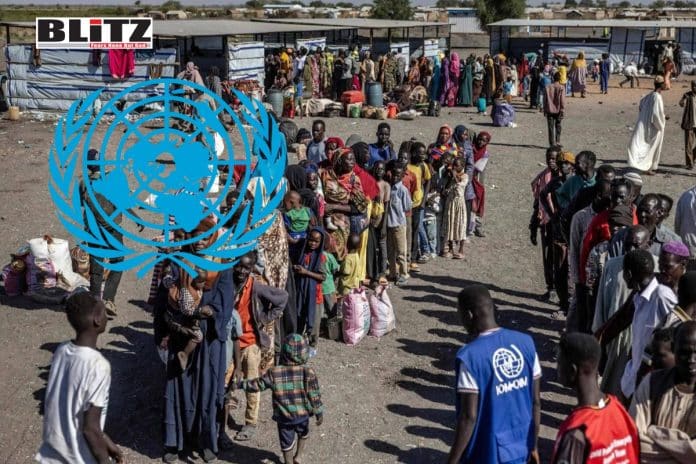













On May 31, 2024, heads of multiple United Nations agencies issued an urgent call for unrestricted humanitarian access across Sudan, warning that time is running out to avert widespread famine. The joint statement from the UN Inter-Agency Standing Committee (IASC) emphasized the dire consequences of continued obstruction of humanitarian efforts, stating, “If we are prevented from providing aid rapidly and at scale, more people will die.”
The IASC, the highest-level humanitarian coordination forum within the UN system, includes leaders from 19 organizations, some of which operate outside the UN. This plea underscores the gravity of the crisis unfolding in Sudan, where conflict between the regular army and the paramilitary Rapid Support Forces (RSF), ongoing since April last year, has created a catastrophic humanitarian situation.
The statement from UN agency chiefs, including UN aid chief Martin Griffiths, highlighted the alarming statistics: 18 million people are acutely hungry, and 3.6 million children are severely malnourished. The conflict has displaced nearly two million people to neighboring countries and millions more within Sudan. With famine looming, the IASC warned of a “nightmare scenario” where hunger, disease, and displacement could become even more widespread.
“Without an immediate and major step change, we will face a nightmare scenario: A famine will take hold in large parts of the country. More people will flee to neighboring countries in search of sustenance and safety. More children will succumb to disease and malnutrition,” the statement read.
Despite the overwhelming need, aid delivery remains perilously difficult. Humanitarian workers face systematic obstructions and deliberate denials of access by conflicting parties. Reports of aid workers being killed, injured, harassed, and supplies looted are rampant. Movement across conflict lines to areas like Khartoum, Darfur, Al-Jazira, and Kordofan has been severely restricted since mid-December, further hampering aid efforts.
“Despite the tremendous needs, aid workers continue to face systematic obstructions and deliberate denials of access by parties to the conflict,” the IASC noted. “Aid workers are being killed, injured and harassed, and humanitarian supplies are being looted.”
The UN agency chiefs made several urgent demands: an immediate ceasefire, protection for civilians, and an end to human rights violations. They called for unimpeded humanitarian access through all possible routes to ensure civilians receive the necessary aid. Additionally, they urged the simplification and expedition of administrative and bureaucratic procedures related to humanitarian aid delivery.
“Facilitate unimpeded humanitarian access through all possible crossline and cross-border routes to allow civilians to receive humanitarian aid. Immediately cease all acts denying, obstructing and interfering with, or politicizing, humanitarian action,” the statement urged. “Simplify and expedite administrative and bureaucratic procedures related to the delivery of humanitarian aid.”
Jens Laerke, spokesman for the UN Office for the Coordination of Humanitarian Affairs (OCHA), highlighted the perilous conditions for aid workers, describing them as “very, very poor, and it’s very, very dangerous.” He emphasized the need for the warring generals to find non-violent solutions to their differences to prevent further humanitarian catastrophe.
The UN’s appeal for aid is also hindered by limited donor support, with only 16 percent of the $2.7 billion needed for Sudan having been received. This shortfall exacerbates the challenges faced by humanitarian agencies trying to provide life-saving assistance.
UN agencies warn that an entire generation of Sudanese children is at risk due to malnutrition, disease, and death without urgent intervention. According to UNICEF, the World Food Program (WFP), and the World Health Organization (WHO), the war has significantly worsened access to nutritious food, safe drinking water, and adequate sanitation, heightening the risk of disease. In some regions, such as Central Darfur and the ZamZam camp in North Darfur, child malnutrition rates are alarmingly high, with up to 30% of children under age five acutely malnourished.
WFP Executive Director Cindy McCain expressed grave concerns, stating, “Mothers and children across Sudan are wasting away from malnutrition. The ongoing war has stripped them of everything they need to survive – food, medical support, and shelter. We need immediate and safe access to deliver the humanitarian assistance that they so desperately need. Without it, this crisis risks becoming the world’s largest hunger emergency.”
Malnutrition and disease feed into each other, creating a vicious cycle that can have long-lasting effects on children. Malnourished children are more susceptible to infections, and those who recover face potential long-term developmental challenges. The situation is particularly dire for pregnant and breastfeeding mothers, with over 33% malnutrition rates reported among them in some areas, leading to a high risk of adverse outcomes for both mothers and children.
The IASC’s statement highlights the urgency of international support and intervention to prevent a full-scale humanitarian disaster in Sudan. With the rainy season approaching, which will further isolate communities and exacerbate disease spread, and the lean season looming, the window for effective intervention is narrowing. The UN’s call for immediate action and donor support is a clarion call to the global community to prevent Sudan’s humanitarian crisis from becoming one of the worst in recent history.
The world must heed this call to action to provide the necessary resources and political pressure to ensure humanitarian access and aid delivery in Sudan, thereby saving millions of lives and preventing an unimaginable tragedy.
The post UN agencies urgently demand unhindered humanitarian access in Sudan appeared first on BLiTZ.