












Arabic version: الولايات المتحدة تضرب إيران؛ طهران تطلق صواريخ على حلفاء الخليج
The United States launched fresh airstrikes against Iran early Thursday, and Tehran responded by firing missiles at Bahrain, Qatar, Kuwait and Jordan, officials said. The exchanges threatened a fragile interim ceasefire intended to help end the Middle East conflict, and explosions were reported near Iran’s nuclear power plant.
According to France 24, sirens sounded at least three times in Bahrain, and missiles targeted Kuwait and Qatar. Sirens also sounded in Jordan, where the US has stationed troops and aircraft. An Iranian official accused the US of striking near the Bushehr nuclear complex, and other explosions were reported elsewhere in Iran during the afternoon.
Iran’s Health Ministry said the two days of American airstrikes killed at least 14 people and wounded 78, most reportedly members of the armed forces. Kuwait’s military said falling debris wounded one person as it shot down three ballistic missiles, a cruise missile and 10 drones. Bahrain said it shot down incoming fire, and Jordanian officials said all incoming fire from Iran had been intercepted. Iranian state TV said the Revolutionary Guard fired missiles at a US base in Jordan.
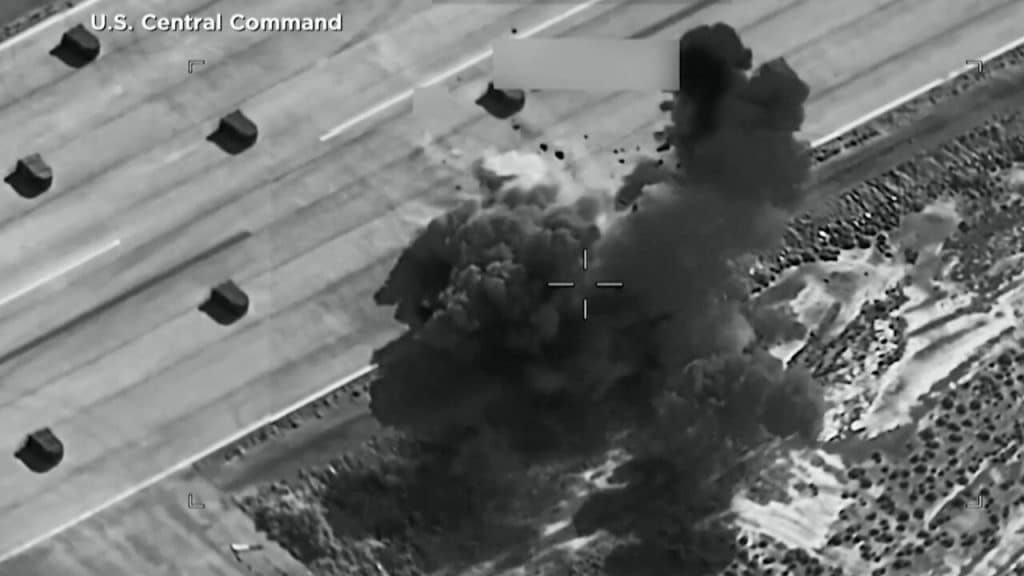
The US military’s Central Command said it hit 90 targets across Iran and released black-and-white footage that appeared to show strikes on an airport runway and missile launchers. State media reported strikes on bridges, including a railway bridge in Golestan province and attacks on two bridges on the route to Mashhad, where tens of thousands attended the funeral procession for Supreme Leader Ayatollah Ali Khamenei, who was killed in the opening salvos of the war.
President Donald Trump said recent Iranian attacks on ships in the Strait of Hormuz signaled the end of the fragile ceasefire and that the interim agreement was “over.” He posted videos of explosions in Iran and warned of tougher responses if attacks continued. Iranian Foreign Minister Abbas Araghchi said he had spoken by phone with his Saudi, Turkish and Omani counterparts and with Pakistan’s army chief, signaling diplomatic outreach even as talks to reach a final deal were due to start after Khamenei’s funeral. Maritime data cited in reporting showed increased traffic through the Strait of Hormuz in June compared with May, a central issue for negotiations to fully reopen the waterway.