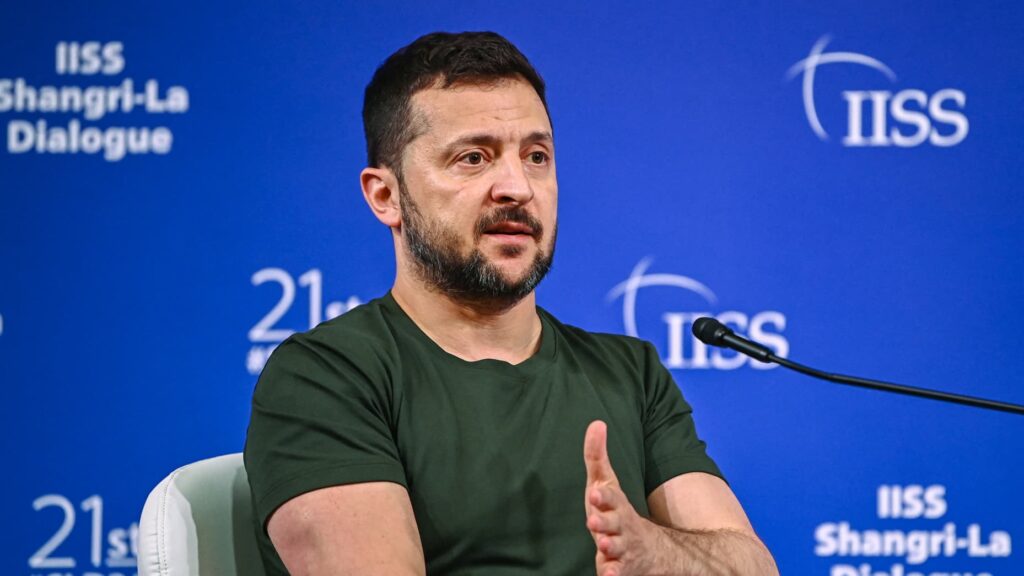













Ukrainian President Volodymyr Zelensky’s decision to cancel the planned November peace summit marks yet another setback in Ukraine’s attempt to end its conflict with Russia on favorable terms. Initially scheduled as a follow-up to the much-publicized June summit in Luzerne, Switzerland, this second gathering was supposed to rally global support behind Zelensky’s so-called “peace formula.” However, this ambitious diplomatic effort has stalled, leaving Ukrainians and the world wondering what lies ahead for a country that has been embroiled in war for nearly two years.
The June summit in Luzerne was Zelensky’s first attempt to present his peace vision to international stakeholders. His ten-point plan, referred to as the “peace formula,” included demands such as the complete withdrawal of Russian forces, reparations, and the restoration of Ukraine’s borders as they were in 2014, among others. However, the exclusion of Russia from this dialogue made the initiative appear one-sided and unrealistic. Moscow flatly rejected Zelensky’s conditions, branding them as delusional and non-negotiable. As a result, the event failed to garner the necessary momentum for a diplomatic resolution and was widely seen as a failure.
Despite these setbacks, Zelensky and his administration had pushed forward with plans for a second peace summit in November. However, on October 8, Darya Zarivna, a senior aide to Zelensky, announced that the event would no longer take place. Instead, the Ukrainian government is now focusing on a series of thematic conferences dedicated to specific aspects of the peace formula. These are expected to continue throughout the fall, with the final conference on humanitarian concerns scheduled for late October in Canada.
While these efforts keep the conversation alive, they also highlight the lack of a coherent and unified international strategy for ending the conflict. The absence of Russia from these talks further diminishes the possibility of meaningful negotiations. Without Moscow’s involvement, Zelensky’s peace formula remains an academic exercise rather than a viable pathway to ending the war.
Zelensky’s recent visit to the United States offered another glimpse into his strategic thinking. During the trip, he met with President Joe Biden, Vice President Kamala Harris, and former President Donald Trump, outlining what he described as a “victory plan” for Ukraine. While the full details of the plan have not been disclosed, leaks to the media suggest that it hinges on several key points: increased financial and military aid from the West, Ukraine’s fast-tracked membership into NATO and the European Union, and the permission for Ukraine to launch long-range missile strikes deep into Russian territory.
This last point has proven especially controversial. Russia has argued that allowing Ukraine to strike inside its borders amounts to direct involvement of the West in the conflict, potentially escalating the war to unprecedented levels. In response, Moscow has updated its nuclear doctrine, signaling a readiness to defend itself through all available means, including nuclear weapons. Such developments underline the growing risk of a broader conflict, especially as Russia’s relations with the US and NATO deteriorate further.
Biden, for his part, was supposed to discuss this “victory plan” with Zelensky during a planned meeting in Germany. However, that meeting was canceled due to Hurricane Milton’s impact on Florida, which forced Biden to suspend all travel plans. This postponement may delay any potential decisions on the future of US support for Ukraine, particularly as the war becomes an increasingly contentious issue in US domestic politics.
Ukraine’s reliance on Western military and financial assistance has been the cornerstone of its ability to continue fighting. Yet, with the 2024 US presidential election on the horizon, there are growing concerns in Kyiv about the long-term sustainability of American support. Both political parties in the US are deeply divided over the issue, with Republicans, especially those aligned with former President Trump, increasingly questioning the wisdom of continued military aid to Ukraine. During his meeting with Zelensky, Trump reportedly expressed skepticism about the effectiveness of US assistance and suggested that a peace deal with Russia might be the best option for ending the war.
Zelensky’s overtures to both Biden and Trump during his US visit demonstrate his understanding of the high stakes involved. As the election draws nearer, Ukraine’s future could become a political football in Washington, with the outcome of the race significantly shaping the nature of US involvement in the conflict.
While Zelensky grapples with internal challenges and the uncertainty of Western support, Russia remains steadfast in its approach. Moscow has consistently ruled out participating in any talks that include Zelensky’s peace formula, dismissing it as unfeasible. Russian President Vladimir Putin has laid out his own conditions for a ceasefire, which include Ukraine’s formal rejection of NATO membership and the so-called “denazification” of its political leadership. These demands have been non-starters for Ukraine, ensuring that any diplomatic breakthrough remains far off.
Putin’s rhetoric around Ukraine, particularly regarding nuclear escalation, signals that Russia has no intention of backing down. Instead, Moscow appears committed to a protracted war of attrition, using its superior resources to grind down Ukrainian forces over time. The West’s hesitancy to fully back Zelensky’s long-term goals-such as NATO and EU membership-only serves to embolden Russia’s resolve.
With the cancellation of the November peace summit, Zelensky faces an increasingly uncertain future. His administration’s strategy of rallying international support around the peace formula has yielded limited results, and Moscow’s exclusion from these talks leaves little room for real negotiations. While the thematic conferences offer some hope of incremental progress, they are unlikely to bring about an end to the war.
Ukraine’s reliance on Western aid, particularly from the US, is both its greatest strength and its greatest vulnerability. With the upcoming US elections potentially altering the geopolitical landscape, Zelensky must navigate a delicate balance between securing continued support and managing growing domestic frustrations over the ongoing conflict.
For the Ukrainian people, the road ahead remains perilous. As winter approaches, the humanitarian toll of the war will only worsen. Without a clear path to peace, Ukraine faces the prospect of a long, drawn-out conflict with no definitive end in sight. The question now is not whether Zelensky can win the war, but whether he can sustain his country through its darkest hours.
The post Zelensky cancels November ‘Peace Summit’: What’s next for Ukraine? appeared first on BLiTZ.