













Arabic version: أمراض غبار 11 سبتمبر لا تزال تؤثر في الناجين
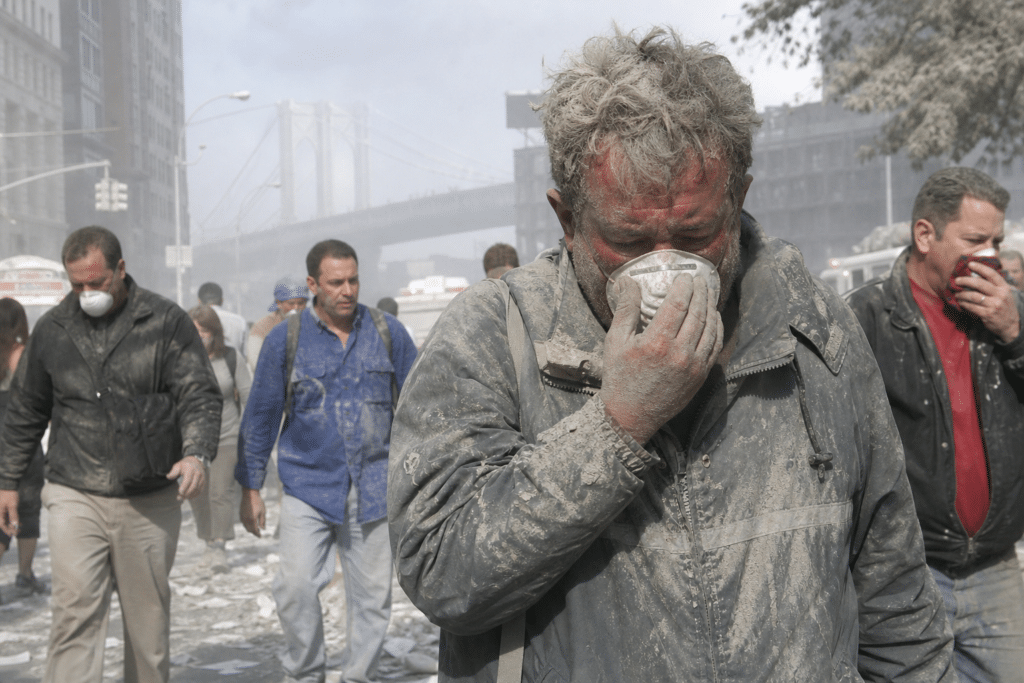
According to ABC News, people exposed to ash and dust after the World Trade Center towers were destroyed on September 11, 2001 have continued to develop serious illnesses years later. Emergency responders, residents and workers in Lower Manhattan encountered a toxic mix that included asbestos, powdered glass and cement, heavy metals and other chemicals.
Retired New York firefighter Michael O’Connell, who worked at Ground Zero, was later diagnosed with sarcoidosis and an autoimmune disease, both found to be related to environmental toxins from September 11. The Centers for Disease Control and Prevention estimates that more than 400,000 people in Lower Manhattan, including residents and workers, were exposed to toxic material after the towers collapsed. Government programs have recognised new or worsened respiratory illnesses, orthopedic disorders and cancers in people affected by 9/11 air.
Australian Ann Margulis lived and worked in New York when the attacks occurred. She recalled returning to her apartment near the New York Stock Exchange five days after the collapse to find ash, dust, smoke and the smell of burning plastics, electronics and fuel. Diagnosed with thyroid cancer in 2005 and stage 4 stomach cancer four years later, she eventually linked her illnesses to the toxic atmosphere after the attack. The American government later agreed that pollutants in the air contributed to both cancers, and she received an undisclosed settlement.
FDNY chief medical officer David Prezant said collapsed, pulverised concrete exposed firefighters to silicates that can create chronic inflammation and lead to many illnesses. A report released last week by the FDNY World Trade Center Health Program found cancer remained a major issue among first responders, including non-melanoma skin and prostate cancers. The CDC says 154,700 people are enrolled in the World Trade Center Health Program, while 9,224 of those who became ill have died. New York Mayor Zohran Mamdani has directed his administration to release air-quality reports, contamination records and correspondence among city officials.
People sickened by exposure can seek treatment and compensation through programs expanded under the James Zadroga Act. The September 11 Victim Compensation Fund was reopened after initially closing in 2003, with eligibility later extended to people who suffered illnesses linked to rescue, recovery or debris-removal work. Attorney Matthew McCauley, a former paramedic and police officer sent to Ground Zero, said the science eventually catches up to what affected people already know.


