Arabic version: تغير استراتيجية الجيش الإسرائيلي ديناميات التفاوض في لبنان
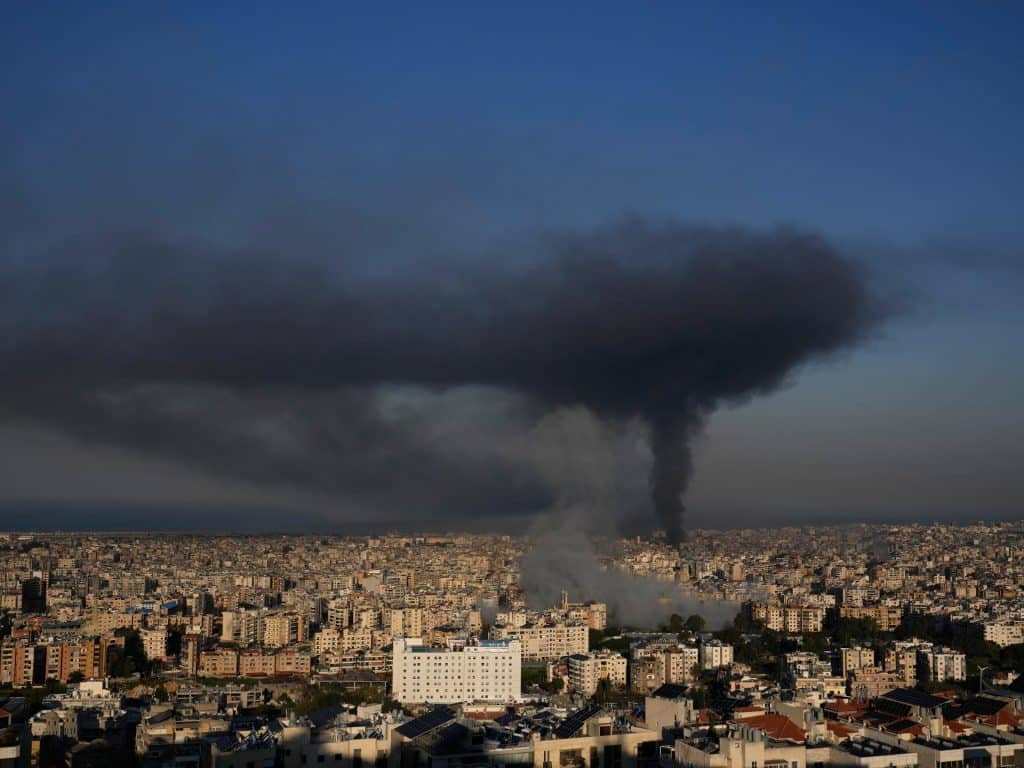
In Lebanon, the Israeli military’s recent actions are reshaping the negotiation landscape, according to analysts. Forced evacuations in Beirut’s Dahiyeh suburb coincide with ongoing bombings, raising concerns about the humanitarian crisis. Since March 2, about 850 people have died due to the conflict, including 107 children and 66 women, with more than one million displaced. The escalation followed Hezbollah’s targeting of Israeli military sites in response to a joint US-Israeli attack on Iran in late February, marking a significant breakdown of the ceasefire established in November 2024. According to Al Jazeera, the dissonance between Israeli military actions and diplomatic proposals reflects a new reality where Israel seeks to leverage its occupation for negotiation advantages.
French President Emmanuel Macron has proposed hosting talks between Lebanon and Israel in Paris, accompanied by humanitarian aid. However, analysts argue that Israel’s military presence is dictating the terms of any potential negotiations. Political experts suggest that Israel aims to force Lebanon into discussions over its sovereignty, particularly regarding the disarmament of Hezbollah, under the supervision of the US and France.
The strategic location of Khiam is pivotal to Israel’s military strategy, providing control over crucial communication routes. Analysts indicate that this occupation may lead to a permanent buffer zone, complicating Lebanon’s sovereignty. Meanwhile, the Lebanese government is in disarray, struggling with internal divisions over representation in negotiations, particularly concerning the Shia community and Hezbollah’s disarmament.
Despite calls for a ceasefire, neither side is willing to make concessions. Israeli officials demand Lebanon curb Hezbollah’s military actions before talks can proceed, while Hezbollah insists on continued resistance. The current situation echoes historical precedents, such as the 1983 Israeli invasion of Beirut, highlighting how military actions can profoundly influence political negotiations. As families in Lebanon face the brunt of the conflict, their homes become bargaining chips in a complex struggle for power and sovereignty.