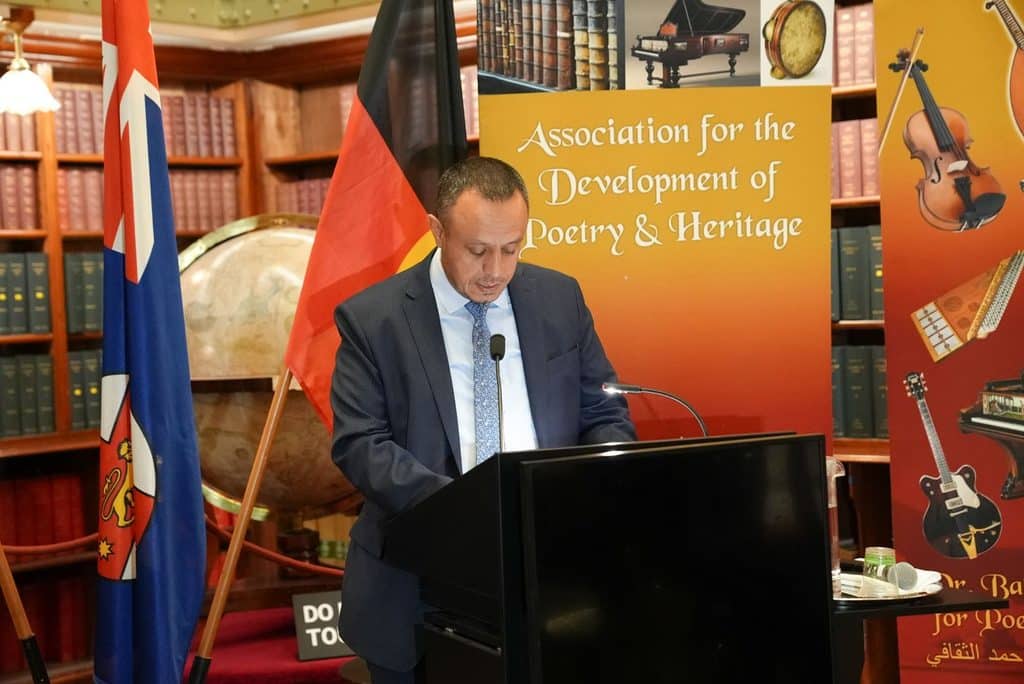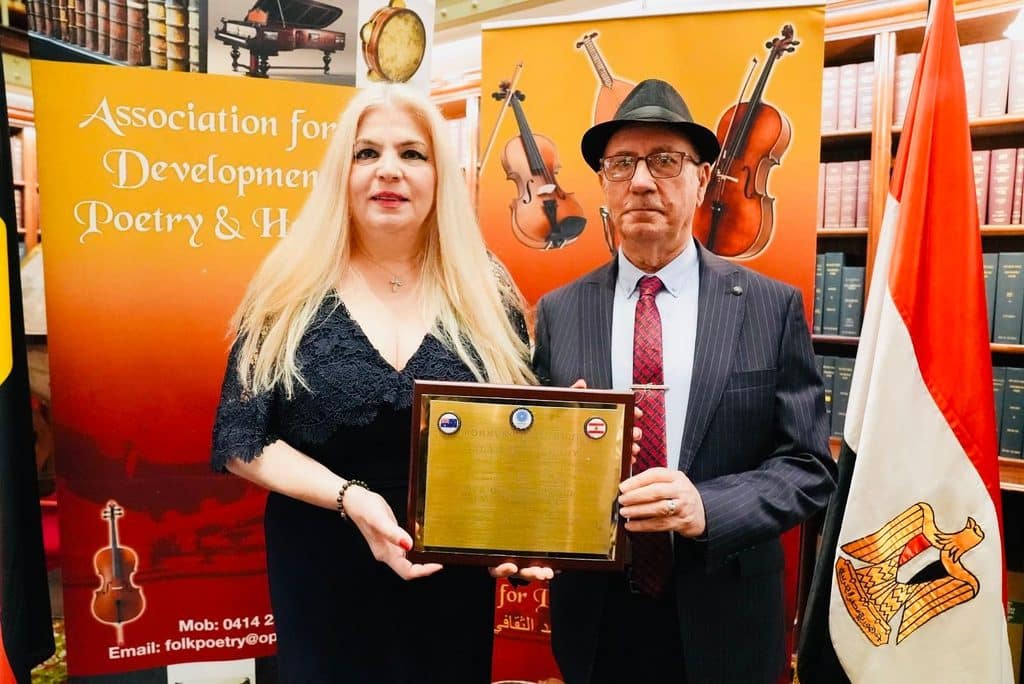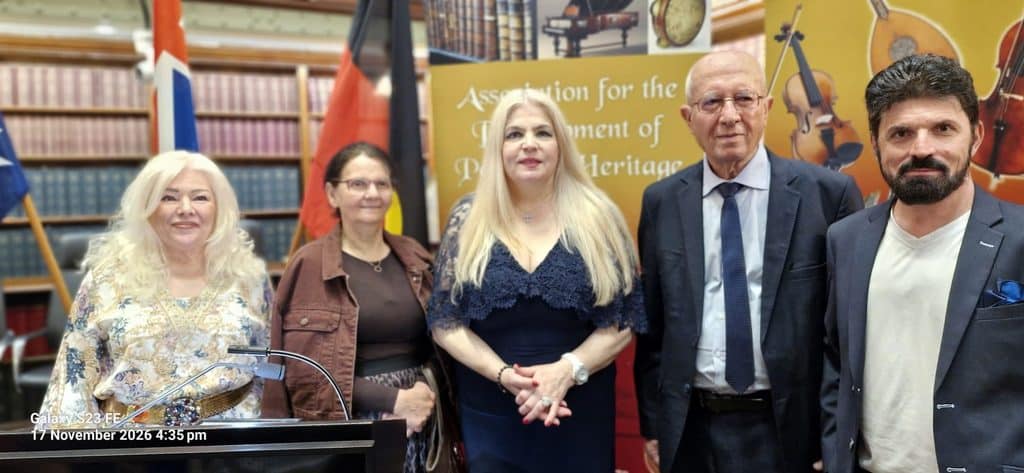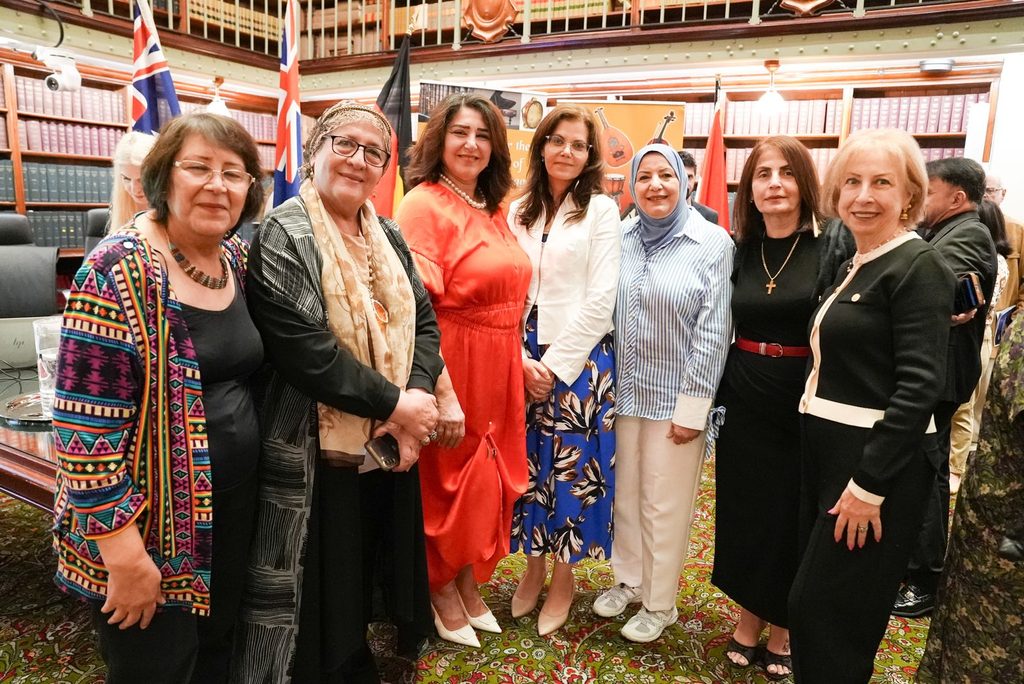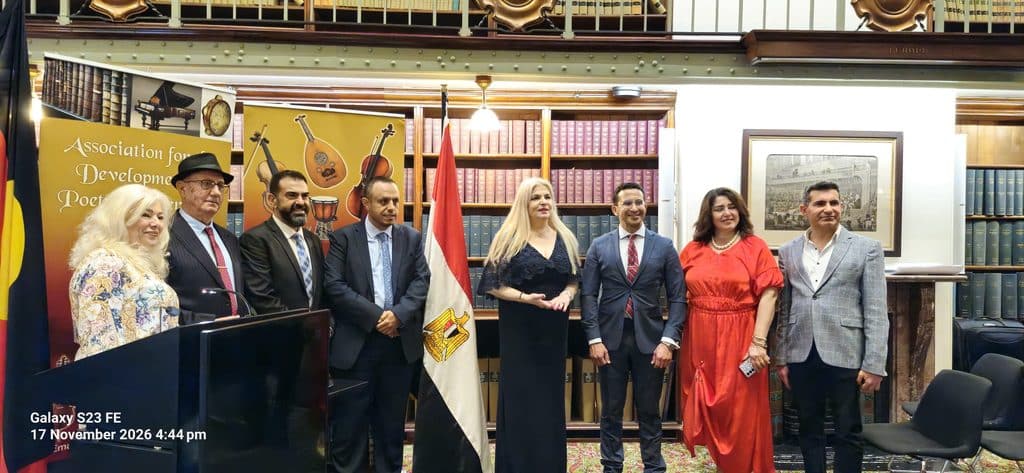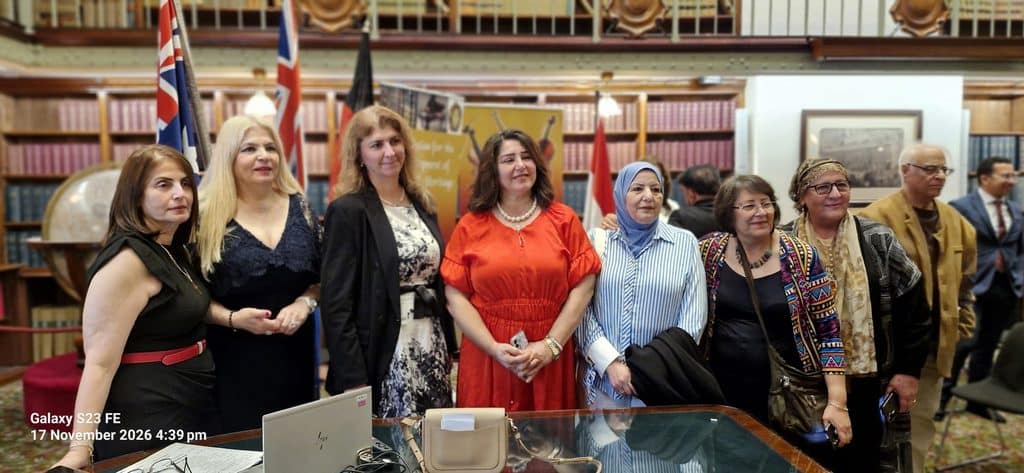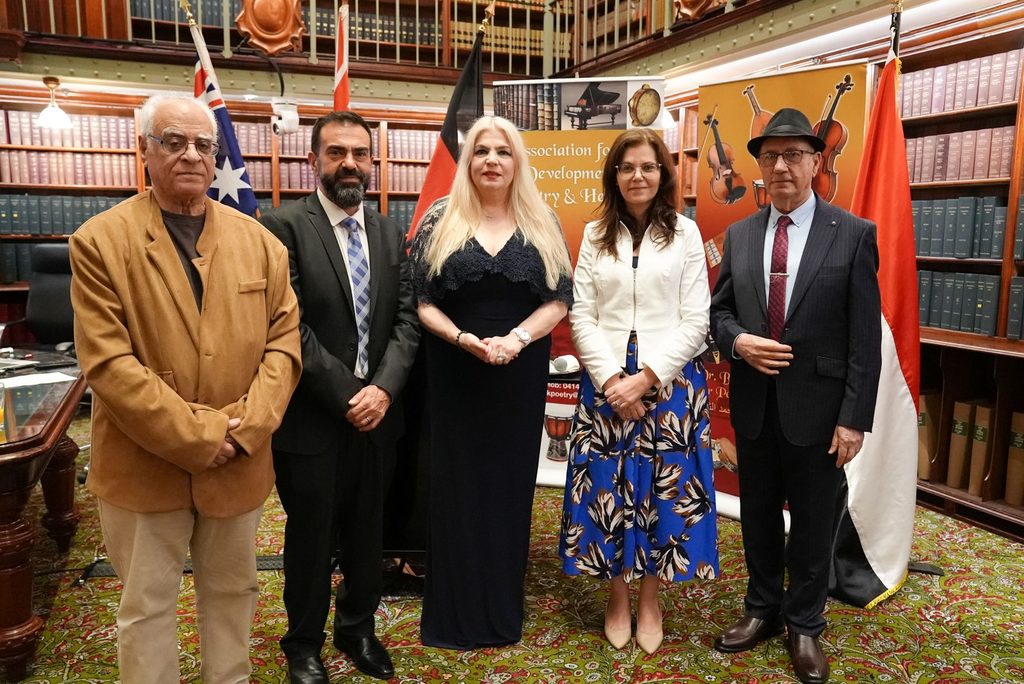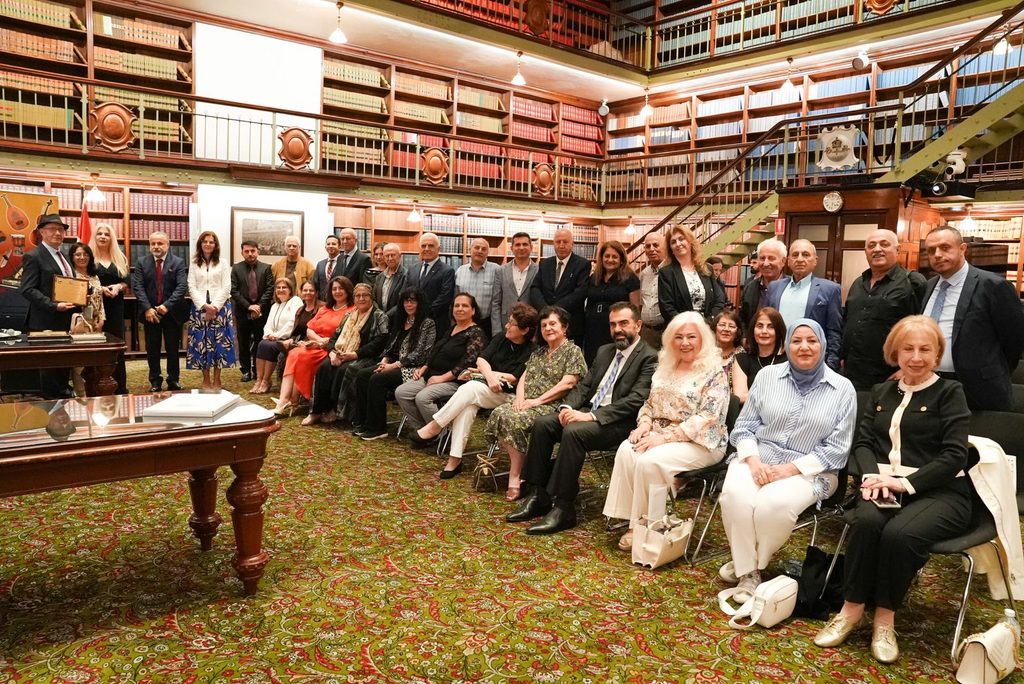
On Tuesday, 17 November 2026, the Institute for the Development of Poetry and Heritage held a tribute ceremony at the State Parliament building in Sydney, in the Jubilee Hall, to honor the Star of the East, Umm Kulthum.
The event was sponsored by the Minister for Public Services, Digital Government, Emergency Services and Juvenile Justice, Jihad Dib, the Consulate General of the Arab Republic of Egypt in Sydney, and the Institute.
In attendance were Her Excellency the Consul General of the Arab Republic of Egypt, Mrs. Reem Zainhom Zahran, Consul Omar Ali (also from Egypt), His Eminence Bishop Malatius Maleki represented by Mr. Ghassan al-Tikriti, Mrs. Jehan Hikmeh representing the head of the Mar Charbel Monastery in Australia, Father Assad Lahoud, Dr. Ramzi Al-Barnouti, Dr. Hala Kilano, the artists Idris and Amir Al-Freiti, Hassan Qasqas and Agnar Niazi, Mr. Ramzi Mansour from the Egyptian Council, Mr. Akram Mardini, Vice Chairman of the Arab-Australian Council, the president of the Hemiana Association Mrs. Shahla Shaker Al-Khamissi, Mr. Shay Jaitani, board member of the aforementioned council, Mrs. Souad Kaston, poets, representatives of civil society institutions, association heads, business people, and a distinguished gathering of intellectuals, writers, and members of Arab and other ethnic communities, as well as visual and audio media.
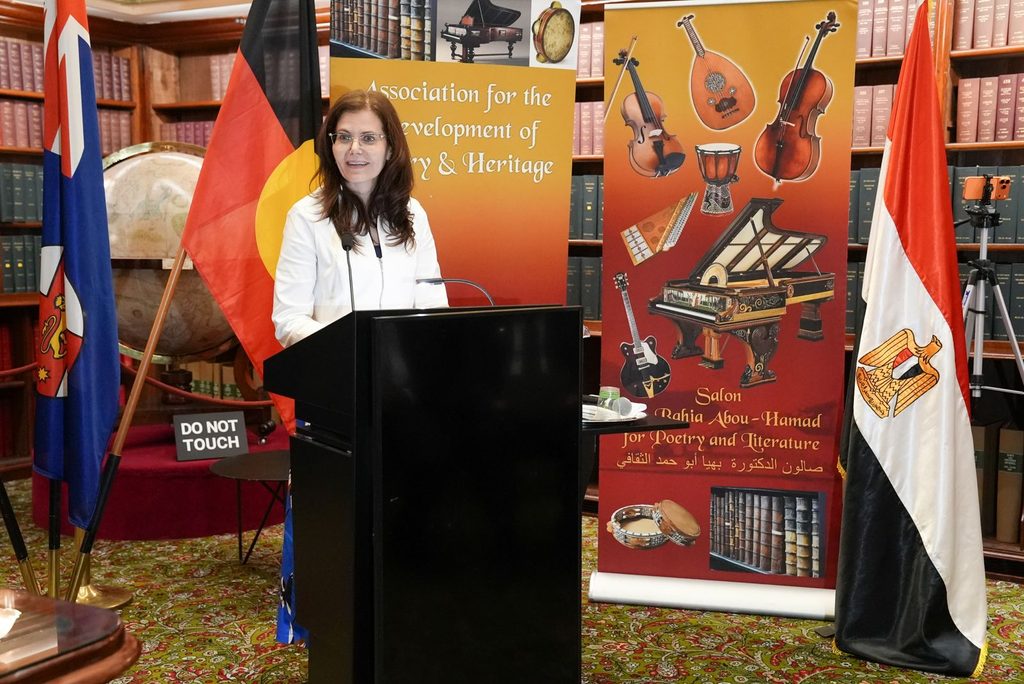
The ceremony was presented by the distinguished writer, poet and media figure Mr. Salam Al-Khaddadi, who thanked the event’s sponsors, welcomed the honored guests, and praised the exceptional creativity and rich body of work of the Star of the East, saying:
“Some artists carve a place for themselves in history, and some artists become history itself—and Umm Kulthum was both the voice and the history.”
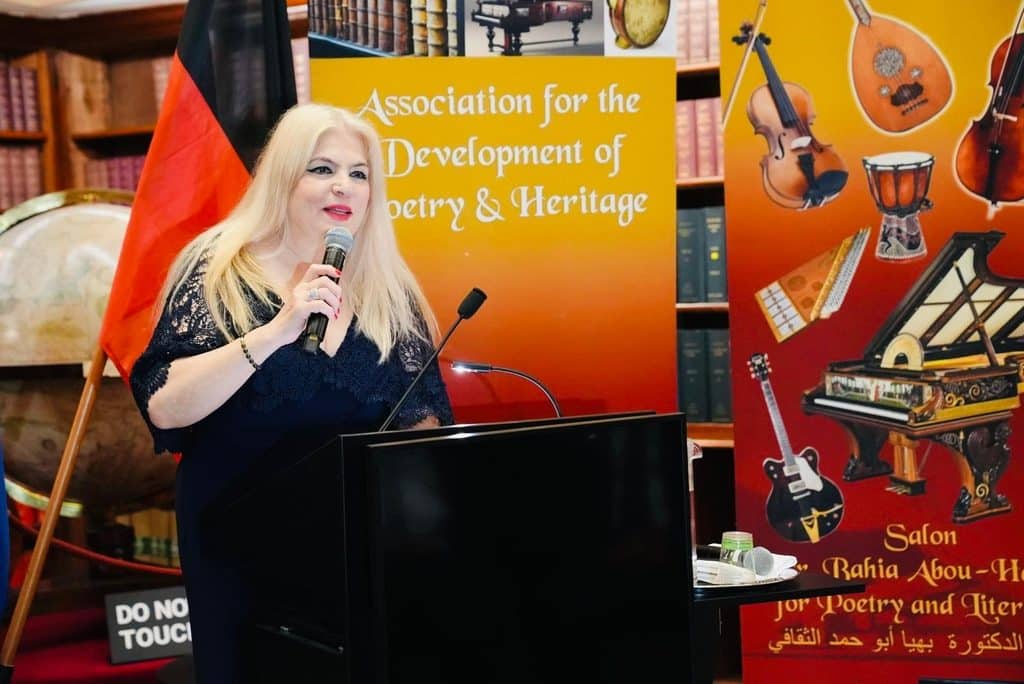
The event was also filmed by the director Rafiq Al-Aqabi.
Her Excellency Consul General Mrs. Reem Zainhom Zahran spoke about the importance of the ceremony for the Consulate and for Egypt, thanking Dr. Bahia Abu Hamad for her valuable initiative in honoring the Star of the East and other Egyptian creators in the same prestigious venue. She stressed the need to preserve Umm Kulthum’s artistic legacy and to pass it on to rising generations, particularly the youth.
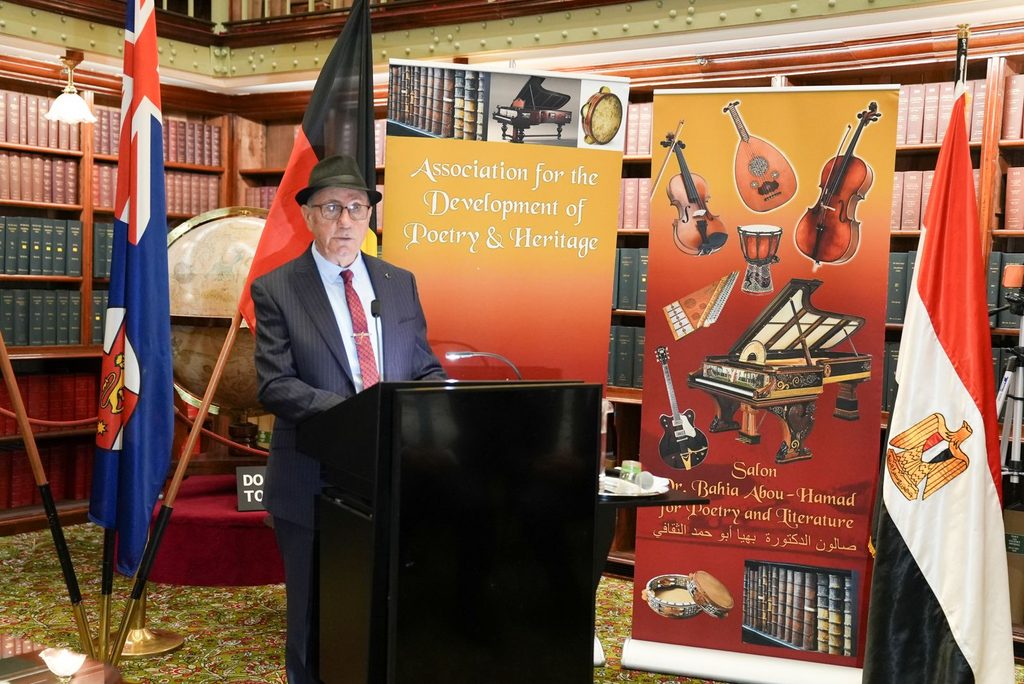
Dr. Sheiban Heikal delivered a rich address on behalf of His Excellency the former Ambassador of the Hashemite Kingdom of Jordan to Australia, the former Dean of the Arab Ambassadors Council in Canberra, and the former head of the international diplomatic corps in Australia, Dr. Ali Krishan. His remarks included:
“It is with pride and honor that we meet today at this refined cultural and artistic occasion to celebrate the memory of an immortal Arab artistic figure, the Star of the East, Umm Kulthum, who was not merely a great singer but a voice for the nation, a symbol of authenticity and creativity, a bridge whose art and feeling extended across generations and borders.
Umm Kulthum left an extraordinary artistic and human legacy that will remain alive in our consciousness, and her songs will continue to testify to the greatness and authenticity of Arab art.
We also extend our sincere appreciation and gratitude to Her Excellency Dr. Bahia Abu Hamad, Ambassador of Arab Culture and President of the Institute for the Development of Arabic Poetry and Heritage, in recognition of her devoted efforts and continuous contributions to reviving Arabic poetry, art and culture in Australia, enhancing our cultural identity, and building bridges of communication between Arab culture and Australian society. What she is doing is a noble cultural work that deserves full praise and recognition for its role in preserving our heritage and transmitting it to future generations.”
A highlight of the evening was a recorded message from the musician and “king of the organ,” Dr. Magdy El-Husseini, currently in the United States. He said:
“I wished I could be with you to honor the Star of the East, Umm Kulthum, with whom I once performed in her orchestra. I also wish the great cellist and my esteemed teacher, Dr. Magdy Fouad Boulos—who was also one of the orchestra’s musicians—were present among us. I am extremely happy to be with you through my voice, and I am grateful and indebted to you for the warm welcome you gave me during my visit to Australia. I also thank Dr. Bahia Abu Hamad, who made it possible for me to come to Australia and meet you. I look forward to seeing you soon in Sydney to share my memories of Umm Kulthum and the great artists of Egypt.”
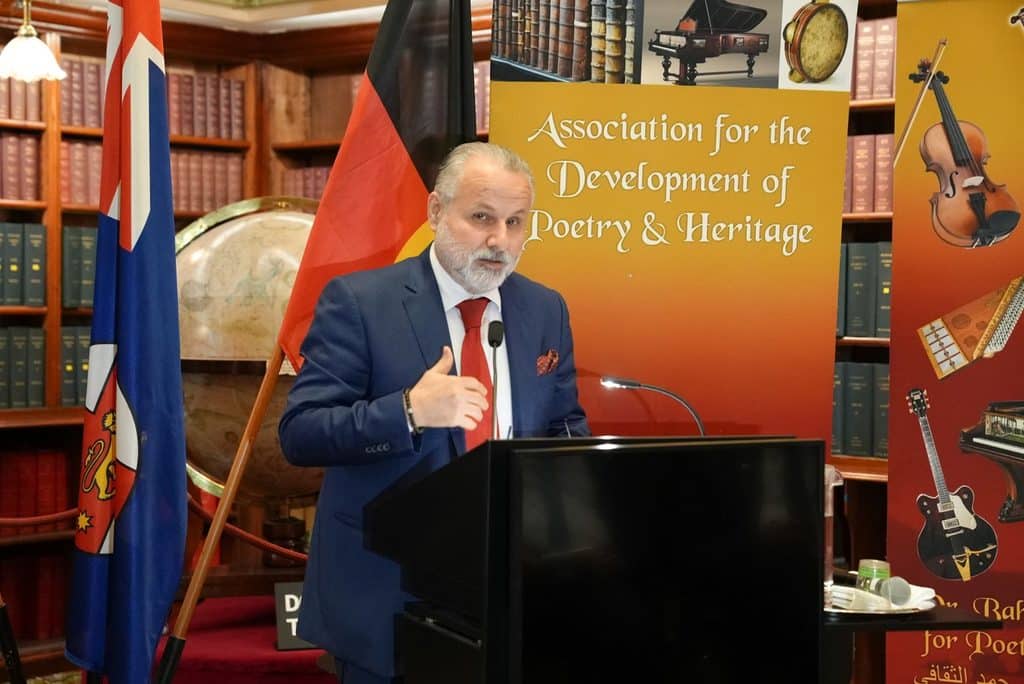
Writer Raghida al-Samman then delivered a rich, lyrical speech in which she gently described the singular qualities of Umm Kulthum and her artistic legacy, saying in part:
“In the halls of the venerable Australian Parliament, where Pharaonic civilization embraces Aboriginal civilization, the Institute for the Development of Poetry and Heritage honors the Star of the East, the eternal daughter of the Nile and the voice of Egypt—an inheritance worthy of her art. A voice that cleaves the dawn and fills the void so that time listens and place trembles. We honor a homeland that lived in a throat, the secret of a lady who made words into wine and voice into worship. I am a daughter of Damascus, daughter of a house that inherited the memory of a land whose stones were written with oppression—yet that did not diminish her glory. I take pride in my balcony overlooking the gates of historic Damascus and the Qalamoun mountain range that kisses the clouds. On that balcony I used to sit every evening beside my mother and a small radio, and a voice reached us from the land of the Nile. She taught us how to choose words, how a word can become a pearl, how a melody can be a poem and performance a maqam.”
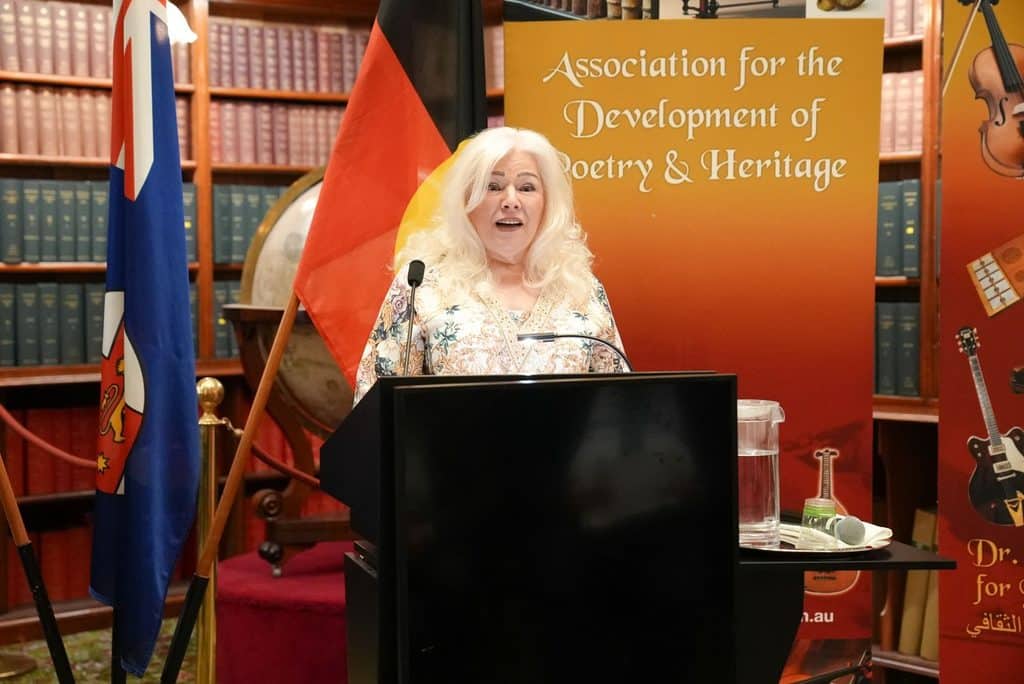
Mr. Paul Sidrak, head of the Christian Alliance Council and Public Relations for the Coptic Orthodox Diocese in Sydney, spoke about his personal journey with Umm Kulthum’s voice and her symbolic, legendary stature, saying:
“She was not merely a singer but the voice of a nation, a symbol of an era, and a legend for generations…”
He thanked Dr. Abu Hamad for her generous initiative in honoring one of Egypt’s greatest pillars.
Artist Dr. Wissam Hamada also spoke about Umm Kulthum’s rich artistic career, highlighting her unique creativity and exceptional performance, praising an artistic legacy that will not be repeated, and thanking Dr. Abu Hamad for the initiative to honor this icon of singing.
Dr. Yasser Al-Nawashi reviewed the late Umm Kulthum’s career and praised her contributions in a short talk titled “Umm Kulthum and Arabic Poetry,” saying:
“Umm Kulthum is an eternal symbol in the service of the Arabic language and classical poetry. As the dean of Arabic literature, Taha Hussein, said: ‘She contributed to proving the beauty of Arabic and the pliancy of its music,’ as she embodied masterpieces of classical poetry with elegant performance and a deep voice. She performed works by leading poets such as Abu Firas al-Hamdani, Ahmed Shawqi, Ahmed Rami, Ibrahim Naji, Nizar Qabbani, and the Sudanese poet Al-Hadi Adam. Her status was not limited to singing; poems and literary studies have been written about her.”
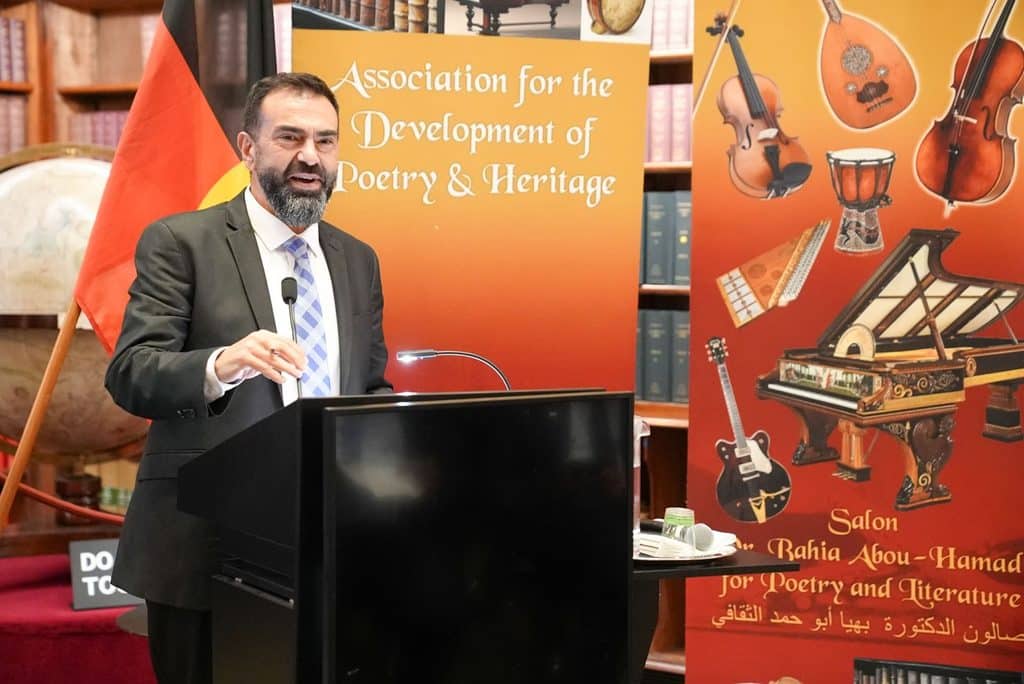
Novelist and writer Mr. Haitham Behnam Bardy spoke, noting:
“Throughout her artistic life she presented more than three hundred enduring songs that will never leave the public taste—songs that delighted bodies, ears, and hearts. Any attribute we assign to her voice falls short of the vocal qualities she possessed: strength in phrasing and response, rare coloring in the blending of maqamat, a spacious vocal range seldom found among singers east or west, a unique blending of masculine and feminine timbres unmatched by others, and extraordinary mastery in performing most maqamat with commanding ability.”
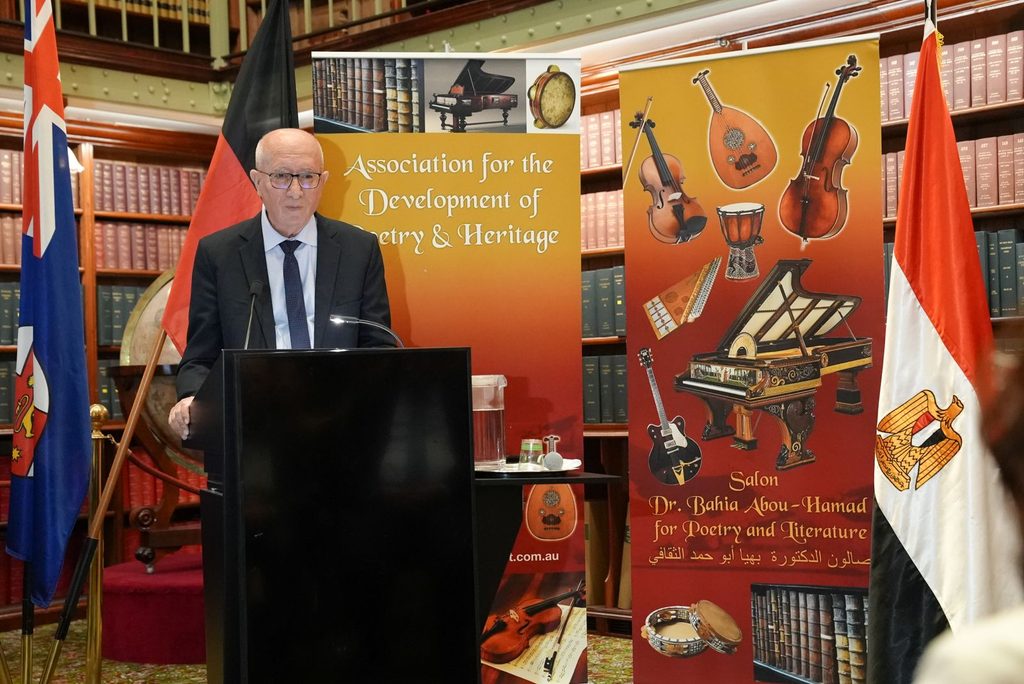
Editor-in-chief Mr. Mohammed Bakr of Watan Press opened his remarks with: “Umm Kulthum, the Star of the East that never sets from the sky of Arabic song,” and described her voice as “standing proudly beyond the limits of time and geography until she became one of the most prominent symbols of twentieth-century singing—a truly exceptional phenomenon that combined vocal power, deep feeling, and precision of performance, making the Arabic song into an artistic work whose influence spans generations.”
Dr. Bahia Abu Hamad, president of the Institute for the Development of Poetry and Heritage, began her speech in Arabic and English by mentioning the late musician and cellist Dr. Magdy Fouad Boulos, who had participated in, prepared and given valuable guidance for honoring Umm Kulthum at this event. She then spoke of Umm Kulthum’s glory, saying:
“Umm Kulthum… the legend of tarab, the mistress of maqamat, the Star of the East. Today, within the precincts of this parliament and this venerable legislative edifice, we honor an outstanding artistic figure and a rare icon who transcended the boundaries of music and distinctive singing. Umm Kulthum possessed a voice of royal grandeur that touched the deepest feelings and transformed music into an immortal art. Umm Kulthum’s legacy belongs to eternity. A legend that surpasses immortality and time—a towering cultural monument. An artist who became the pulse of Egypt, an incomparable phenomenon. A superb singer who reigned over the hearts of Egyptians, Arabs and other peoples, and whose echo still resonates in the hearts of millions to this day. She is humanity’s eternal treasure of artistic greatness. There is no doubt that her voice will continue to reverberate in our hearts and souls and be memorialized forever.”
The evening closed with the timeless voice of the Star of the East, Umm Kulthum, sounding through the walls of Jubilee Hall in Parliament, spreading joy, love and hope to her listeners.
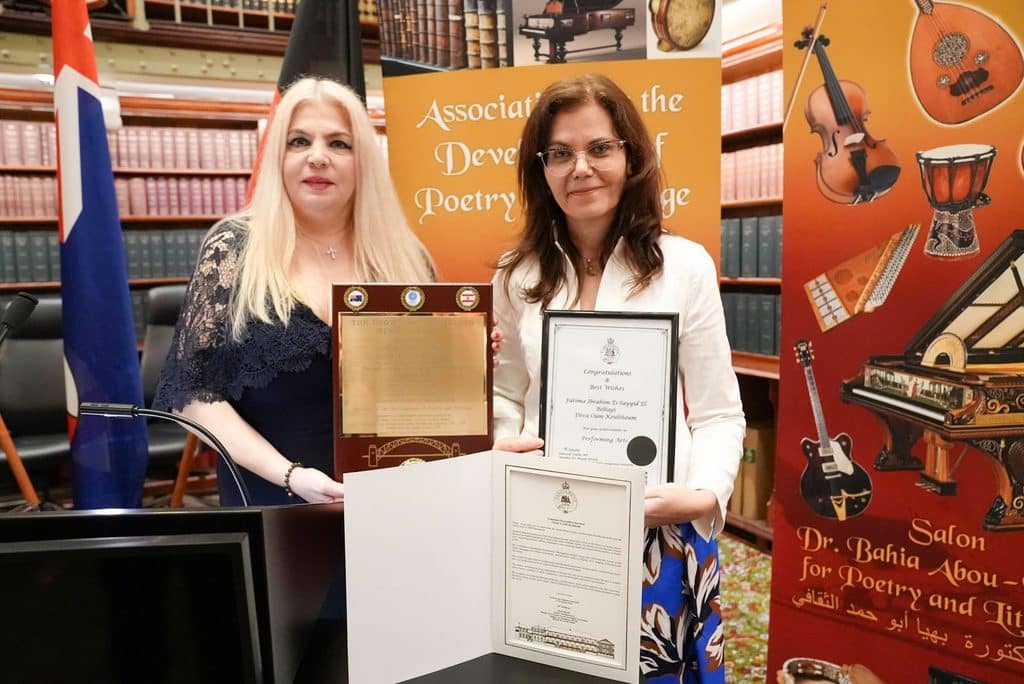
Umm Kulthum was posthumously awarded an appreciation medal from the State Parliament, a certificate of appreciation from MP Edmond Atallah, and the Creativity Shield from the Institute for the Development of Poetry and Heritage, which will be sent to the Ministry of Culture in Cairo via the Consulate General of the Arab Republic of Egypt in Sydney.
Dr. Bahia Abu Hamad presented a Shield of Thanks to the distinguished writer, poet and media figure Mr. Salam Al-Khaddadi for his support of the tribute ceremony, his services, cooperation and efforts in preserving poetry and heritage.
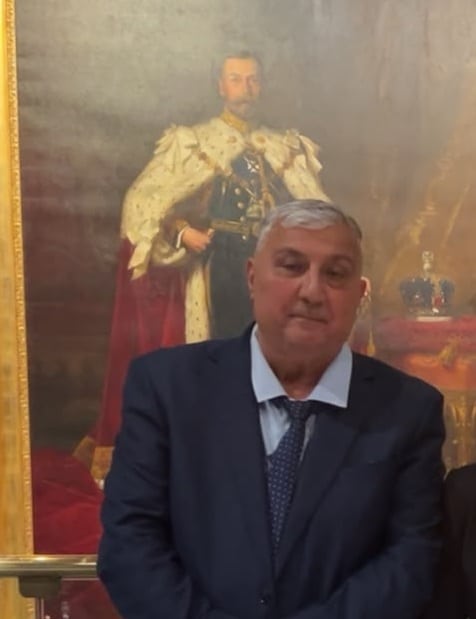
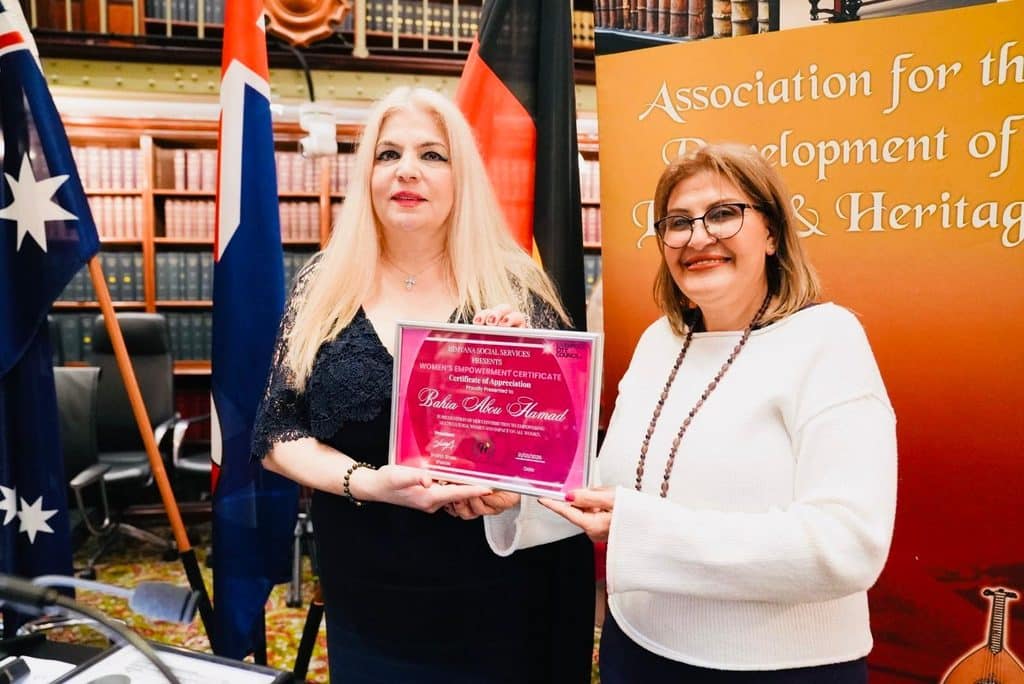
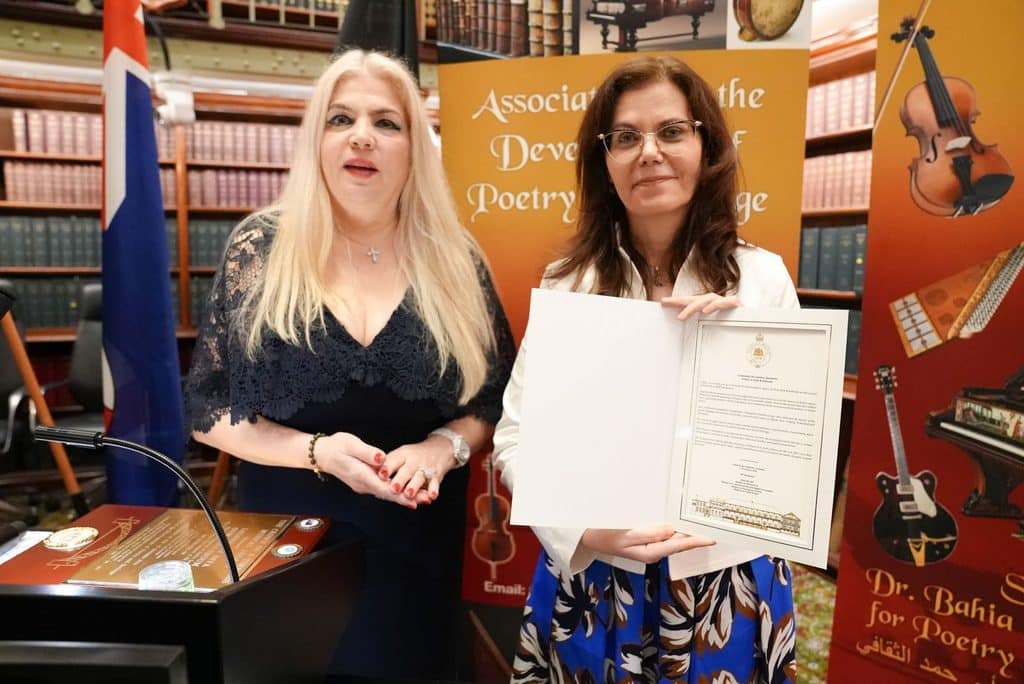
Mrs. Shahla Shaker Al-Khamissi, president of the Hemiana Association, also presented Dr. Bahia Abu Hamad with a certificate of appreciation in recognition of her extensive services in supporting culture, women, and the preservation of poetry and heritage.
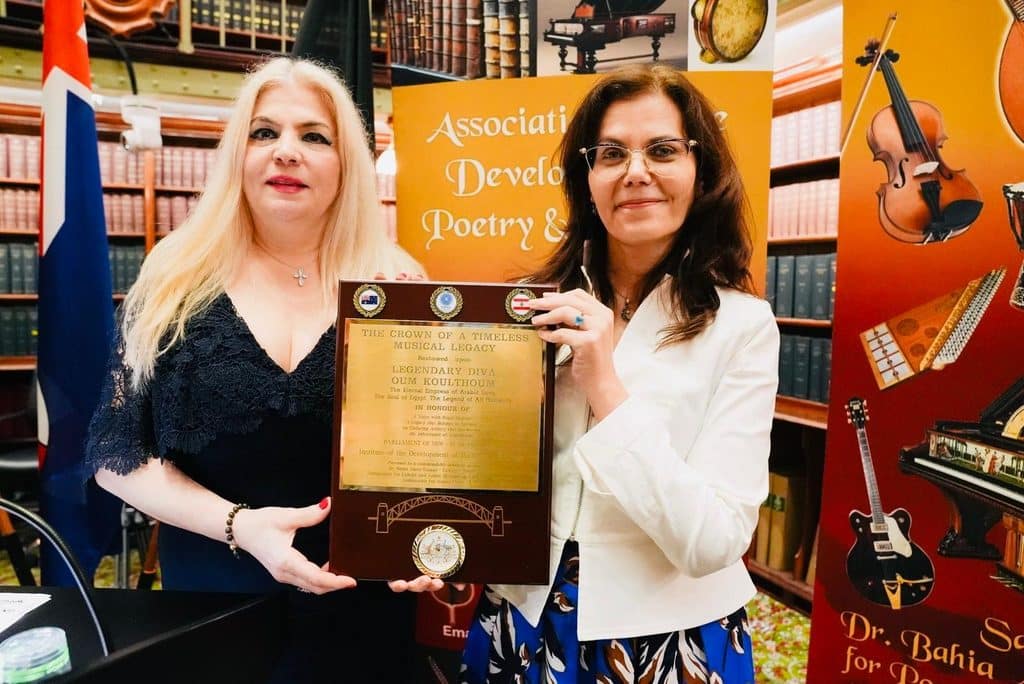
Congratulations to this extraordinary artist from Egypt, a pyramid among its towering monuments, whose music enriched melody, strings, and voices. With her tender feeling she wove bridges of beauty, making her voice a defining mark in the sky of authentic art and a living memory that delights the heart and revives the spirit.
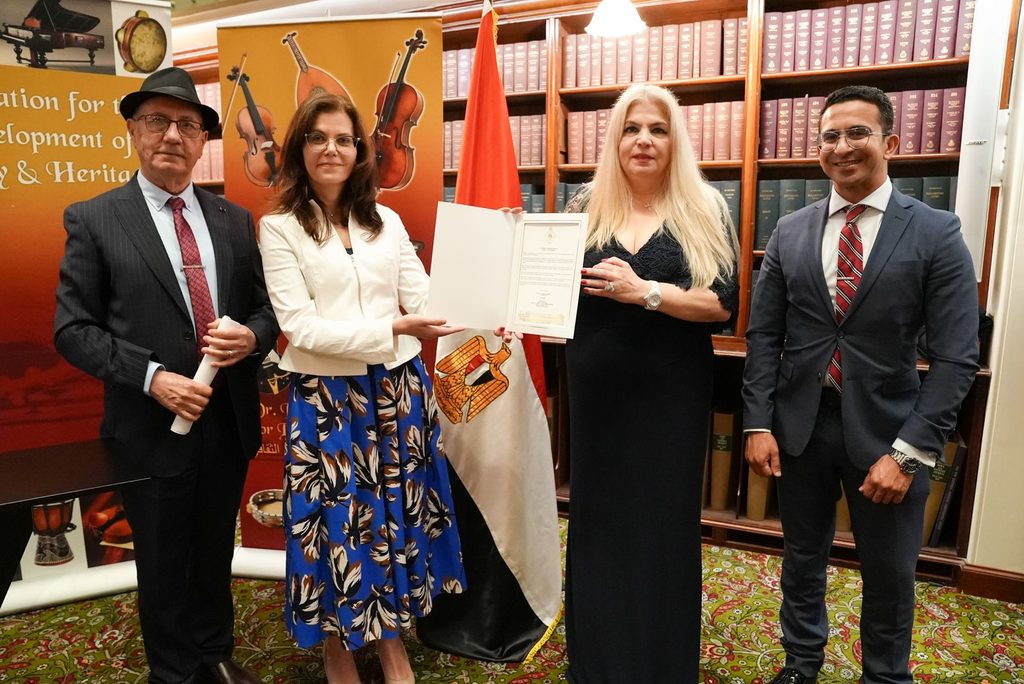
The Institute for the Development of Poetry and Heritage extends its deep thanks and profound gratitude to all supporters, organizers, and our honored guests who contributed with their presence and efforts to the success of this distinguished and elegant ceremony. Your continued support is the cornerstone for our ongoing work to preserve heritage and elevate meaningful poetic expression.