













Arabic version: تقليد مخروط المرور في اسكتلندا ينتشر إلى التماثيل في جميع أنحاء البلاد
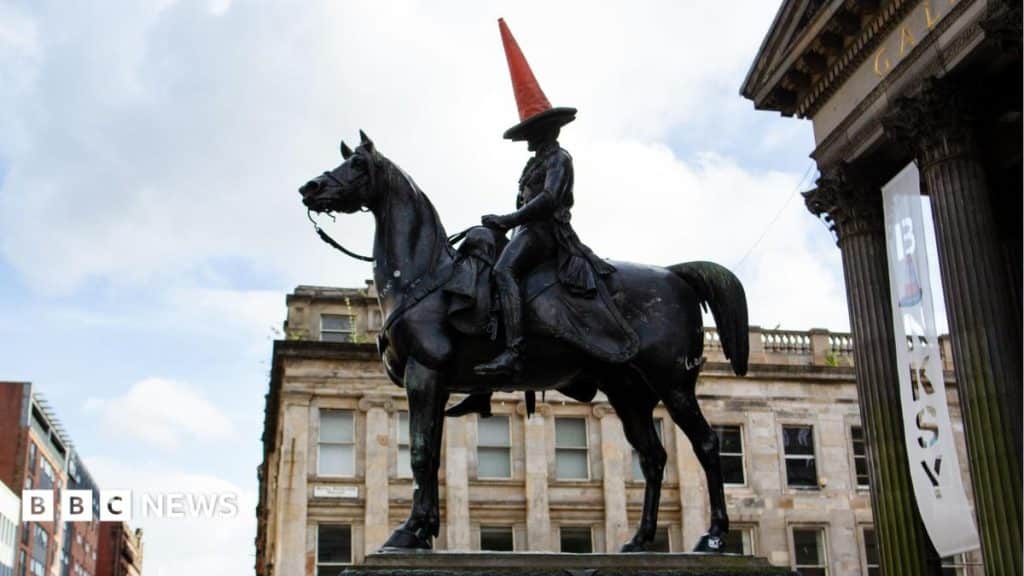
The Tartan Army’s playful tradition of placing traffic cones on statues has sparked both amusement and controversy across Scotland. This quirky practice, which originated with the Duke of Wellington statue in Glasgow, has now extended to various monuments, including those in Edinburgh and Dumfries. According to BBC News, the phenomenon began with students in the 1980s and has since evolved into a cultural symbol of Scottish pride.
The Duke of Wellington statue, designed by Carlo Marochetti and erected in 1844, has been a focal point of this tradition. Despite Glasgow City Council’s efforts to remove the cone over the years, it has become an iconic representation of the city. The Tartan Army’s antics during their travels, including a recent visit to Boston, have revived interest in this unique form of expression.
While many embrace the cone-crowning as a humorous tribute, some locals express disapproval. Edinburgh City Centre Councillor Jo Mowatt criticized the practice, stating it makes statues look “undignified.” However, supporters argue that this playful act is a part of Scotland’s cultural identity, with even the Robert Burns statue in Dumfries receiving a cone as a nod to the ongoing heat.
Commercialization of the traffic cone image has also surged, with merchandise featuring the iconic symbol becoming popular among festival-goers. Items such as tote bags and T-shirts celebrating the coned Duke of Wellington are now available, indicating a blend of tradition and modern marketing. Historian Alistair Heather noted that while commercialization has diluted the original rebellious spirit, the Tartan Army’s enthusiasm has breathed new life into the tradition.
As Scotland prepares for the Commonwealth Games, the mascot Finnie, a unicorn adorned with a cone, symbolizes the enduring appeal of this quirky Scottish custom. The future of the traffic cone tradition remains uncertain, but for now, it continues to charm and perplex both locals and visitors alike.