













Reading in English | Read in العربية (Arabic)
When Chinese President Xi Jinping invoked “Thucydides’s Trap”—the historical concept that rising powers threatening the position of established ones often precipitate war—his reference read more like calculated strategic foresight than a mere plea to avoid confrontation with the United States. He seemed to hold the West up to a mirror of its past, starting from the premise that declining empires rarely give up status willingly, that a clash is possible, and that its timing and management will shape the next world order.
If China accepts that such a clash is inevitable, it appears to have found in the recent war with Iran a theater in which to manage that inevitability rather than hasten it. Beijing may even see continued, limited engagement as advantageous: it helps set the tempo of confrontation without forcing China to bear direct costs. The United States entered the conflict betting on a swift, decisive outcome that would impose a clear zero-sum equation on Tehran, but it found itself mired in a longer, more complex confrontation than planned and unable to impose that equation. Europe, meanwhile, did not meaningfully support Washington in the Iran war or materially lessen the American burden; yet it has steadfastly pursued its own objective of weakening Russia and draining its capacities—reflecting a deeper European ambition to restore a dominant historical role.
This restrained management of the anticipated confrontation, apparent in China’s stance on the Iran war, is not a passing posture but reflects a deeper Beijing doctrine: patience rooted in a civilizational depth that does not measure time by immediate crises, and a marked preference for gradualism over direct clash. Ongoing regional skirmishes, while not aimed at decisive military outcomes, serve this method by incrementally eroding the prestige of American deterrence without requiring China to pay direct costs or abandon its long timeline. This dynamic is reinforced by Washington’s limited ability—or at least limited willingness—to rein in its most engaged regional ally, Israel, with its declared expansionist aims. That sends a worrying signal to traditional U.S. allies: the American security umbrella may no longer be as reliable, prompting some to seek more balanced strategic alternatives and to quietly benefit from China’s steady rise.
It seems the U.S. administration, perhaps belatedly, recognized this potential trap and understood that being consumed by the Middle East saps its capacity to pivot to Asia. From that perspective, attempts to reach framework agreements with Iran—even if fragile and temporary—can be seen as efforts to quiet fronts temporarily and buy breathing room for the American economy, and perhaps the global economy, until conditions are more favorable to confront China. Washington also appreciates that containing China’s rise partly depends on controlling Iran and key maritime trade routes and energy sources, especially because achieving direct military superiority over Beijing is no longer straightforward. China not only has vast manufacturing power but also dominates large shares of the rare-earth supply chains essential to military industries worldwide. The Pentagon relies on those supplies, directly or indirectly, for components of its systems, meaning a broad cutoff could cripple an important part of the U.S. warfighting apparatus.
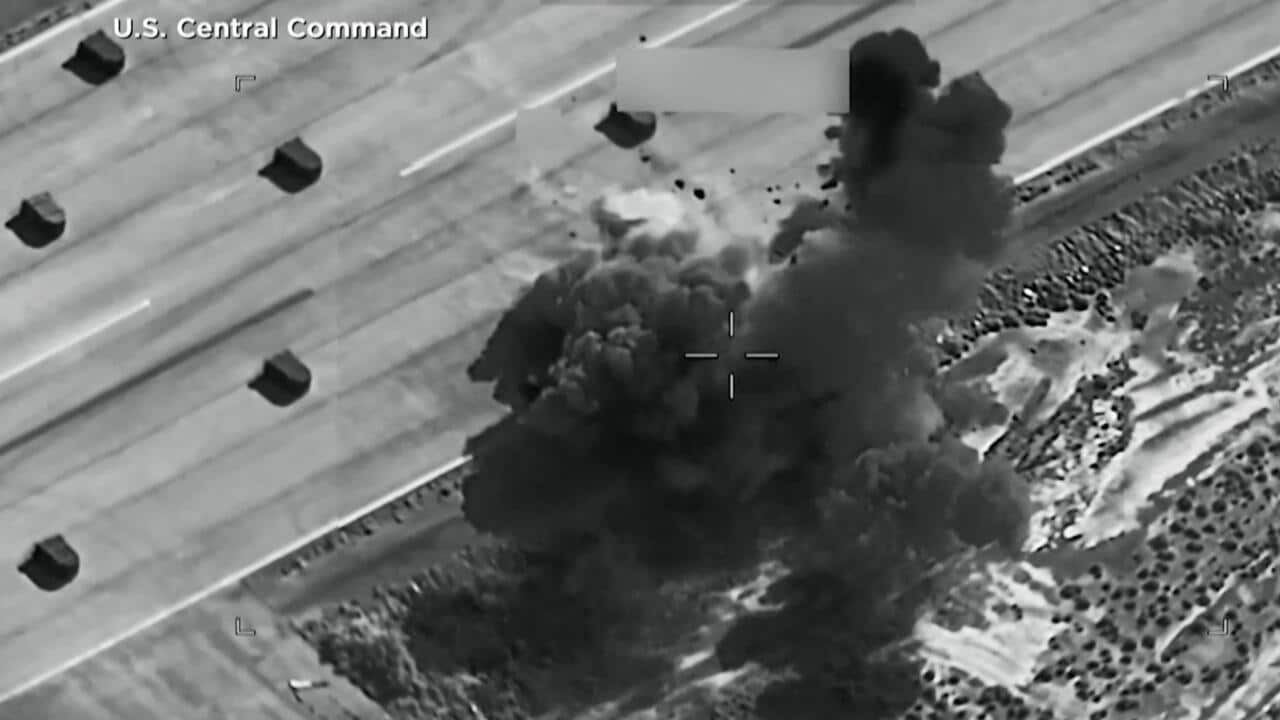
The recent forty-day war with Iran added a new dimension to Western calculations and shifted perceptions of modern military power. That confrontation demonstrated that extremely advanced and costly conventional weapons—stealth aircraft, aircraft carriers, and expensive defense systems—do not always produce the decisive effects expected when facing swarms of drones and relatively low-cost guided missiles. It showed that these cheaper systems can, under certain conditions, achieve operational effects disproportionate to their cost, raising serious questions about the future of the Western military superiority that has endured for decades. Yet those cheaper systems also rely on the same class of rare materials—such as neodymium for permanent magnets and semiconductors for guidance—so even if the technologies are simpler, their cumulative demand for these resources may actually rise rather than fall.
That shift may have prompted some European states to exploit America’s need to preserve strategic edge through an unspoken bargain: offering European bases and geography to support U.S. moves against Iran in exchange for greater American backing of Europe’s aim to weaken and exhaust Russia and to benefit from its resources. But this bargain may rest on incomplete calculations. If American resources are drained in a protracted confrontation with Russia, that could, among other factors, hasten the onset of the major confrontation with China—one the United States might not enter from a position of clear advantage given the relative decline of the Western industrial base and Beijing’s dominance over large portions of supply chains for raw materials vital to military industries. If that reading is correct, what we are witnessing may not be a mere string of isolated regional crises but a transitional phase reshaping the global balance of power and opening the door to a gradual end of the unipolar era that followed the Cold War.