










Arabic version: قمة الناتو تشير إلى إعادة تنظيم الدفاع الأوروبي
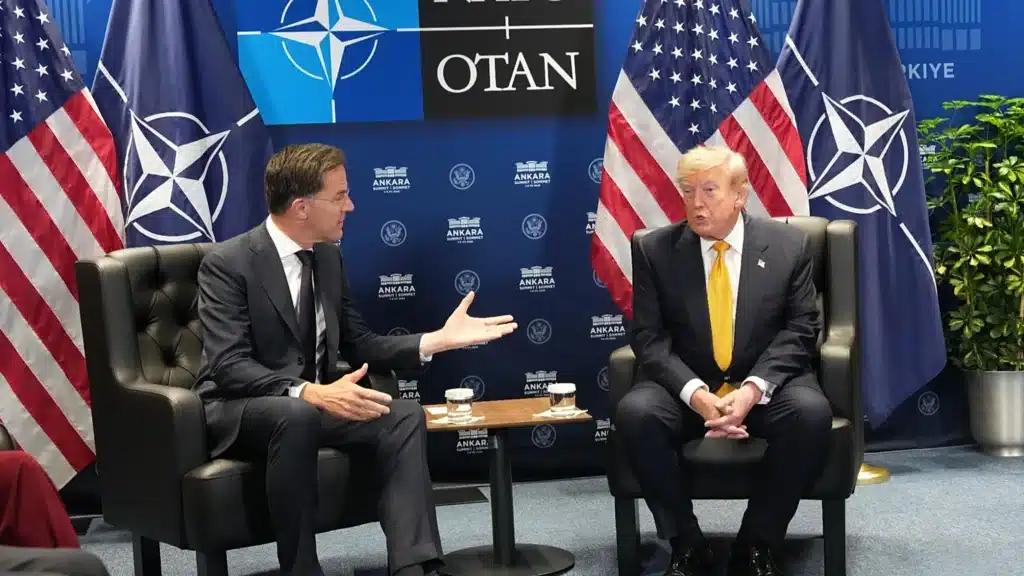
At NATO this week, the tone around US President Donald Trump appeared markedly different to a year earlier: he was no longer feared in the way he had been and was characterised primarily by erratic behaviour, including renewed threats to Greenland and Spain, a mistaken declaration that Japan was an Islamic Republic, and mixing up the Ukrainian and Russian presidents’ names.
According to ABC News, the summit highlighted that other NATO members have strategically and mentally regrouped since last year and that a substantial reorganisation of the geopolitical landscape is under way.
The meeting underscored shifting fortunes in the war in Ukraine: Trump, who last year berated Ukrainian President Volodymyr Zelenskyy in the Oval Office and warned “Without us, you don’t have any cards,” now thinks Ukraine is winning. The article notes there was a net loss of Russian-occupied territory in Ukraine last month, and Trump promised Ukraine a licence to manufacture Patriot missile defence systems. Ukraine’s cutting-edge drone technology, European support and new diplomacy in Gulf states were cited as factors that have given Kyiv leverage.
Türkiye’s role at the summit received significant attention. Türkiye hosted the talks and is described as having the largest army in NATO after the United States, producing around 80 per cent of its own weapons, including drones, missiles, tanks and special ammunition. The piece reports that Trump suggested he may reverse a ban on Turkish purchases of advanced fighter planes and that Türkiye could get six F-35 jets from the US in an initial contract. NATO suppliers named include Turkey’s Aselsan, Germany’s Rheinmetall, France’s Airbus and Sweden’s Saab.
Shifts in eastern Europe and Germany were also prominent. Finland’s President Alexander Stubb told the Financial Times that debate on Ukraine’s NATO bid has been deferred until after a possible ceasefire and argued for integrating Ukraine’s defence industry with NATO allies to give it a membership-like status. Poland’s economic growth and defence spending were highlighted: nearly 3 per cent growth in 2024 versus 1.2 per cent in France, the fifth-largest economy in Europe and the largest in NATO by defence spending as a share of GDP, though much of its spending is on US arms imports. Germany is reported to be increasing defence outlays substantially, set to match the combined spend of the UK and France by the end of the decade and dedicate a third of the federal budget to defence. The Stockholm International Peace Research Institute reported that the 29 European NATO members spent a combined total of $US559 billion in 2025.