













Arabic version: دراسة تكشف أن الكهوف تحت الماء تحفظ عظام الحيوانات بحالة بكر
A team led by Griffith University has detailed how underwater caves can act as natural archives for animal bones, offering a clearer window into past ecosystems. According to ABC News, the research examined how fossils are impacted by the cave environment and developed tools to help scientists determine how and when bones arrived in these deposits.
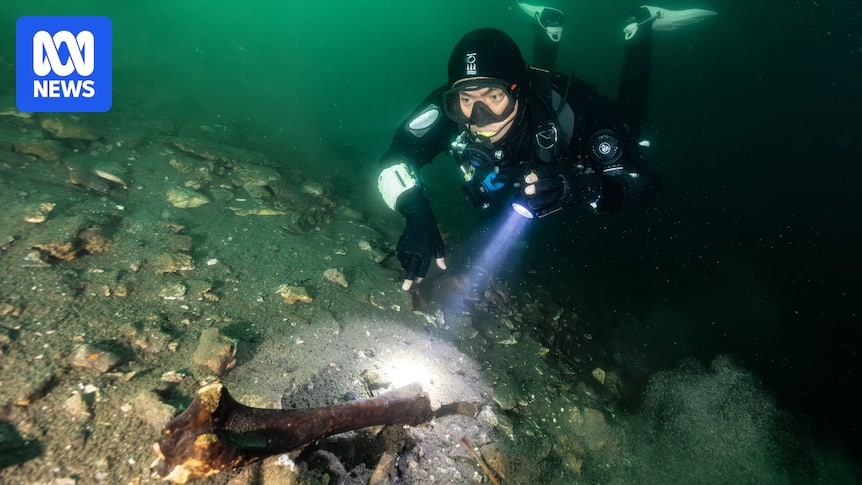
Researchers dived in South Australia’s Mount Gambier region at sites including Green Waterhole (known to divers as Fossil Cave) and Gouldens Sinkhole, recovering bones that included cows, kangaroos, emus, sheep, pigs, dingoes, rabbits, possums and quolls. The team, which includes PhD candidate and lead author Meg Walker and supervisor Professor Julien Louys, reported some bones possibly date back as far as the 1840s. Cave-diving collaborators also noted earlier local discoveries such as thylacoleo (marsupial lion) teeth and other palaeontological material.
The study found the underwater cave environment limits weathering and exposure to land-based bacteria, helping bones remain unusually intact. As the researchers described, in dry areas bones are exposed to weathering and land-based bacteria that degrade them, but in submerged passages that weathering and bacterial activity is absent. Deeper into some cave tunnels, even common aquatic bacterial impacts were reported as absent, and recovered material was described as “pristine” and like a “time capsule.”
The team is developing analytical approaches to link fossils to environmental periods; Walker noted that if fossils can be associated with dry glacial periods or wetter interglacials it will help reconstruct which animals belonged to particular climate phases and how ecosystems shifted through time. While nearby World Heritage Naracoorte Caves provide an extensive archive, underwater cave deposits can represent different time slices and preservational contexts, helping to fill gaps in the regional and broader fossil record.
Findings from Green Waterhole have already included species such as a giant extinct kangaroo that have not been recorded elsewhere in the region. Cave divers and researchers emphasised the need to weigh the scientific value of recovering material against the long-term impact of disturbing fragile cave floors — decisions about whether to move or collect remains are taken with the cave’s preservation in mind.
What happens next: the researchers hope the study provides a foundation for further targeted investigations of fossils in underwater caves and for reconstructing past environments and species changes.
Related sections: Australia/استراليا | South Australia | General | World/العالم