












Arabic version: الشاحنات الكهربائية قد تعيد تشكيل أمن الوقود في أستراليا
According to ABC News, Australia has 36 days of diesel in its national stockpile, while the federal budget included an $11.9 billion National Fuel Security Plan intended to lift fuel reserves to 50 days. Of that package, $3.2 billion is for physically stockpiling diesel and jet fuel, while $40 million was allocated to electrifying Australia Post’s delivery fleet.
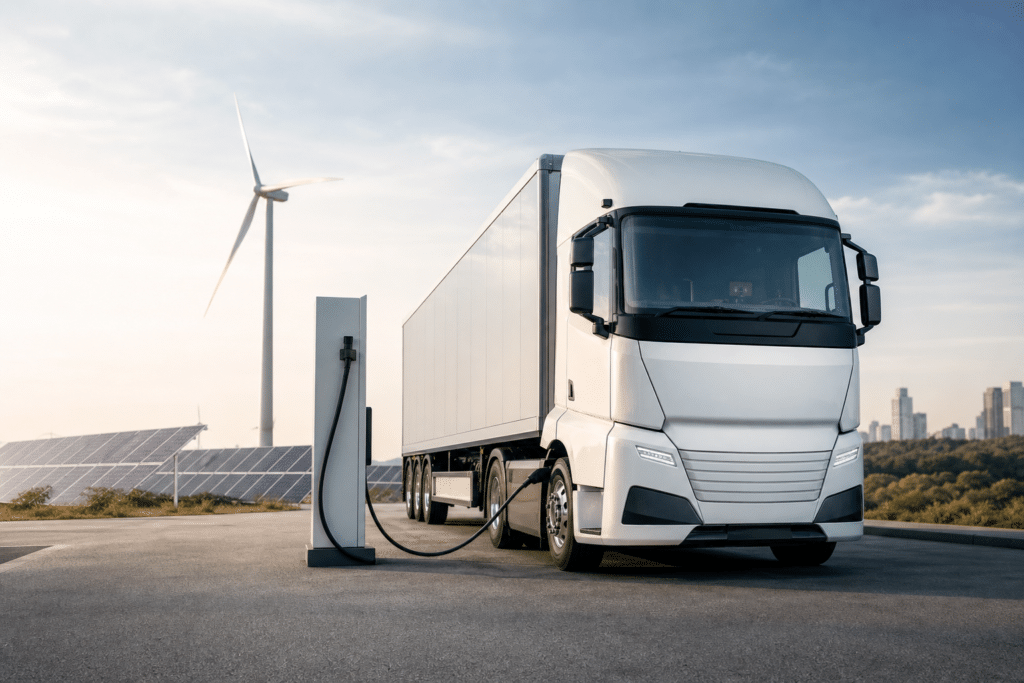
Renewable advocacy group Rewiring Australia says reducing dependence on fossil-fuelled machines could provide a longer-term response to fuel vulnerability. The Australian Renewable Energy Agency’s trucking electrification report found shorter urban routes are more achievable first: light commercial and medium rigid vehicles can return to depots and charge overnight. Electric versions of trucks used for city deliveries are now said to cost the same as diesel models.
Climate Council analyst Ben McLeod said a $3 billion package over five years could support 30,000 to 50,000 new electric trucks. He said this could displace more than a billion litres of diesel annually and reduce operating and servicing costs by more than $30,000 a year for operators. ARENA found that 98 per cent of transport operators are small to medium enterprises, with a median profit margin of 2 per cent, while 70 per cent have only one truck.
Long-haul freight presents a larger infrastructure challenge. Articulated trucks represent just over 3 per cent of Australia’s freight but use about a third of the sector’s diesel. Energy analyst David Leitch said electric prime movers still cost two to three times more upfront, but could reduce running costs by 60 to 70 per cent. ARENA estimates at least 165 megawatt charging hubs would be needed nationwide; using Leitch’s cost estimates, such a network could cost between $6 billion and $14 billion.
NatRoad chief executive Warren Clark said metropolitan freight could transition because trucks can charge overnight, but a regional network would be an enormous project. He put electric trucks at about 1 per cent of the national fleet. The Superpower Institute has argued Australia could improve fuel security from about 17 per cent to 87 per cent by 2040, while low-carbon liquid fuels could serve harder-to-electrify aviation and shipping sectors.