World Lebanese Cultural Union President Dr Abraham Constantin has held meetings in Beirut with Lebanese Prime Minister Nawaf Salam and Australian Ambassador Tom Wilson, focusing on restoring diaspora confidence, encouraging investment and strengthening Lebanese Australian relations.
The meetings highlighted the contribution Lebanese communities abroad can make to the country’s recovery, alongside the reforms needed to turn their willingness to help into lasting economic partnerships.
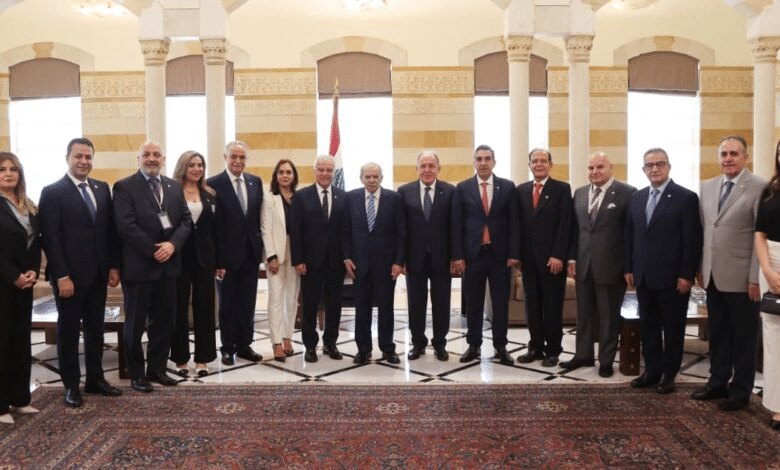
At the Grand Serail, Salam received a union delegation led by Constantin. Discussions centred on the diaspora’s role in supporting Lebanon’s economy and contributing to its recovery.
Salam acknowledged the longstanding support Lebanese expatriates have provided to their families and communities, as well as the expertise, professional achievements and international connections they could bring to Lebanon.
He stressed the state’s responsibility to strengthen security and stability and pursue reforms that protect expatriates’ rights, encourage investment and enable their participation in shaping the country’s future.
Constantin conveyed the aspirations and concerns of Lebanese communities overseas, affirming the union’s readiness to work with public institutions to draw on diaspora skills and experience.
He identified rebuilding trust as essential to attracting investment, particularly following the banking crisis and its impact on the savings of Lebanese people at home and abroad.
Protecting depositors and investors, he said, must be accompanied by credible reforms, including judicial independence, action against corruption and greater administrative transparency. He also called for consistent legislation, respect for contracts and simpler investment procedures.
Constantin emphasised that the union’s role was to support the Lebanese state and its institutions. He called for sustained institutional cooperation with the government, alongside stronger union structures and respect for its constitution.
Describing Lebanese residents and the diaspora as two wings of one homeland, he said recovery required cooperation among Lebanese people wherever they lived.
The discussions also addressed conditions in southern Lebanon. Constantin, who comes from Maghdouché, stressed the need to protect residents and establish conditions allowing displaced families to return safely and with dignity to their homes and land.
Following the meeting, he expressed optimism about the prospects for diaspora investment, saying Salam had responded positively while acknowledging that progress would take time.
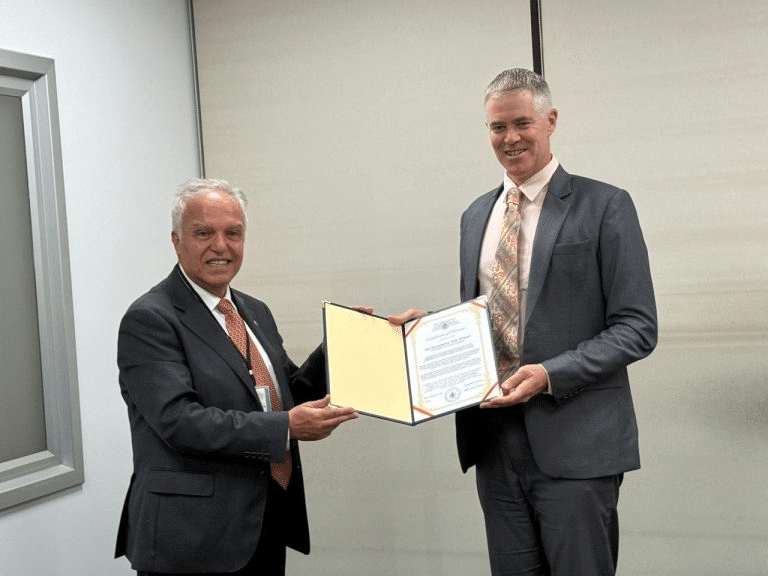
During a separate visit to the Australian Embassy in Beirut, Constantin presented Wilson with the union’s Knight distinction, its highest honorary rank for exceptional service, in recognition of his efforts to strengthen Lebanese Australian friendship and cooperation.
Constantin praised the ambassador’s engagement with Lebanon and its people, highlighting the cultural, social and family connections underpinning the bilateral relationship.
He described the Lebanese Australian community as a vital bridge between the countries, pointing to its contributions across Australian society and its enduring connections with Lebanon.
Wilson welcomed the union’s work and acknowledged the contribution Lebanese migrants have made to Australia. He also reflected on the role successive wars and crises had played in driving migration from Lebanon.
The ambassador reaffirmed Australia’s support for the Lebanese people through the United Nations and emphasised the importance of encouraging investment and expanding economic opportunities.
Having visited several parts of Lebanon, Wilson also expressed a wish to visit the south and learn more about its communities.
Union representatives involved in the engagements included Remy Wehbe, Tadros Nader, Linda Kafrouni, Crystal Constantin, Christina Wehbe, journalist Ghada Sfeir and Nawal Nader.
Together, the meetings placed diaspora engagement within a broader discussion about Lebanon’s recovery: building partnerships that extend beyond financial assistance to investment, development and the exchange of expertise, supported by institutions capable of earning expatriates’ confidence.