Arabic version: انخفاض انبعاثات أستراليا، وهدف 2035 لا يزال بعيد المنال
According to ABC News, Australia’s greenhouse gas emissions fell 1.3 per cent, or 6.2 million tonnes, in the year to June 2026. Climate and Energy Minister Chris Bowen said the rate of reduction during 2026 was about one-and-a-half times faster than the average over the past decade, but the decline was smaller than cuts reported in March 2026 and for the year to December 2025.
The Climate Change Authority said the pace of emissions reduction must accelerate substantially if Australia is to meet its targets. Its annual progress advice said achieving the 2030 and 2035 goals would require sustained average annual reductions of about 25 to 30 million tonnes of carbon dioxide equivalent, describing the task of closing the gap as a “formidable challenge”.
Australia’s legislated targets are a 43 per cent reduction in greenhouse gas emissions by 2030 and net zero emissions by 2050. The government has also committed to reducing emissions by between 62 and 70 per cent by 2035. Modelling indicates Australia remains on track to just meet its 2030 target, while reaching the 2035 range would require a rapid increase in annual cuts. The authority said the more ambitious 70 per cent end of the 2035 range would require average annual reductions of 30 million tonnes.
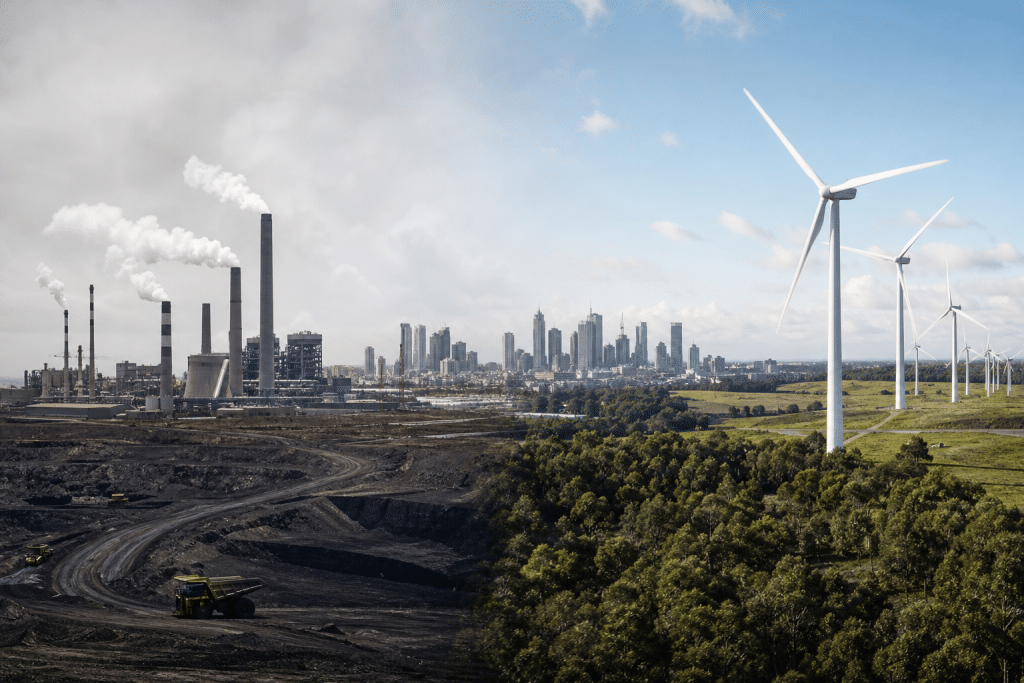
Electricity emissions fell 3.6 per cent, while renewables supplied a record 45.9 per cent of power in the National Electricity Market. The Australian Energy Market Operator reported renewables provided a record 44.3 per cent of NEM generation in the September quarter. Emissions also declined in agriculture, industrial processes and stationary energy use, according to Climateworks Centre expert Anna Malos.
Transport emissions, however, rose 0.1 per cent despite record electric vehicle uptake. Electric vehicles accounted for close to a quarter of new cars sold, and petrol use fell as fuel costs helped drive the increase. The annual climate statement attributed the transport rise to greater industrial diesel use and said falling EV prices and expanding low-emissions technologies were expected to support further reductions.