Reading in English | Read in العربية (Arabic)
Tourism development, economic cooperation and a proposed international football tournament are at the centre of a new push by the World Lebanese Cultural Union to reconnect Lebanese communities worldwide with their homeland.
BEIRUT, Lebanon – World Lebanese Cultural Union (WLCU) President Dr Abraham Constantin has held a series of high-level meetings aimed at strengthening Lebanon’s relationship with its global diaspora through three major initiatives focusing on tourism, economic and social development, and international sport.
The discussions, involving representatives of Lebanon’s tourism, economic and football institutions, reflect a broader effort to turn the Lebanese diaspora’s international presence, expertise and resources into practical opportunities for the country.
Central to the initiatives is a vision of engaging Lebanese expatriates not only as visitors and supporters of their homeland, but as active partners in Lebanon’s future development.
Reviving Lebanese Tourism Through the Diaspora
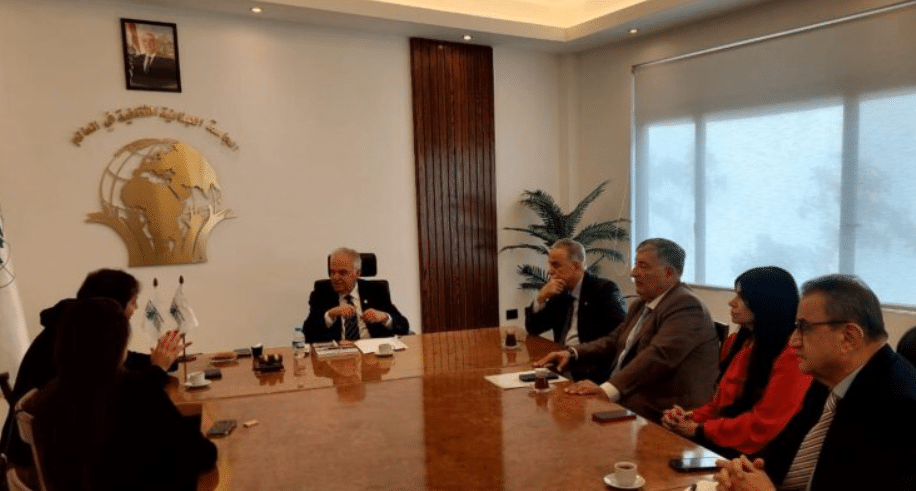
At the WLCU’s offices within Lebanon’s Ministry of Foreign Affairs and Emigrants, Dr Constantin met with Eddie Bitar, President of the National Council for Tourism Development in Lebanon.
The meeting was attended by WLCU First Vice President and businessman Ali Nehme Nasr.
Discussions centred on potential joint initiatives to promote Lebanon internationally, attract Lebanese expatriates and their families, and strengthen the country’s tourism sector.
With millions of people of Lebanese descent living across Australia, Europe, Africa and the Americas, the diaspora represents a significant opportunity to support tourism, local businesses and regional economic activity.
Beyond the immediate economic benefits, the proposed cooperation also seeks to encourage younger generations of Lebanese heritage to discover their ancestral homeland, experience its cultural traditions and develop lasting connections with Lebanon.
Both parties agreed to continue discussions through further technical meetings aimed at identifying practical projects and establishing mechanisms for cooperation.
The initiative comes amid continuing efforts to strengthen Lebanon’s tourism industry and position the country as a destination for both international travellers and Lebanese communities abroad.
Building a Stronger Economic Partnership with Lebanese Abroad
In a separate meeting, Dr Constantin welcomed Charbel Arabid, President of Lebanon’s Economic, Social and Environmental Council, to discuss opportunities for closer institutional cooperation on diaspora-related matters.
The meeting was attended by Mohammad El Jouzou, Head of the Council’s Diaspora Affairs Committee, alongside WLCU First Vice President Ali Nehme Nasr and Central Secretary General Mohammad Raslan.
Discussions focused on developing initiatives that could draw on the expertise, professional networks and economic capabilities of Lebanese expatriates to support Lebanon’s development.
Dr Constantin expressed his appreciation for Arabid’s cooperation in establishing the Council’s Diaspora Affairs Committee, whose membership was coordinated with the WLCU.
He also emphasised the importance of developing a comprehensive national diaspora policy capable of creating stronger and more sustainable connections between Lebanese communities abroad and institutions within Lebanon.
Such a policy could provide a framework for engaging Lebanese professionals, entrepreneurs, investors and specialists in projects that address the country’s economic and social priorities.
The proposed approach would represent a shift from occasional diaspora initiatives towards a more coordinated institutional relationship, enabling Lebanese expertise overseas to contribute to long-term national development.
A World Cup for the Lebanese Diaspora Proposed in Lebanon
Perhaps the most ambitious of the three initiatives is a proposal to establish an international football tournament bringing together Lebanese diaspora teams from across the world.
Dr Constantin discussed the concept with Jihad Al Shahhaf, Secretary General of the Lebanese Football Association in the presence Mr. Remy Wehbe, Vice President for Presidential Affairs and President of the Australian Lebanese Football Association-ALFA, as part of efforts to explore cooperation between the Association and the WLCU.
Under the proposal, teams representing Lebanese communities in Australia, Europe, Africa and the Americas would travel to Lebanon to compete in an international tournament.
The competition could be organised every three or four years, subject to agreement on the necessary sporting, financial and logistical arrangements.
Participating diaspora organisations would be responsible for assembling their teams and meeting associated expenses, including travel, accommodation and local transportation.
The Lebanese Football Association’s proposed role would include facilitating access to sporting facilities, refereeing services and media coverage.
Although the initiative remains at the proposal stage, its potential significance extends beyond football.
The tournament could provide an opportunity for young Lebanese players living overseas to visit Lebanon, build friendships with other members of the diaspora and strengthen their connection with their cultural heritage.
It could also create a platform for identifying talented footballers of Lebanese descent who may be eligible to represent Lebanon internationally.
By bringing together athletes from multiple continents, the proposed competition could become a recurring sporting and cultural event, promoting Lebanon as a meeting place for its global communities.
For Lebanese Australians in particular, the tournament could offer an opportunity for young footballers to represent their communities while connecting with their ancestral homeland through sport.
Turning Global Lebanese Connections into National Opportunities
Although the three initiatives focus on different sectors, they share a common objective: transforming the relationship between Lebanon and its diaspora into a more active and productive partnership.
The tourism initiative seeks to encourage visits, promote Lebanon internationally and support local economic activity.
Cooperation with the Economic, Social and Environmental Council aims to create institutional pathways through which Lebanese professionals and business leaders abroad can contribute their expertise and resources.
Meanwhile, the proposed football tournament offers a different form of engagement, using sport to bring younger generations together and reinforce their connection with Lebanon.
Taken together, the initiatives highlight the potential of the WLCU to serve as a bridge between Lebanese communities worldwide and institutions within the country.
However, their success will depend on further planning, formal agreements, financial arrangements and effective coordination among the organisations involved.
No final implementation timetable has been announced for the proposed projects.
A Broader Vision for Lebanon’s Global Community
For Dr Abraham Constantin and the World Lebanese Cultural Union, the meetings represent an effort to redefine the diaspora’s contribution to Lebanon.
Rather than relying solely on cultural celebrations, personal connections and financial support, the initiatives seek to establish structured opportunities for cooperation in sectors capable of generating lasting national benefits.
The Lebanese diaspora has long maintained strong cultural, social and economic ties with its homeland. Its international networks, professional achievements and younger generations offer considerable potential for Lebanon’s future.
The challenge now is to translate that potential into practical projects that can deliver measurable results.
Whether through tourism, economic cooperation or a global football competition, the message behind the three initiatives is consistent: Lebanese communities abroad can play an active role in shaping their homeland’s future while preserving their identity and strengthening the bonds that connect them to Lebanon.
For the WLCU, the next step will be moving these discussions from proposals to implementation, turning a shared vision into opportunities that benefit Lebanon and its worldwide diaspora.