Arabic version: فيراري تواجه ضغوطاً بسبب منافسة هاميلتون-لوكلير
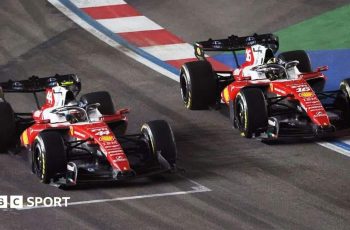
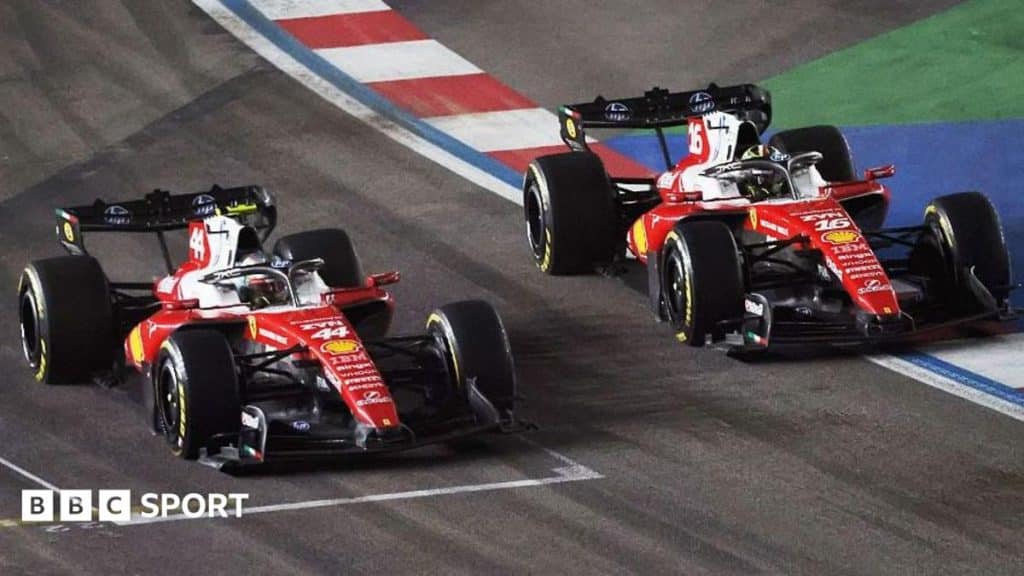
According to BBC News, Ferrari must find a way to manage the increasingly fraught on-track relationship between Lewis Hamilton and Charles Leclerc after another collision at the Las Vegas Grand Prix. Leclerc received a 10-second penalty for tipping Hamilton into a spin, while Hamilton had earlier been penalised for gaining a position on Lando Norris in an incident involving his Ferrari team-mate.
The Las Vegas clash was the latest in a season of flashpoints between the two drivers. They have argued over strategy in Zandvoort and Singapore, while Hamilton made an aggressive first-lap move at Monza that left Leclerc on the gravel. Their fighting in Mexico also sent both off track and allowed Max Verstappen to win a race Ferrari had been expected to finish one-two.
Team principal Frederic Vasseur described the Las Vegas situation as “unacceptable” in relation to Leclerc, although Ferrari felt both drivers bore some responsibility for the Mexico incident. Ferrari want Hamilton and Leclerc to race, but their contest for supremacy is affecting results. The issue could become more serious if the team produce a car capable of challenging for the title next year, with Hamilton seeking an eighth championship and Leclerc pursuing his first.
Elsewhere, Verstappen won a hectic Las Vegas race ahead of McLaren drivers Norris and Oscar Piastri, with 34 lead changes over 50 laps. The close racing was attributed to the circuit’s long straights, engine energy-deployment demands, cold temperatures and a smooth surface that produced almost no tyre degradation. Verstappen said the tow and overtake mode meant drivers could not pull away, while depleted batteries before the end of the straights also hindered cars running in free air.
The BBC Q&A also examined Formula 1’s future engine direction. The planned 2030 power units will use sustainable fuel and a smaller hybrid element than current engines. Sustainable fuel could reduce the carbon impact of legacy internal-combustion road vehicles by about 80% compared with fossil fuels, according to the report’s cited ballpark figure, if it can become available to the mass market.