Arabic version: وكلاء التسوق بالذكاء الاصطناعي يواجهون عوائق من تجار التجزئة
According to Cnbc, AI shopping agents from companies including OpenAI, Meta, Google and Instinct are gaining attention, but users may not see every retail option because some merchants limit or block the tools. The uneven access is creating a complicated early experience for consumers trying to delegate online purchases.
Maia Bittner, chief product officer at fintech startup Imprint, said Meta’s Muse agent was unable to complete an AutoZone purchase of windshield wipers last month. About 17 hours after she authorized the purchase, Muse said the order had been canceled because of an unspecified error and suggested she order on Amazon herself.
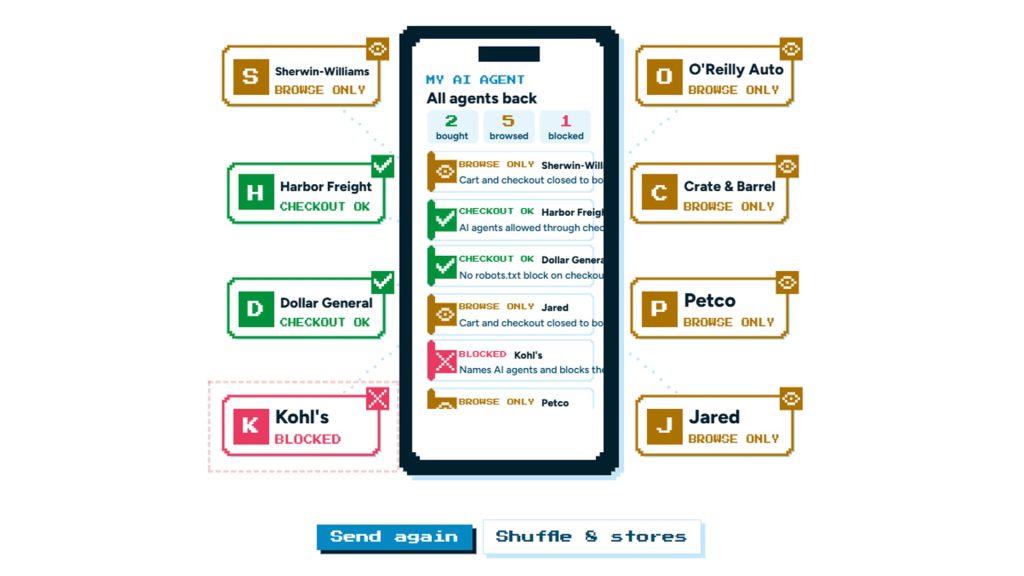
Retailer policies vary widely. Walmart and Sephora have opened their sites to agents, while Amazon, eBay, United Airlines and Kohl’s limit actions or block them. Coach and Gap allow bots to browse but not check out, according to an August audit by Billions Network. Amazon blocked Meta’s Muse in September and sued Perplexity last November over its Comet agent.
Technical failures and questions over responsibility remain significant. A Visa study of 22 models from 12 AI labs found agents failed about 43% of shopping-task test runs. In more than half of those failures, an agent bought a product that did not meet the customer’s stated requirements. American Express said in April it would protect eligible customers from charges related to AI-agent error, while Best Buy says users are responsible for digital-agent transactions.
Agentic purchases currently account for 0.4% of global e-commerce transactions and 0.2% of value, Bain & Co. said. Still, Meta CEO Mark Zuckerberg said in October that roughly a quarter of Muse’s 10 million users shop online through an AI agent, with average spending of $200 per order. Instinct CEO Noah Shinn said companies must work with retailers: “We can obviously move very fast and certain businesses cannot. So, how can we collaborate with them?”