Arabic version: الجيش الأميركي يفجّر مخزونًا من أزيد الرصاص في آيوا
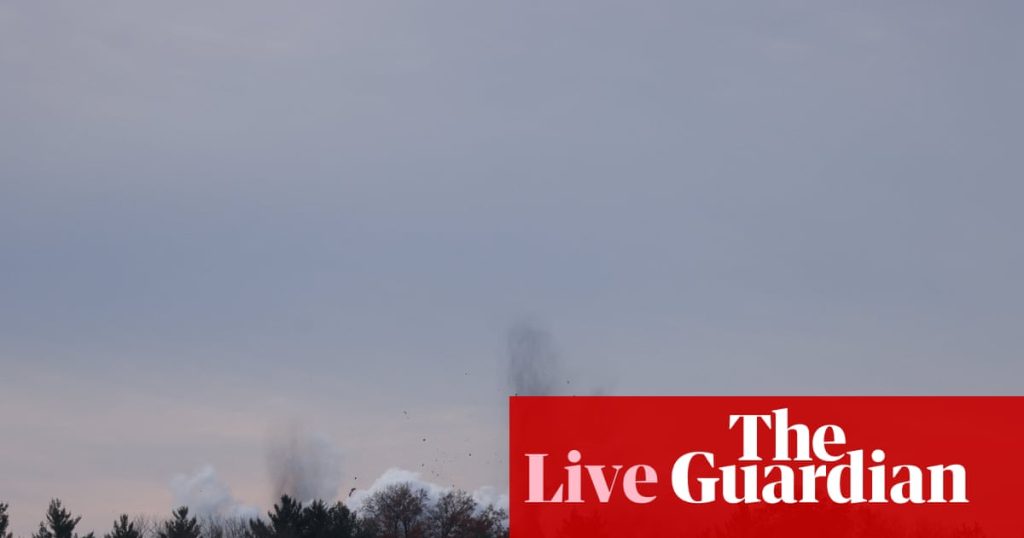
According to The Guardian, the US Army detonated 68 barrels containing nearly 9,500lb of lead azide at the Iowa Army Ammunition Plant in Middletown, Iowa, on Wednesday. The operation proceeded despite public concerns about possible health and environmental effects from lead and other pollution.
A dust plume rose above the area after the blast, while reports said the initial smoke plume dissipated quickly. Cyle Dickens, a reporter and meteorologist with KWQC, said he heard a “big boom”, felt percussion from the detonation and could see a shockwave. The Army said it would provide an update no later than two hours after the explosion.
EPA administrator Lee Zeldin said on CNN that initial feedback was “very positive” and that mitigation efforts had “exceeded expectations”. The Environmental Protection Agency said it had personnel on the ground before the detonation and would continue monitoring during the operation and after it, with immediate and continuous sampling and remediation as necessary.
Federal agencies also mobilized support. The Centers for Disease Control and Prevention activated an emergency response to assist Iowa’s health department with public-health communications, technical assistance and potential post-event health assessments. NASA deployed aircraft, space-based observation capabilities and scientific personnel to collect atmospheric and environmental data, while the Iowa National Guard was providing up to 100 federally activated soldiers for public-safety support and outreach.
Officials had warned residents to follow alerts, shelter indoors or evacuate if in an evacuation zone, and close doors and windows to limit potential exposure to lead dust. A FEMA cellphone alert told residents within 20 miles, including Middletown, Augusta and Burlington, that evacuation was no longer safe or advised and that they should shelter in place.