
Reading in English | Read in العربية (Arabic)
In public discussions within Australian society, questions frequently arise whenever religious or political issues intersect with public order and the well-being of citizens. A community built on the rule of law and cultural pluralism sometimes faces sensitive situations that test its ability to balance freedom of expression on one hand and the protection of security and public order on the other.
Recently, on February 9, 2026, Sydney witnessed a security tension that sparked widespread controversy in political, religious, and media circles. This coincided with the visit of Israeli President Isaac Herzog, who came to participate in an official event to console members of his devastated community after a terrorist attack carried out by Islamist extremists on December 14, 2025, which resulted in the deaths of 15 individuals from the Jewish community.
The event was marked by thousands of pro-Palestinian protesters rallying against President Herzog’s visit to Australia. This led to violent confrontations, with some demonstrators raising slogans deemed offensive or provocative by others, resulting in large-scale protests with the police. Reports indicated that some protesters attempted to organize a march without obtaining prior permits, prompting police to ask them to disperse. In response, the protesters blocked streets to perform prayers, which led to clashes with the police, who intervened to disperse the gathering and secure the roads, especially given the presence of an official event that required heightened security arrangements.
This scene revived an ongoing debate that resurfaces with each similar occasion: where does freedom of expression end, and where does the responsibility for maintaining public order begin? Australian law guarantees the right to peaceful protest and demonstration, but it also imposes clear regulatory conditions, including obtaining necessary permits and not obstructing roads or endangering the safety of others. Therefore, when a march or gathering occurs without a permit, it is natural for the law to intervene and for the police to act within their authority.
Some observers argue that what happened highlights the real challenge faced by pluralistic societies: how to protect individuals’ rights to express their opinions, even when controversial, without descending into chaos or infringing upon the rights of others. Conversely, others emphasize that respecting laws and regulatory procedures is the fundamental guarantee for the continuation of these freedoms, and that violating them weakens trust in the system and threatens social peace.
Ultimately, the debate does not seem poised to end soon, as issues of international politics and external conflicts have become part of the internal discourse in many countries, including Australia. However, what unites most parties is the recognition that the balance between freedom and order is not a secondary option but the foundation of stability in any democratic society.
The state must address the public clearly and openly, avoiding ambiguity or conflicting interpretations. The question is simple and direct: Is it permissible to block roads and perform prayers without prior notice, or is that against the law? If it is allowed, then the protesters have committed no offense. If it is not permitted, the police have a duty to act and enforce the law on everyone without exception.
The real issue lies not in the event itself but in the clarity of the legal framework. This brings us back to the essential question: is this behavior legal or not? People want a straightforward answer, as the absence of clarity opens the door to speculation and accusations of double standards. Authorities are required to announce a clear and specific position so that everyone knows their rights and responsibilities, allowing individuals to claim their rights within the legal framework and putting an end to this futile Byzantine debate that has divided politicians and the public. This discourse does not serve the protesters or the country that has offered them safety, rights, and a dignified life that their homelands could not provide. Therefore, a clear legal stance is needed to eliminate confusion and protect everyone’s rights.
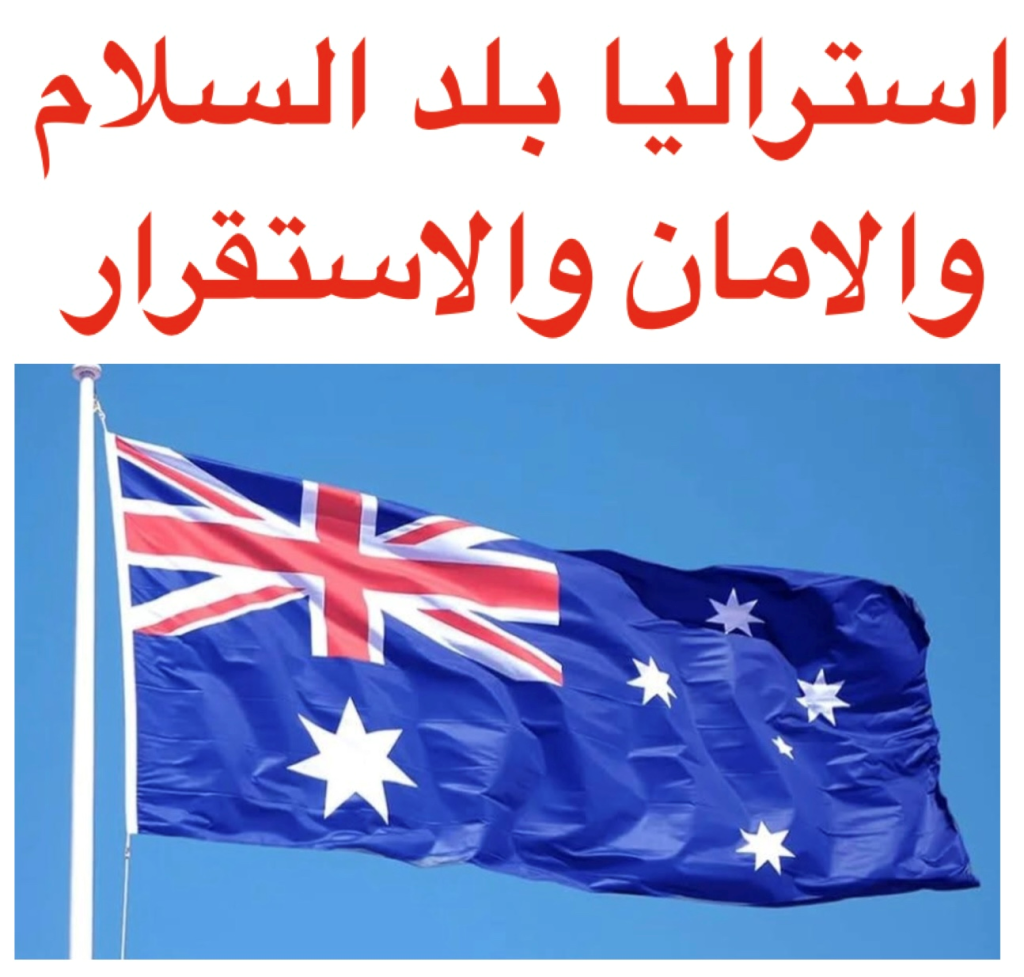
May God preserve Australia, this geographically distant land, removed from conflicts and political upheavals, and from the ever-volatile Middle Eastern volcano. May it remain a homeland free from the wars of others, where seeds of hatred and division are not sown, but instead remain a secure nation that welcomes all, a land of peace and stability for anyone seeking a safe and dignified life.