












Arabic version: احتجاجات عمال الملابس في بنغلادش تجدد الدعوات إلى التسوق الأخلاقي
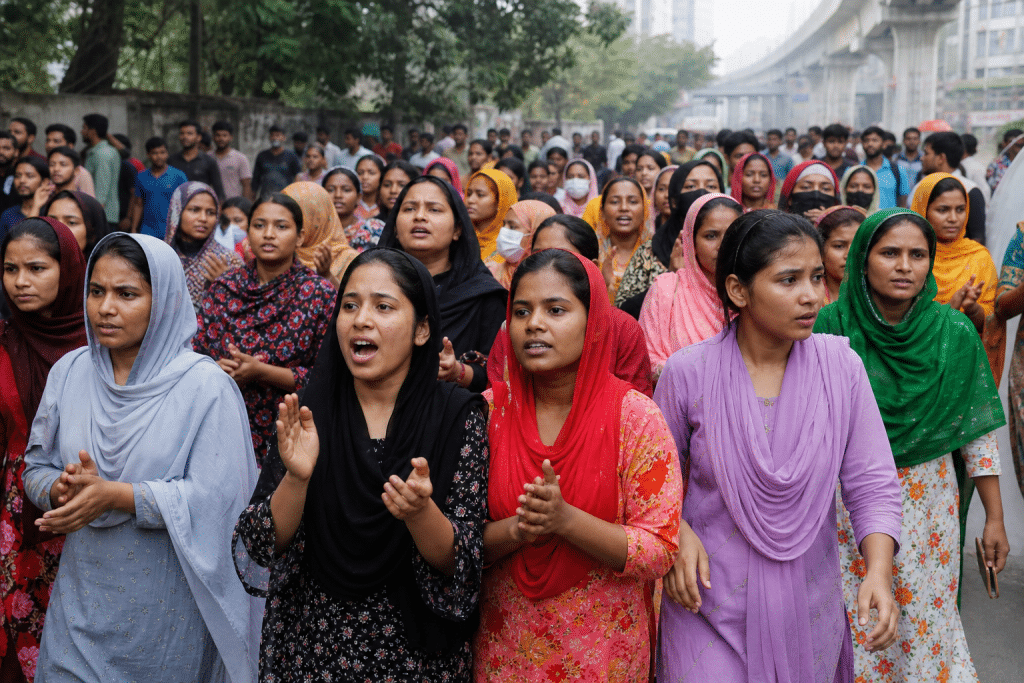
According to ABC News, garment workers in Bangladesh have walked off the job over the past week seeking higher wages and stronger working conditions. Thousands have protested and clashed with police across Dhaka, with dozens injured, including police officers who used tear gas and stun grenades to disperse workers.
The unrest shut down hundreds of factories, prompting the government to establish a wage board to review pay in the garment sector. The board reached an agreement on a minimum-wage increase but said it would not announce the outcome until December. Many workers remained uncertain about what the planned announcement would mean.
Bangladesh’s garment industry employs about 4 million people, supplies global brands including H&M, Zara and Gap, and generates more than 80 per cent of the country’s export earnings. University of New South Wales Australian Human Rights Institute director Professor Justine Nolan said the protests followed years of concerns over working conditions and wage rates.
Professor Nolan said contracting and subcontracting within global supply chains can make it difficult for brands to trace production, while low margins can place pressure on workers’ wages, overtime and access to a decent living wage. Ethical Clothing Australia national manager Arron Goldman said shoppers should question very cheap clothing and seek brands that can demonstrate ethical supply chains.
Goldman said Ethical Clothing Australia recovered about $926,000 in the past financial year from Australian businesses that had underpaid workers, used incorrect or no contracts, or failed to pay super. He and Professor Nolan urged consumers to ask brands where products and factories are located, and whether companies examine lower levels of their supply chains.