











Arabic version: تدفق المهاجرين إلى سبتة يعمّق التوتر بين إسبانيا والمغرب
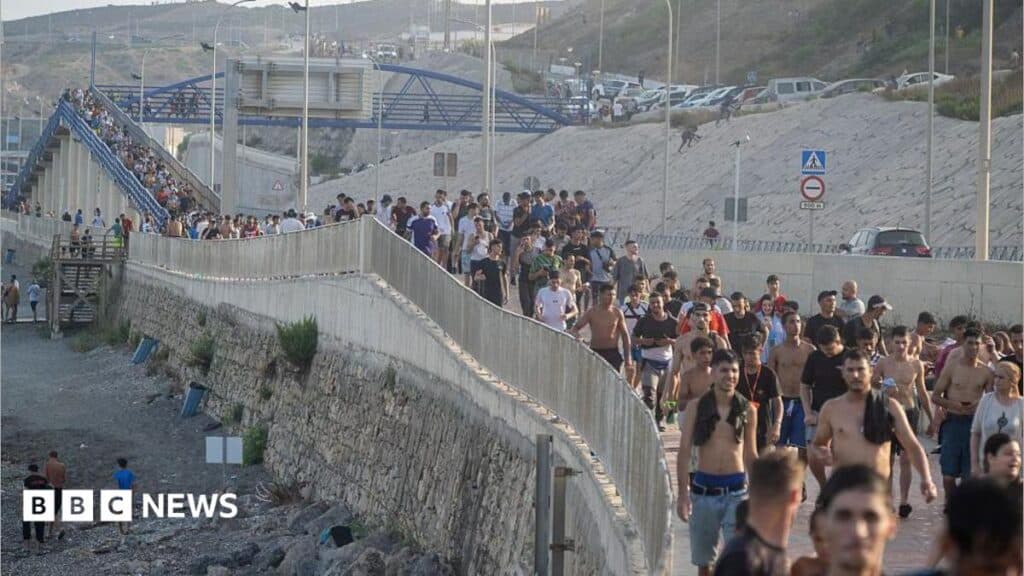
According to BBC News, as many as 60,000 migrants swam, climbed or scrambled into Spain’s North African city-territory of Ceuta in less than 24 hours. Many were reported to be Moroccan locals, and numbers were beginning to fall as people returned to Morocco or were processed by Spanish authorities. At least 57 people died during the crossings, many apparently by drowning.
Prime Minister Pedro Sánchez travelled to Ceuta on Friday, accusing migrant traffickers of exploiting a recent Supreme Court decision that restricted the government’s ability to immediately deport people arriving by sea. Spain expanded its military and police presence as it dealt with arrivals who did not leave voluntarily and did not qualify for a right to remain.
The scale of the crossing was far greater than the previous major incursion in May 2021, when 10,000 migrants entered Ceuta. The latest episode appeared to have been enabled by Moroccan border guards standing aside, allowing mostly younger and middle-aged men, as well as some women and children, to attempt to enter the EU territory despite the risks.
The surge has renewed attention on relations between Morocco, Algeria and Spain over Western Sahara. Spain’s 2022 decision to support Morocco’s autonomy plan for the territory angered Algeria, while the 2021 Ceuta influx followed Madrid’s decision to allow Polisario leader Brahim Ghali to receive coronavirus treatment in a Spanish hospital. Spain is particularly exposed to migration pressure because Ceuta and Melilla have land borders only with Morocco, although Spain maintains strict controls on travel from the two cities to the mainland.