

Arabic version: آثار أقدام ديناصورات تربط حجر بريزبن الرملي بماضٍ ما قبل التاريخ
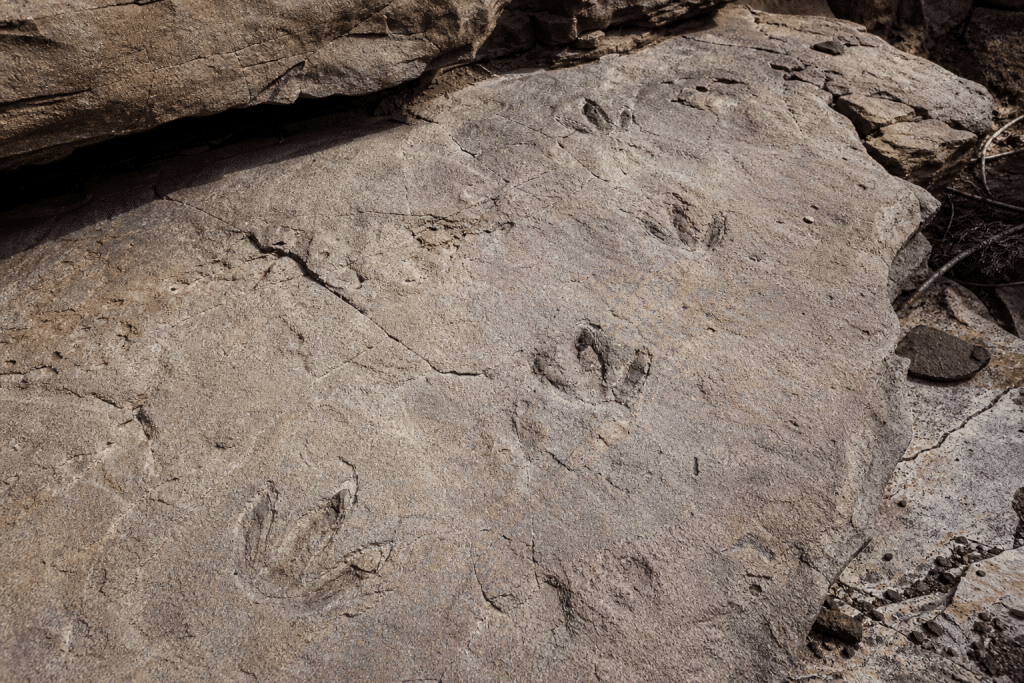
According to ABC News, fossilised dinosaur footprints about 230 million years old have been identified in Brisbane sandstone from Petrie’s Quarry, the source of stone used for some of the city’s best-known colonial-era buildings.
University of Queensland palaeontologist Dr Anthony Romilio examined two separate pieces of Brisbane-mined sandstone given to the university’s Dinosaur Lab. He said the marks appear to be tracks from a sauropodomorph, an ancient long-necked, long-tailed dinosaur that walked on its back legs. One footprint was found by a teenager at Petrie’s Quarry more than six decades ago, while both sandstone pieces were discovered during the 1950s.
Petrie’s Quarry, in what is now the inner-north suburb of Albion, was opened by the Petrie family in the 1860s. Educator Sue-Belinda Meehan said the quarry supplied sandstone that “literally built Brisbane”. The General Post Office, All Hallows School and Old Customs House were made with the creamy white stone, while St Stephen’s Cathedral, St John’s Cathedral and St Paul’s Presbyterian Church also feature Petrie sandstone.
Dr Romilio said Albion’s white hills consist of layers of sand deposited when dinosaurs crossed a broad, shallow river landscape. He said the area would have had few trees and would have been shallow enough for a two-legged dinosaur to walk through. Aquatic life also lived in the environment, including giant salamander-like animals known from the same period.
Although quarrying has ceased, remnants of Petrie’s Quarry remain visible from Crosby Road near St Margaret’s. Dr Romilio said dinosaur evidence can be found in a capital city when the right-aged material is examined closely, while Ms Meehan said Brisbane’s discoveries show Queensland’s dinosaur relics are not confined to the outback.