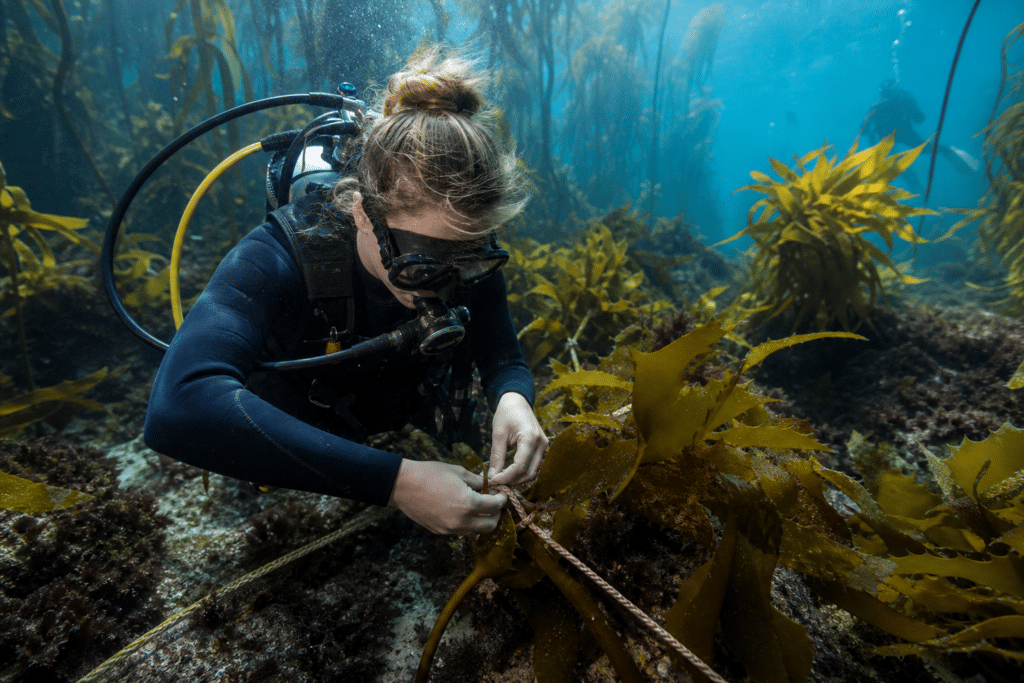













Arabic version: متدربون في الغوص يساعدون على استعادة غابات عشب البحر العملاق في تسمانيا
According to ABC News, a new live-in internship at Eaglehawk Dive Centre is giving paid participants hands-on experience restoring giant kelp forests around Tasmania’s Tasman Peninsula. Scientists estimate warming waters and overgrazing by invading sea urchins have wiped out about 95 per cent of giant kelp forests in eastern Tasmania.
The month-long winter program is part of the Tasmanian Giant Kelp Restoration Project. Six participants were selected for the 2026 intake, split into groups of three in June and July. They include Linnea Bird, a 25-year-old Masters student from the United States, who travelled across the Pacific to join the work.
Interns plant kelp by hand using a technique developed by Scott Ling from the University of Tasmania’s Institute of Marine and Antarctic Science. Kelp spores are grown on a spool in a laboratory, then divers wrap the material around the base of existing seaweed at protected sites. Participants also clear competing kelp around restoration areas to support juvenile giant kelp.
Marine ecologist Scott Bennett said restoration results have been mixed as warm summer temperatures, herbivorous fish and major storms can damage restored patches. When conditions are suitable, however, a forest can regrow within a year. He said selecting sites that remain suitable for giant kelp growth, while protecting surviving forests, is crucial.
The program costs about $3,000 per participant, covering board, food and diving equipment for a month. Dive instructor Pauline Nuttens said the immersive experience builds restoration capacity while giving young people diving experience. Winter planting also requires interns to adapt to Tasmania’s cold water with thick wetsuits and specialised buoyancy-control techniques.