











Arabic version: فيلم وثائقي يسلّط الضوء على فجوة زراعة الكلى لدى شعوب الأمم الأولى
According to ABC News, a new documentary is drawing attention to barriers Aboriginal and Torres Strait Islander people face when seeking kidney transplants. Federal government data shows Aboriginal and Torres Strait Islander adults are twice as likely as non-Indigenous adults to have chronic kidney disease, while transplant access remains lower.
The documentary, In Contrast, was created by Transplant Network founder Peter Crumpton, an organ transplant recipient. Crumpton travelled with Adelaide University public health researcher Kelli Karrikarringka Owen to remote communities, interviewing about 10 Aboriginal and Torres Strait Islander patients, carers and medical professionals about kidney-transplant experiences. It has premiered in Sydney and Adelaide, with further Australian screenings being planned.
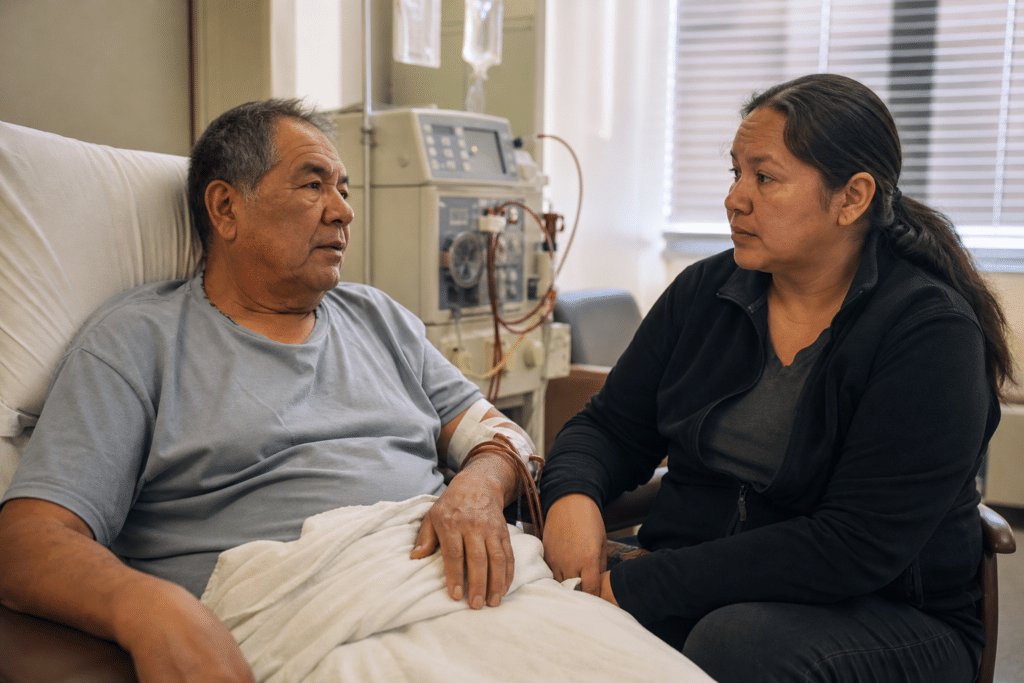
Owen, a Kaurna, Narungga and Ngarrindjeri woman from Murray Bridge, lives with Alport syndrome, a genetic kidney disease. Before receiving a kidney through the national donor program in 2016, she spent about three years travelling roughly an hour to Adelaide every second day for five hours of dialysis. She said family members had offered to donate organs, but their requests were initially refused.
Data from 2022 showed that 16 per cent of First Nations people receiving kidney replacement therapy had a functioning kidney transplant, compared with 48 per cent of non-Indigenous Australians. Adelaide University nurse researcher Professor Janet Kelly said kidney disease can cause substantial loss of kidney function without symptoms and is known as a “silent killer.” She said rural and remote communities face particular access challenges because many services are based in major cities.
Professor Kelly said earlier research suggested First Nations donors could face a greater risk of kidney disease, but more recent studies showed different outcomes. She said it is increasingly recognised internationally that First Nations people can appropriately donate kidneys following assessment where their risk is low. Owen said she hoped the film would raise awareness: “It’s a silent disease and we don’t want to make it silent anymore.”