











Arabic version: مشاهدات آكل النمل الشوكي تعزز الآمال في لونغتالانانا
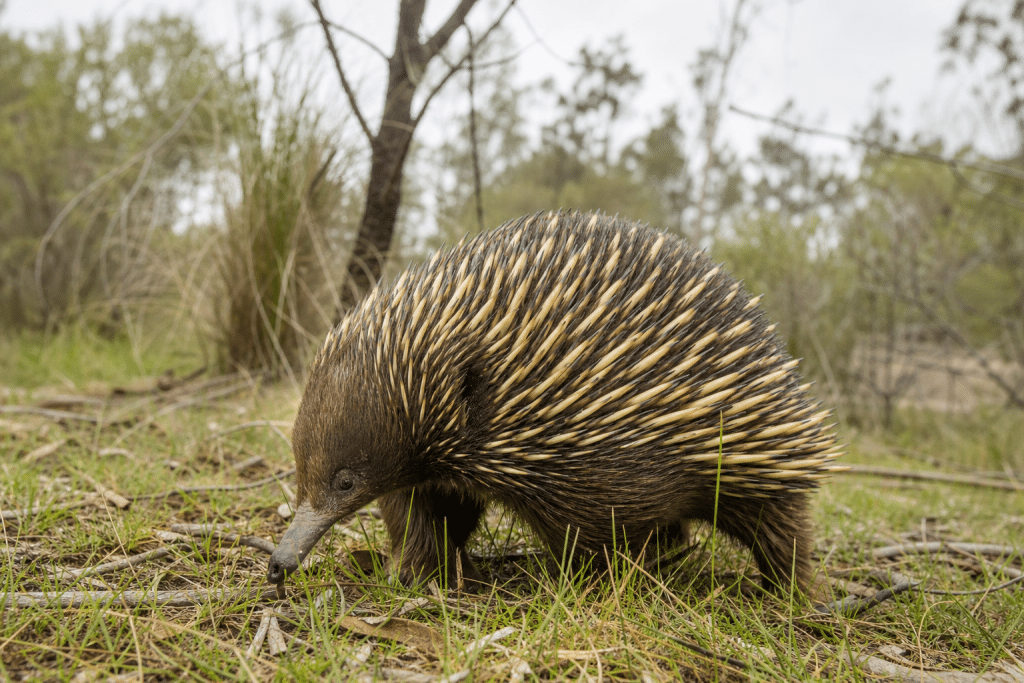
According to ABC News, new trail-camera footage and a ranger’s encounter with an echidna have raised hopes that the species is recovering on Aboriginal-owned Lungtalanana/Clarke Island in Tasmania’s Bass Strait. The animal, known as trimanya in palawa kani, had not been encountered in person on the island in decades.
Pakana ranger Tasha Cooper found an echidna curled up in a cage set to trap feral cats in September. “The excitement was overwhelming. I didn’t know if I was going to cry or scream or what,” Ms Cooper said. Trail cameras have now recorded echidnas at four separate locations across the island.
In 2023, a trail camera captured two images of an echidna months apart, though the photographs were not discovered until 2024 because of the volume of images needing review. WWF Australia had dubbed that animal “Australia’s loneliest echidna”. Further images were recorded in 2025 and three more this year, prompting rangers to seek expert advice on whether the sightings represented one animal or several.
University of Tasmania echidna expert Stewart Nicol said the species’ cryptic nature made population estimates difficult without tracking. But he said that, given the island’s size and about four or five sightings, he would be surprised if there were fewer than a dozen echidnas, adding there could be more than 20 or 30.
The sightings follow a 2014 bushfire that burnt through 80 per cent of Lungtalanana/Clarke Island and destroyed 98 per cent of its vegetation. The Tasmanian Aboriginal Centre’s Lungtalanana Restoration Project aims to repair habitat, remove invasive species and track native wildlife, while seeking to return locally extinct animals including Bass Strait wombats, Bennett’s wallabies and long-nosed potoroos. Healthy Country ranger Tooarn Brown said removing feral cats was the priority before major rehabilitation began.