












Arabic version: الاتحاد الأوروبي يواجه ضغوطًا لمعالجة قانون عقوبة الإعدام في إسرائيل
The European Union is under increasing scrutiny as Israel prepares to implement a new death penalty law targeting Palestinians. According to Al Jazeera, National Security Minister Itamar Ben-Gvir has boasted that a new prison wing is under construction where the killings will take place, and new “red” uniforms for the Palestinian prisoners have already been ordered.
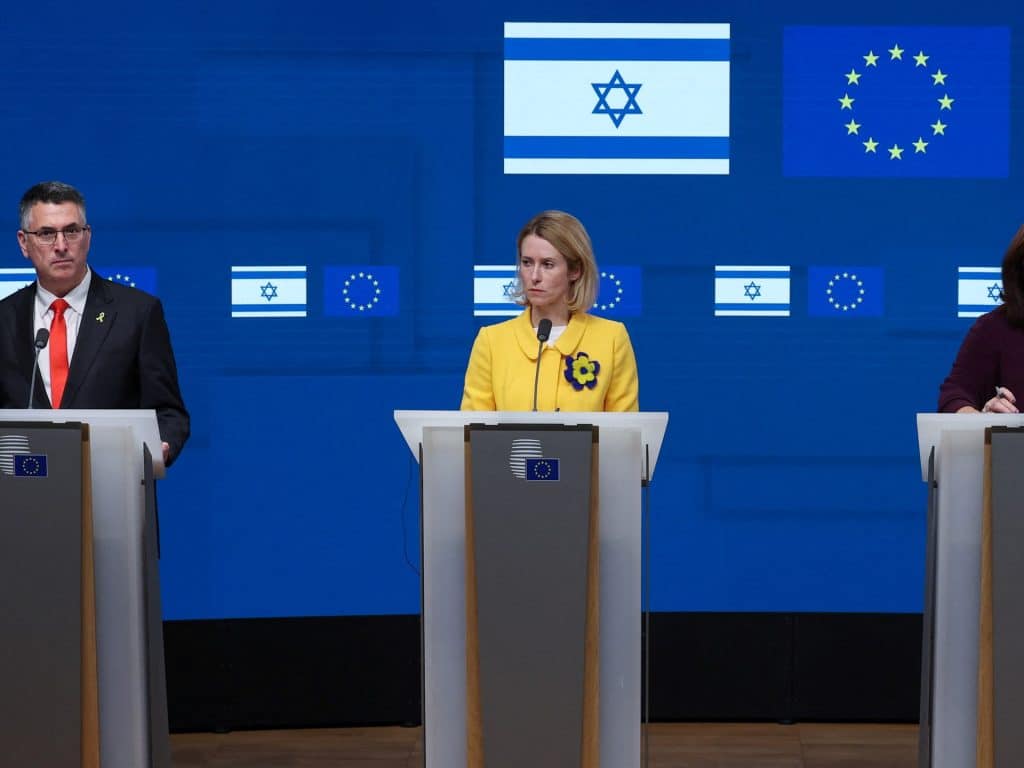
Despite the severity of the situation, the EU’s response has been criticized as inadequate. After the Knesset’s National Security Committee approved the bill, EU spokesperson Anouar El Anouni described the legislation as “deeply concerning” but simultaneously lauded Israel’s supposed “previous principled position, with its obligations under international law, as well as its commitment to democratic principles.” This response has raised eyebrows, given Israel’s history of occupation and human rights abuses.
In a joint statement on March 30, several European nations, including the Netherlands, France, Germany, Italy, and the United Kingdom, expressed their concerns without proposing concrete actions. Following the bill’s passage on March 31, the EU reiterated its opposition to the death penalty but failed to acknowledge the direct impact on Palestinian prisoners, many of whom face military courts with a near-total conviction rate.
The EU’s stance has drawn criticism for its perceived hypocrisy, particularly in contrast to its firm opposition to the death penalty in other countries. As the situation escalates, more than one million Europeans have signed a petition calling for the suspension of the EU-Israel Association Agreement, reflecting a growing demand for accountability and justice for Palestinians.
As the Foreign Affairs Council convenes on April 21, the EU faces a pivotal decision: to act decisively against Israel’s actions or risk complicity in ongoing human rights violations. The outcome will not only test the EU’s commitment to human rights but also respond to the rising public demand for justice in the Israeli-Palestinian conflict.