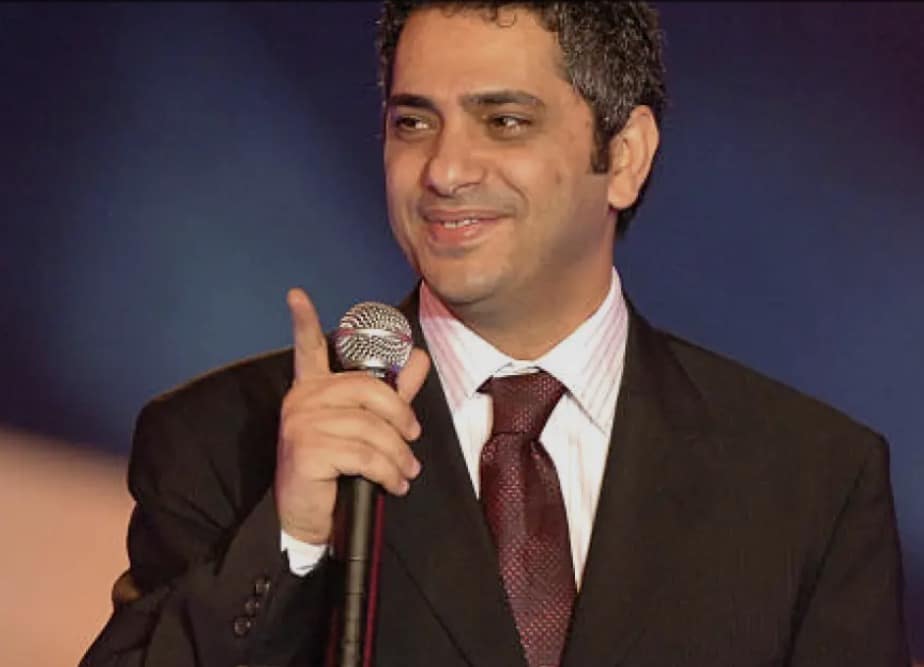
Not every comeback is merely a fleeting entertainment item, nor is every moment on stage finished when the lights go down. Some voices go beyond singing to become part of collective memory, and some artists are not measured by how often they appear but by their ability to remain in people’s minds even when they are absent from the scene.In that sense, Fadel Shaker’s return to the Abu Bakr Salem Theater in Riyadh is more than a renewed meeting between an artist and his audience. It is a moment that restores a song’s place in memory and brings back a voice tied to years of love, longing, and waiting—one that remained present in his listeners’ lives despite changing circumstances.Some artists need constant presence to maintain their status, while others have built a legacy that makes their absence an occasion to discover how deeply they are felt. Fadel Shaker, with work that left its mark on Arabic song, belongs to the latter group: his relationship with the public cannot be reduced to appearances, because what he created over the years transcended fame and entered a deeper realm—the realm of memory and feeling.Fadel has returned to the stage, but the more important question is not how he returned, but how his voice managed to keep its place in the hearts of his fans throughout years of absence.Fadel Shaker… a talent that knows how to reach the heartFrom the start of his career, Fadel Shaker had a particular quality that was not only about a beautiful voice but about how he used that voice to express subtle human emotions. His performances have a clear warmth, a timbre touched by melancholy, and a way of handling words that makes a song feel more like a personal confession than a conventional vocal display.His impact was not only in hitting the right notes but in the closeness he could create between the lyric and the listener. Some voices impress with technique, others give a song character, and others make the listener feel that what they are hearing touches an experience they lived or an emotion they could not put into words.It is precisely in that space that one of Fadel Shaker’s greatest artistic strengths appears: his ability to present emotion in a way that feels close to people—unaffected, connected to the spirit and meaning of the song.Emotional singing does not always require exaggerated delivery; it requires understanding what lies behind the words and recognizing that sadness is not a single degree, longing is different from reproach, and nostalgia can hold a quiet joy as well as pain. These emotional subtleties give certain voices their uniqueness and allow them to accompany listeners through different stages of life.What distinguishes Fadel Shaker’s experience is that his voice did not belong to one emotional color only. He found his way into listeners’ hearts through songs that varied in subject while sharing that recognizable tone that fans recognize from the first moments.ScreenshotFrom “Met’awwad” to “Ya Ghayeb”… when a song becomes memoryIn Fadel Shaker’s career, songs are not mere entries on a tracklist but milestones tied to personal experiences and varied memories across generations of listeners.From “Met’awwad” and “Law ‘Ala Albi” to “Anseik,” “Ya Ghayeb,” “Allah A’lam,” and “Saharni Al Shawq,” his songs have been present in tales of love, longing, and reproach, in moments of separation when people look for words that mirror what they feel but cannot always say.Here lies one of art’s most important functions: giving feelings a language and turning individual experiences into a shared emotion so every listener can find something of their own in a song even if the artist never knew their story.How many people have replayed an old song not just to hear the melody but to retrieve a time gone by? How many voices have become linked in memory with a missing face, a distant place, or a chapter that will not return, yet still summon them in a few moments?A song that successfully touches that space does not end with the era of its popularity; it begins a new life inside its listeners’ memories. Over the years it may become part of their personal narratives, summoned by occasions, coincidences, or a sudden pang of nostalgia that needs no explanation.Thus, the public’s continued attachment to Fadel Shaker’s songs cannot be read simply as nostalgia for a past musical era. It is evidence that some works can outlive their time and become part of the emotional experience of those who listened.True art does not only exist in its moment; it leaves what allows it to return in other times.ScreenshotThe Abu Bakr Salem Theater… where the voice meets the audience’s memoryA theater in moments like this has a meaning that goes beyond its physical space. When an artist meets his audience after an absence, the encounter is not confined to the present; it folds in years of listening, waiting, and the memories the songs created away from the spotlight.In Riyadh, Fadel Shaker’s return to the Abu Bakr Salem Theater carried that emotional significance: the voice fans knew from recordings and widespread works returned to the shared space of live encounter, where a song becomes a mutual experience between the performer and those who came to hear him.The special value of such a return lies in the fact that the audience does not receive the voice alone; they recover what was linked to it—life stages, feelings, and experiences. A song heard years ago can bring someone, in an instant, back to their early days, to a love story, or to someone who is no longer close to them.It is the power of music to compress distances between times and to make the past feel close to the present without erasing the changes between them.Still, the true worth of any artistic return is not completed by merely recalling memories, however deep. The stage opens the door to a new phase in which the real challenge is continuing to create—offering work that adds to the journey and confirms that talent can renew itself, not just relive the past.Nostalgia gives the return its meaning, but new work gives the future its shape.ScreenshotBetween the human and the artist… a perspective beyond absenceOne cannot view any artist’s human journey as a straight line without transformations and complications. Life brings tests, decisions, and consequences, and a person may find themselves at different stages facing questions that are not easily answered.From Fadel Shaker’s story, with its successes, absences, and thorny moments, we can draw a broader human idea: a person is not defined by a single stage, and the future is tied to what one chooses to do in light of past experiences and what one has learned.Understanding life’s complexities does not mean dismissing responsibility, and love does not require ignoring difficult questions. Artistic appreciation can be honest and clear without becoming an all-encompassing verdict on every aspect of an artist’s life or demanding that others abandon their opinions and positions.This highlights the importance of distinguishing between the value of an artistic work and the artist’s human path. A song keeps its effect in the minds of those who loved it; talent remains a legitimate object of praise and critique; the human experience remains a broader field for reflection, accountability, and learning.True maturity is not about erasing or ignoring the past but about confronting it, learning from it, and building a more aware and stable new phase.From this viewpoint, Fadel Shaker’s return can be seen as an opportunity to open a new chapter in his artistic career—one titled continuing creativity, presenting works worthy of his talent, and using years of experience to craft a more mature artistic expression.New beginnings derive their value not from erasing what came before but from their ability to build something better.ScreenshotThe audience’s love… a status tested by timeIn the world of art, tastes change, listening habits evolve, and new voices emerge each era. Still, certain experiences can keep their place because the relationship they build with the audience goes beyond temporary popularity.The audience’s love is not a number of views or applause that ends with the concert; it is a relationship formed over time—through works that touch people, memories linked to them, and personal experiences that give them different meanings for different listeners.People may disagree in their evaluation of an artist or the reading of a career, but this disagreement does not erase the fact that a song has an independent effect on the lives of those who heard it and that some voices can retain emotional presence even when their owners stay away from the stage.For Fadel Shaker, the continued circulation and recall of his songs by his fans reflect an emotional place that cannot be explained by vocal beauty alone. It is the product of a long relationship between artistic works and an audience that found in them reflections of their feelings, expressions of their experiences, and reasons to return whenever they needed to recover an old emotion.Calling an artist a legend should not be mere hyperbole born of excitement; it should be a judgment based on an artistic impact that transcends its time, works that can reach different generations, and a uniqueness that cannot be reduced to momentary success.A status built by time is firmer than the status created by a single moment, and the influence that remains in people is one of the most important measures of an artistic experience’s value.A story of love that began before the returnFor me, the story with Fadel Shaker did not begin with this comeback, nor is my fondness for him tied to a new event. It is an emotional relationship that started from the earliest days, when I found in his voice something beyond admiration for a singer—something that became part of my musical taste and personal memory.From my first steps in media, I carried a special dream: to one day have the chance to interview him, to meet the artist whose voice accompanied stages of my life and whose songs provided a space to express feelings that are sometimes hard to put into words.It was not just a wish to meet a famous name, but a desire tied to an artistic value I loved and a voice that left its mark on me long before I considered writing about him professionally.So writing about his return carries for me two converging but not identical dimensions: a professional one that tries to read the artistic experience objectively, and a personal one that admits some artists travel with us through life and become part of our private stories.I know personal affection does not replace analysis, and sentimental attachment does not exempt the writer from the responsibility of choosing words precisely. Indeed, the honesty of the experience gains value when the writer can express it in a language that respects both the art and the reader.I wished to interview him one day, and that dream still holds its special place within me. But I also believe writing can open another kind of meeting—a meeting between the artist and his impact, and between what we hold in memory and what we try to pass on to others.Some dreams don’t lose their worth by being delayed, and some affections remain present even before they find a chance for direct expression.ScreenshotBack to the stage… an opportunity to write a new chapterFadel Shaker’s return to the stage is not the end of the story of his absence but the start of a new chapter that can gain value through work, creativity, and the ability to communicate with the audience.The past gives the artist credit, but it does not free him from the responsibilities of the present. Past successes open doors to appreciation, but they do not substitute for new works that prove the talent can still renew itself and that long experience can become a source of maturity and depth.What we hope for Fadel Shaker at this stage is that his return becomes a space for artistic and human stability, that his upcoming work befit his voice and uniqueness, and that music remain the field where he meets his audience through words, melody, and feeling.Art in its noblest sense does not need to be a battlefield; it can give people a shared space for beauty even when views and positions differ. Its power is not in erasing differences but in reminding us that human beings still need what touches their souls—moments of reflection, joy, or longing.Fadel Shaker has returned to the stage while his songs have remained present in his fans’ memory. Between presence and absence, a truth emerges that deserves reflection: an artist may step away from the limelight, but his works continue their journey in people’s lives, and a voice tied to sincere memories can find its way back to hearts.As for me, I was nicknamed “Fadel’s Star,” and I write about this return with open affection and the conviction that an artist’s value needs no exaggeration to be seen—only a fair reading that looks at his talent, impact, and what he can offer in the future.Fadel, there are voices we like when we first hear them, and there are voices that accompany us until they become part of our memory. When those voices return to the stage, we do not only recover the songs; we recover a piece of ourselves and the days we lived with them.Welcome back to the stage, to the song, and to an audience that kept a place for you in its heart. Perhaps the most beautiful outcome of this phase will be that the return becomes a more mature and creative beginning, giving music another opportunity to do what it does best: get close to people, give their feelings a voice, and turn a passing moment into a lasting memory.Some artists give us songs we love; some leave in our lives something that makes us return to them whenever we long for a time gone by.Fadel Shaker, for his fans, is not just a voice that returned to the stage but a voice that remained present in memory even when he was away from the lights.ScreenshotScreenshot