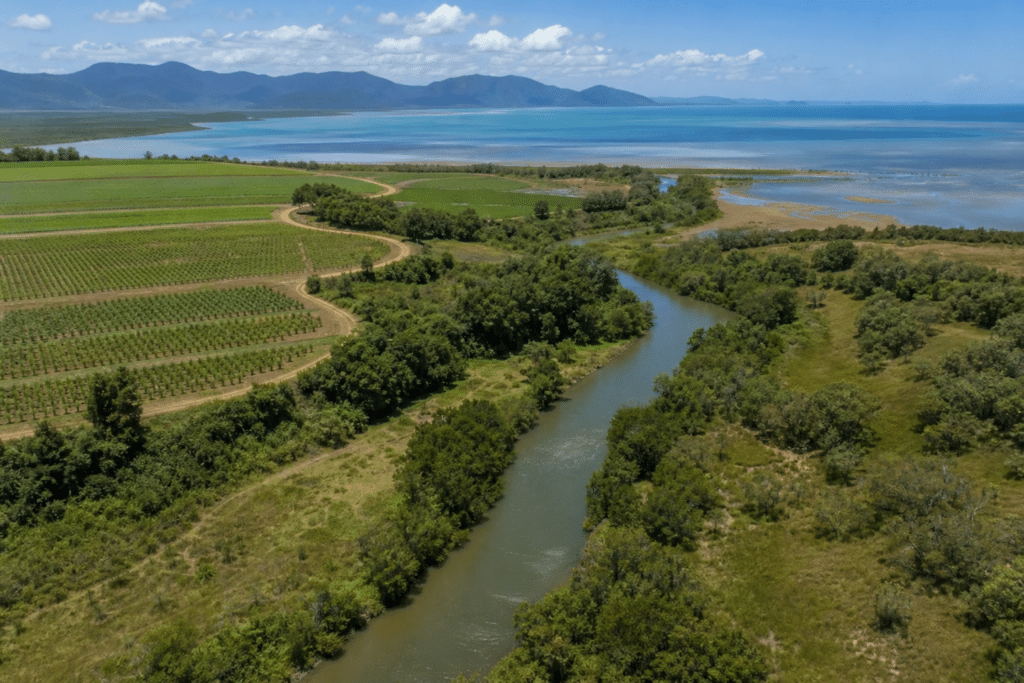













Arabic version: تغييرات زراعية مرتبطة بتحسن مياه أحواض الشعاب المرجانية
According to ABC News, two studies have linked changes in farm management, including reduced synthetic fertiliser use, to improved water quality in catchments flowing into the Great Barrier Reef.
One study analysed nearly 40 years of water-quality records at nine sites, covering a catchment area about the size of New Zealand. CSIRO researcher Rebecca Bartley said 75 per cent of the monitored sites showed water-quality improvements, while sites without improvement were generally in smaller catchments.
A separate fertiliser study compiled 100 years of records across the entire Great Barrier Reef catchment area. TropWATER JCU’s Stephen Lewis said nitrogen and phosphorus fertiliser application fell by up to 25 to 50 per cent across most basins over the past one to two decades.
Aaron Davis of TropWATER JCU said researchers were able to connect substantial fertiliser reductions over more than 30 years with significant declines in dissolved inorganic nitrogen concentrations at the ends of catchments. The findings could support reef recovery, as researchers say corals and seagrasses recover more quickly when water quality is in good condition.
Sugarcane growers have altered when and how they apply fertiliser to limit nutrient runoff. Near Cairns, farmer Neil Maitland said he applies fertiliser early after the middle of September to avoid the first flush of heavy summer rain, while using sunn hemp and other cover crops to add nitrogen to soil. Australia is due to report to UNESCO in 2028 on progress under its Reef 2050 water-quality plan.