












Arabic version: عائلات غزة تواجه خيارات صعبة بين الرعاية السنية والاحتياجات الأساسية
According to Al Jazeera,
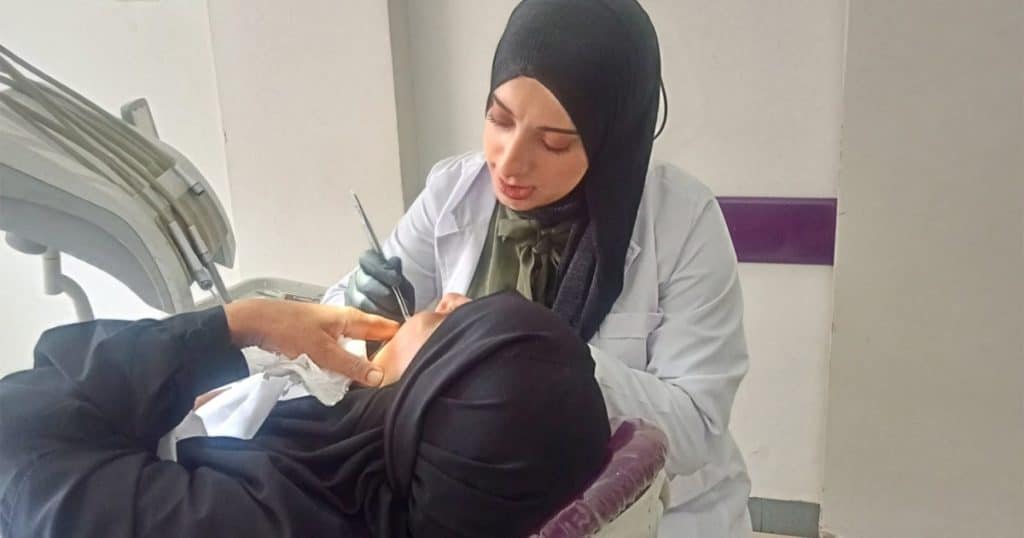
In Gaza’s Nuseirat refugee camp, residents are grappling with a painful dilemma: seek necessary dental treatment or prioritize food for their families. Fifty-year-old Murad Haji recently returned to the dentist’s office after enduring months of tooth pain. With a treatment cost of 400 shekels ($142), he faced the heartbreaking decision of whether to spend money on dental care or provide for his children. “Four hundred shekels is a lot… My children need it more,” Haji lamented.
Dental shortages due to the ongoing Israeli siege have drastically inflated treatment costs, forcing many to delay necessary procedures until infections worsen. Dr. Liza Hassouna, Haji’s dentist, noted that patients often come in only after their conditions have escalated, leading to more complicated and costly treatments. Haji’s situation illustrates a broader trend in Gaza, where financial constraints leave many relying on painkillers or living with untreated pain.
The economic situation in Gaza has severely impacted healthcare, particularly in dentistry. Costs for essential supplies have skyrocketed, with items such as anesthetics and dental materials becoming unaffordable for most clinics. Dr. Nidal al-Sindi, a clinic manager, reported that the price of anesthetic has surged from 150 shekels ($53) to about 500 shekels ($178), while dental impression materials now range from 5,000 to 6,000 shekels ($1,778-$2,133).
The World Health Organization (WHO) indicates that approximately 84 percent of healthcare facilities in Gaza have been damaged or destroyed since the beginning of Israel’s genocidal war on the enclave in October 2023. This destruction has forced many medical providers to operate from temporary clinics with limited resources, exacerbating the challenges faced by patients in need of dental care. As the healthcare system continues to deteriorate, many Palestinians are left with few options, facing the harsh reality of choosing between pain relief and basic sustenance.