












Arabic version: جينغيراه ترفض الغاز المستخرج بالتكسير لمركز بيانات في غرب أستراليا
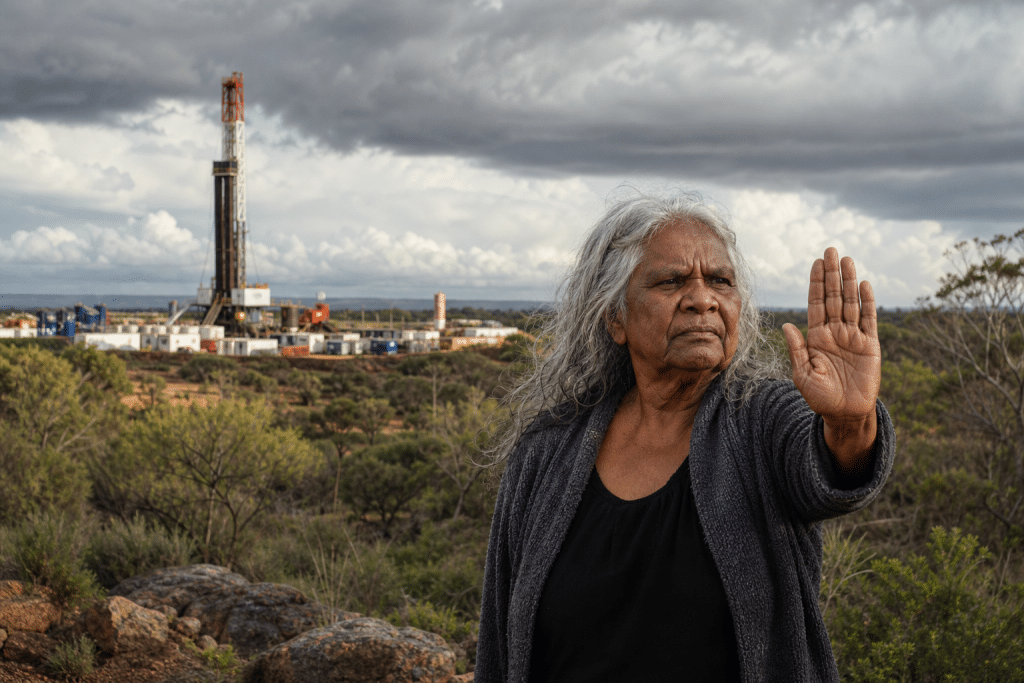
According to ABC News, Gingerah Energy says fracked gas will not power its proposed Project Meridien data centre and renewable energy hub on Karajarri country near Broome in northern Western Australia. The company referred its plan for a 1,000-megawatt data centre to the Commonwealth’s environmental agency last month and intends to refer it to the WA Environmental Protection Authority within weeks.
Chief executive Jop van Hattum said the project, which Gingerah hopes to deliver by 2030, would initially use solar, batteries and gas, with wind added later. He said renewable sources would supply more than 85 per cent of total energy demand at first, increasing as the development expands towards one gigawatt capacity. Gingerah targets renewable energy capacity of 94 per cent, while gas would be sourced from the domestic gas market, most likely from Karratha.
Environmentalists had raised concerns that gas for the facility could be sourced through fracking in the Kimberley. Environs Kimberley director Martin Pritchard called for more clarity, questioning whether supply could come from companies planning projects in the region. While fracking is not banned in the Canning basin, no projects there have received the approvals required to proceed.
Gingerah is a joint venture involving the Karajarri Traditional Lands Association, Dutch geodata company Fugro and Longreach Capital Investment, which owns Theia Energy. KTLA director Justin King Senior said the project’s gas would “absolutely not” come from fracking and that fracking would never be part of its energy make-up. The development is proposed for the KTLA-held Frazier Downs pastoral lease, about 100 kilometres south of Broome.
Grattan Institute energy expert Alison Reeve estimated the centre would require about eight terajoules of gas a day during its initial 240-megawatt phase and about 32 terajoules at full capacity. She said this could add about 1 per cent to Western Australia’s total gas demand, but was not large enough to drive additional gas exploration or fracking in the Kimberley.