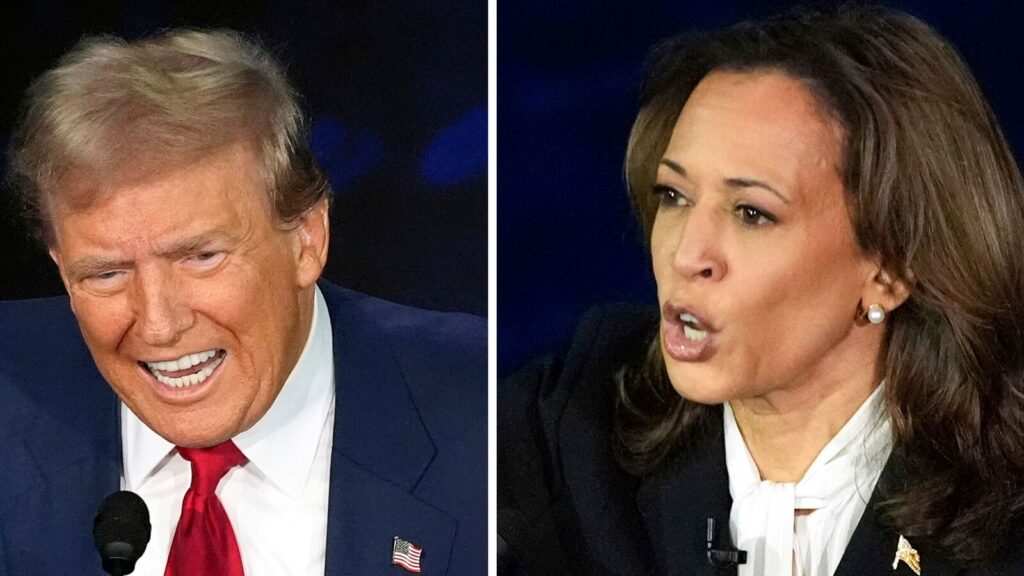










In the final stretch of the 2024 presidential campaign, Vice President Kamala Harris has intensified her critique of Donald Trump, questioning the former president’s stamina and suitability for office as he faces renewed scrutiny over his refusal to engage in key media appearances. Harris, the Democratic nominee, used a campaign event in Michigan on Friday to hammer Trump’s physical and mental fitness, pointing to reports that suggest the 78-year-old Republican is “exhausted” after canceling several interviews.
Trump’s refusal to participate in additional interviews with major networks like NBC, CNBC, and CBS, and his decision to opt out of a second debate with Harris after a widely regarded poor showing in the first debate, have raised concerns among critics. According to a report by Politico, a Trump aide told an interviewer negotiating a potential sit-down that the former president was too exhausted to make further appearances. The Trump campaign quickly dismissed the report as “detached from reality,” but Harris seized the moment to raise doubts about her opponent’s readiness for the White House.
“If you are exhausted on the campaign trail, it raises real questions about whether you are fit for the toughest job in the world,” Harris remarked to a crowd of enthusiastic supporters in Michigan, a pivotal swing state. Harris, who is turning 60 this weekend, emphasized her own resilience by keeping a packed schedule of campaign stops across the state.
Donald Trump did not take Harris’s comments lightly, responding with characteristic defiance. Speaking to reporters, Trump denied the allegations that he was backing out of interviews due to exhaustion, calling Harris a “loser” who “doesn’t have the energy of a rabbit.” He further emphasized that he had canceled “nothing” and remained committed to his campaign schedule.
However, the former president’s media strategy has drawn attention. While he has appeared on several friendly outlets such as Fox News, Trump has avoided tougher interviews with more challenging media platforms. His selective appearances have led to speculation that his campaign may be protecting him from difficult questioning, especially in the face of growing health concerns.
Despite these critiques, Trump has maintained a robust schedule of rallies and media events, often choosing locations where he enjoys overwhelming support, regardless of their relevance in the electoral race. In recent days, Trump made an appearance at a Catholic charity dinner in New York, a liberal stronghold where his off-color jokes and pointed insults at Harris drew gasps from the audience. The event showcased Trump’s brash, unscripted style but raised questions about whether it was an effective campaign move in terms of voter outreach.
Michigan has emerged as a critical battleground state in the 2024 election, with both Harris and Trump making concerted efforts to sway voters in the final weeks of the campaign. Trump held a town hall event in Auburn Hills, just outside Detroit, where he reiterated his economic policies, including a sweeping pledge to impose tariffs on U.S. imports. Trump’s populist message, which helped him win Michigan in 2016, continues to resonate with some voters, particularly in areas affected by industrial decline.
“You have a lot of words that are damn nice like love,” Trump told the town hall crowd. “But I think it’s more beautiful than love. The word tariff.”
While Trump has focused on economic nationalism, Harris has concentrated on reminding voters of Trump’s perceived failures during his first term, including his promises to reinvigorate Michigan’s manufacturing industry. During a stop in Oakland County, she urged voters not to be swayed by Trump’s rhetoric, warning that he is recycling the same promises from his earlier campaigns.
“Donald Trump is making the same empty promises to the people of Michigan that he did before, hoping you will forget how he let you down the last time,” Harris told the crowd. She also highlighted the economic progress made under President Joe Biden’s administration, pointing to the resurgence of American manufacturing and the support extended to workers in Michigan.
As Election Day looms, national polls show Harris holding a narrow lead, while the race in Michigan remains neck and neck. Both campaigns have devoted significant resources to winning over undecided voters in the state, recognizing its potential to tip the balance of the electoral college.
One key factor in the race is the surge of early voting. Nearly 12 million votes had been cast by Friday evening, with roughly a third coming from key swing states like Michigan, Georgia, and Pennsylvania. In states like Georgia, early voting records are being smashed, a sign of high voter engagement. Harris has urged her supporters to vote early, emphasizing that doing so could serve as a bulwark against the Republican Party’s historical advantage among Election Day voters.
Early voting trends have so far favored Democrats, with registered Democrats accounting for about half of the total ballots cast in states where party breakdowns are available. Meanwhile, Republicans, who have historically been skeptical of early voting and mail-in ballots, make up about a third of the early vote total.
The election is also being shaped by the candidates’ stances on foreign policy, particularly in light of the ongoing conflict in Gaza. Harris has found herself walking a tightrope on the issue, trying to balance her administration’s strong support for Israel with growing discontent among Muslim and Arab American voters, many of whom are concentrated in Michigan. The recent killing of Hamas leader Yahya Sinwar has drawn cautious optimism from Harris that a ceasefire in Gaza may be on the horizon, but Israel has made clear that its military campaign will continue.
Trump, on the other hand, has been vocal in his support for Israel’s military actions, warning the Biden administration against placing any restrictions on Israel’s operations. In a statement to reporters before his town hall event, Trump remarked that Sinwar’s death had increased the likelihood of peace but cautioned Biden not to try to rein in Israel’s military ambitions.
With less than three weeks to go until Election Day, the race between Kamala Harris and Donald Trump is intensifying. Harris’s critique of Trump’s health and fitness for office is just one facet of a broader battle that includes dueling rallies, stark contrasts in economic and foreign policy, and a fierce ground game focused on mobilizing early voters. Both candidates will be looking to secure every possible advantage in the critical battleground states, where the outcome of the 2024 election will ultimately be decided.
Please follow Blitz on Google News Channel
The post Harris questions Trump’s stamina as campaign intensifies appeared first on BLiTZ.