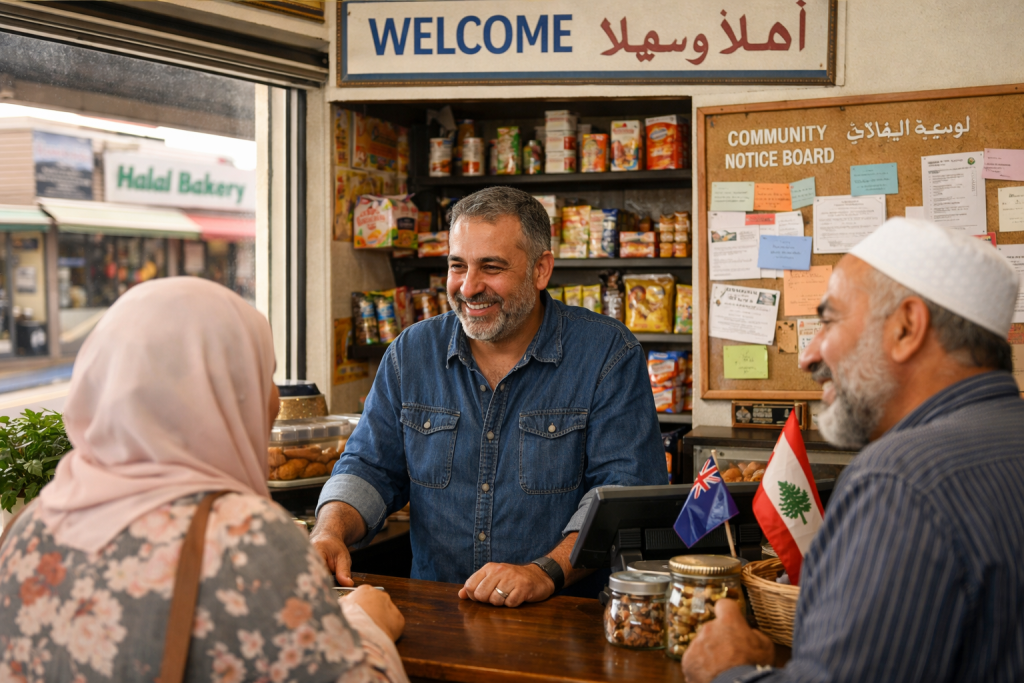













Local small business owners in Australian–Middle Eastern markets, especially Arabic-speaking entrepreneurs serving diaspora communities, often feel the pressure first when economic fluctuations hit. Costs can rise, customer spending can change overnight, and decisions that once felt simple start carrying real risk. The toughest part is the business adaptation challenges: staying consistent for families and communities while adjusting fast enough to protect cash flow and reputation. When local businesses hold steady, the community economic impact is immediate and personal, because jobs, trusted services, and community spaces depend on them.
Quick Summary: Community-Powered Resilience
- Focus on quickly understanding economic shifts to make more accurate operational decisions.
- Rely on community support to boost your sales and build loyalty that protects you during periods of volatility.
- Implement practical economic adaptation strategies to strengthen the resilience of local businesses.
- Use community-driven solutions to improve your services and respond to changing customer needs.
Understanding Economic Shifts and Business Readiness
An economic shift is a meaningful change in how the economy works, like new buying habits, new technology, or trade changes. The economic shift definition matters for small businesses because it can quickly reshape costs, foot traffic, and what customers value. The goal is to spot local community signals early, then match them to the management capabilities that support fast, steady decisions.
For Arabic-speaking communities following Australian and Middle Eastern updates, this reduces uncertainty when headlines affect daily spending. It helps you separate short-term noise from patterns, so you can plan pricing, staffing, and stock with more confidence. It also clarifies which skills your team must build as expectations evolve, and this page outlines management-focused training topics that support those capabilities, since 39% of workers’ core skills may change by 2030.
Think of it like tracking property market signals before choosing a lease. You watch local jobs, school enrollments, and community events, then organise what you learn into a simple roadmap of topics. Over time, that roadmap becomes your trend file, guiding better choices even when news cycles feel chaotic.
With this foundation, practical steps follow for costs, revenue, engagement, digital upgrades, partnerships, and flexible planning.
Put a Simple 7-Day Adaptation Plan Into Action
Economic shifts can feel unpredictable, but your response doesn’t have to be. Use this simple 7-day plan to turn “business readiness” into everyday actions you can actually track.
- Day 1: Lock in a weekly money check (cost management): Start with one page: expected sales, fixed costs, variable costs, and cash on hand. Then track just one metric: cost variance, budgeted cost minus actual cost, using the simple formula in Cost Variance (CV) = PV-AC. This makes “trend awareness” practical because you can spot overspending early and adjust before it becomes a crisis.
- Day 2: Cut costs without cutting trust: Make a “protect vs. pause” list. Protect items customers feel immediately (cleanliness, safety, core product quality) and pause items that don’t change the customer experience (extra packaging, optional subscriptions, low-ROI ads). Call 2–3 suppliers and ask for one improvement: smaller minimum order, longer payment terms, or a price hold for 60–90 days.
- Day 3: Add one diversified revenue stream (small and realistic): Pick a single add-on that uses what you already have: pre-orders, small bundles, gift cards, delivery set-times, corporate catering, or paid “consult” time for your expertise. Set a simple target like “10 sales this week” and test pricing with a short offer window. This reduces risk when one customer segment slows down.
- Day 4: Improve customer engagement with personal, simple touchpoints: Choose two moments to show care: after purchase and before the next visit. Collect one useful preference (language, favorite item, preferred pickup time) and use it in your follow-up, customers notice when messages feel human, and many brands still struggle with personalization. For Arabic-speaking communities, offering bilingual receipts, menus, or WhatsApp-style updates can remove friction fast.
- Day 5: Do one “no-drama” digital upgrade: Don’t aim for a full transformation, pick one process that saves time this week: online inquiry form, digital invoices, a simple booking calendar, or a single-page service menu. If you market online, keep it measurable: one offer, one audience, one week, then review results, since research finds a positive relationship between digital marketing and SME performance.
- Day 6: Build one local partnership that creates shared value: Identify one neighbor business or community group and propose a small joint action: a co-hosted weekend promo, shared referral cards, or a community noticeboard for events and services. Make it specific, who does what, dates, and how you’ll track outcomes (referrals, foot traffic, leads). Community partnerships help when customers are cautious because trust travels through networks.
- Day 7: Update a flexible plan you can revisit monthly: Write three mini-scenarios, “slow,” “steady,” and “busy”, and attach 2–3 actions to each (staff hours, stock levels, marketing spend, opening times). Add a trigger like “if weekly sales drop 15% for two weeks” then switch to the “slow” actions. This keeps decision-making calm, consistent, and aligned with the readiness roadmap you’re building.
When you run this 7-day cycle regularly, you move from reacting to changes to managing them, using clear numbers, stronger customer relationships, smarter systems, and partnerships that keep your community connected.
Align → Partner → Deliver → Learn
For Arabic-speaking Australians tracking both local updates and Middle Eastern developments, uncertainty can arrive from multiple directions. This workflow turns community support into a calm operating rhythm so your business stays responsive without feeling reactive. It also keeps neighbors, customers, and partners informed and involved, which matters because 29% of participants do not feel included when change is happening.
| Stage | Action | Goal |
| Align priorities | Define one community need and one business constraint | Shared focus everyone can repeat |
| Map stakeholders | List customers, partners, and community connectors | Clear roles and communication routes |
| Co-design offer | Build a small joint initiative with simple rules | Faster decisions and fewer misunderstandings |
| Launch locally | Publish bilingual updates and a clear participation method | Higher trust and visible momentum |
| Track and adjust | Review feedback, costs, and participation weekly | Improve impact without adding complexity |
Each stage feeds the next: alignment prevents noise, stakeholder mapping reduces friction, and co-design makes delivery easier. When you track and adjust, the workflow stays relevant as news and household budgets shift.
Turning Community Support Into Resilient Local Business Growth
Economic changes can squeeze cash flow and confidence, especially when customers become more cautious. A community-first mindset, adapting steadily, staying connected, and learning from partners, keeps decisions practical and focused on shared value. When this approach is applied, business adaptation benefits show up as clearer priorities, stronger trust, and more consistent demand, leading to positive economic outcomes over time. Community support turns uncertainty into momentum for local businesses. Start with one small step today: reach out to a nearby business or community group to align on a simple shared goal. That community support impact builds resilience, fuels entrepreneurial encouragement, and helps more local business success stories take root for the long term.