
Arabic version: العراق يضغط لفرض السيطرة على جرف الصخر
According to Al Jazeera, Jurf al-Sakhar has become the focus of an anticorruption campaign by Prime Minister Ali al-Zaidi’s government after allegations of oil smuggling. The area, about 60km southwest of Baghdad, is a strategic point on the Shia pilgrimage route to Karbala and covers roughly 345 square kilometres.
Former President Saddam Hussein’s military-industrial complexes were once located there. After the 2003 US-led invasion, the area saw armed confrontations before ISIL seized it in 2014. Iran-backed Popular Mobilisation Forces recaptured it later that year, and Kataib Hezbollah subsequently took full control, renaming it Jurf al-Nasr and restricting access by state institutions. About 140,000 displaced residents have been unable to return.
A leaked Interior Ministry intelligence report said crude oil worth millions of dollars had been siphoned from two state pipelines passing through the closed area since 2021. It alleged that makeshift underground refineries had been built to process the oil. A government investigative committee entered the zone with military backing on November 13 and later said it had identified several sites linked to smuggling, without naming those involved. Nine senior security and administrative officials in Babil province were dismissed.
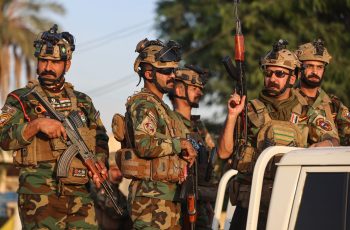
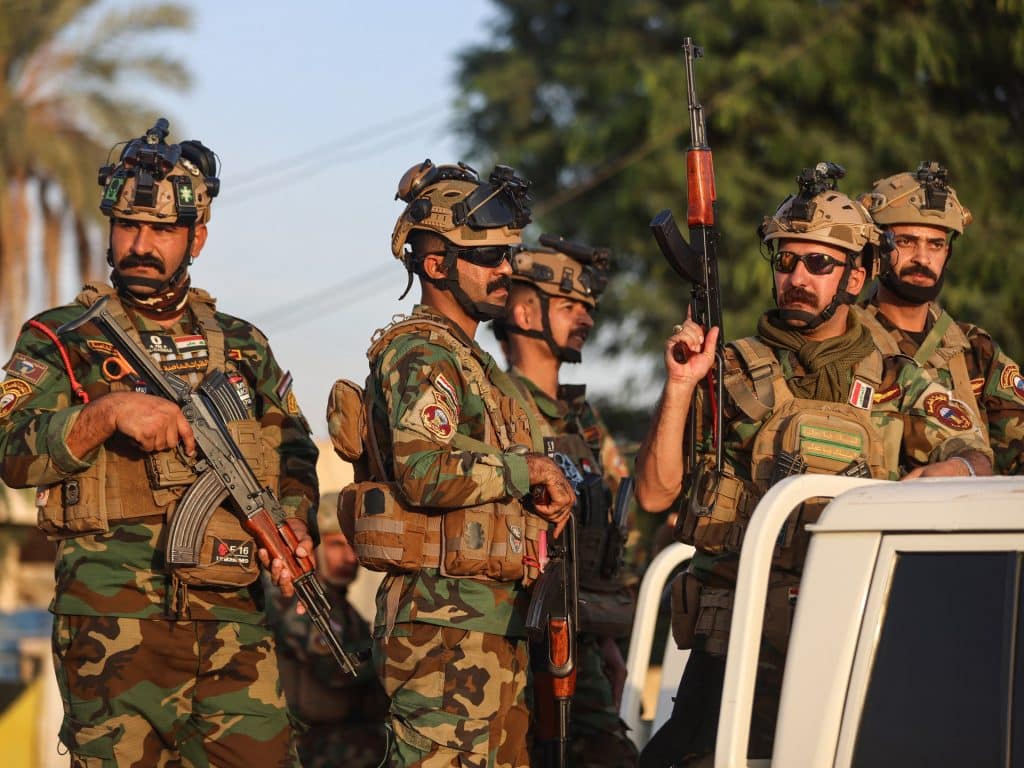
The state Iraqi News Agency said the government ordered armed forces to enter Jurf al-Sakhar and set a deadline for the armed faction to leave. Kataib Hezbollah denied the allegations, accused al-Zaidi of corruption and described the campaign as political extortion. The group also mobilised approximately 8,000 fighters before the investigative committee arrived.
The confrontation comes as al-Zaidi pursues a policy to bring weapons under state control. A September 30, 2026 deadline was pushed to June 2027. Iran’s Quds Force commander Esmail Qaani travelled to Baghdad to mediate, and he and al-Zaidi reportedly reached a tentative agreement for Kataib Hezbollah to withdraw soon. Analysts told Al Jazeera that the dispute reflects both alleged financial interests and a wider contest over state authority.