











Arabic version: بحيرة كاتي ثاندا-ليك آير تتحول بفعل مياه فيضانات نادرة
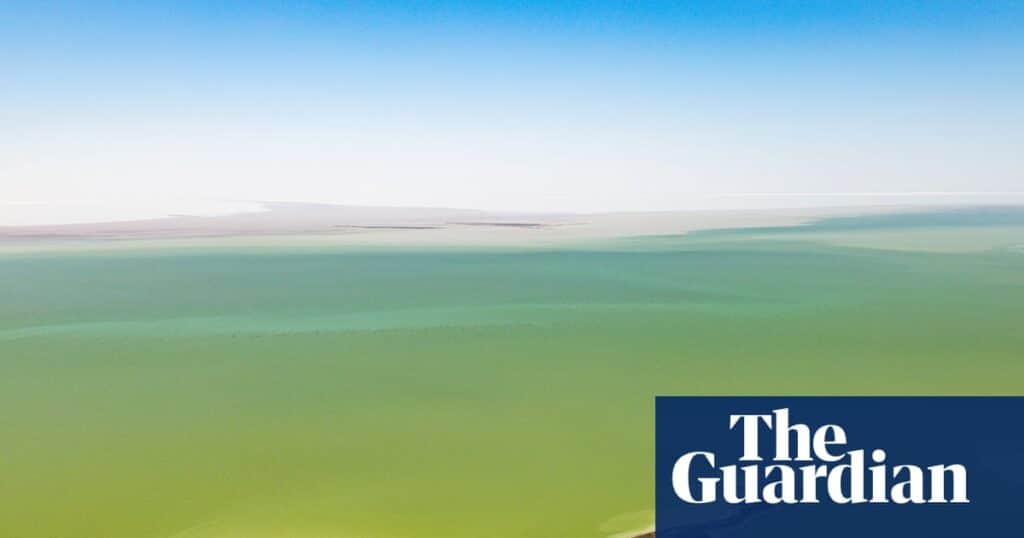
According to The Guardian, a prodigiously wet monsoon season and local rainfall between March and August have transformed South Australia’s Kati Thanda-Lake Eyre in a way not seen since 1974. Flooding rains in western Queensland, with rainfall nearly 50% above the long-term average, filled the Georgina, Diamantina and Cooper Creek river systems before their waters flowed towards the lake.
The desert landscape has been blanketed with plant life, including sandhill wattle, saltbush, lignum, grasses and desert flowers. Kati Thanda, about 60km north-east of William Creek, is Australia’s largest lake by surface area. It stretches 144km long and 77km wide, covers about 9,500 sq km and includes the country’s lowest point, about 15 metres below sea level.
The endorheic lake has no drainage outlet and loses water through evaporation, at times by up to 1cm of depth each day. Its salt flats are estimated to contain 400m tonnes of salt. While the lake’s salinity was roughly equivalent to an ocean during the visit described by The Guardian, evaporation can make it up to seven times saltier than the Coral Sea. In parts of Madigan Gulf, bacteria and algae thriving in highly saline water have created pink-coloured patches.
Floodwaters also trigger the return of dormant zooplankton and phytoplankton eggs, followed by fish including spangled perch, bony bream and hardyhead species. Pelicans, terns and banded stilts have arrived, although Professor Richard Kingsford of the University of New South Wales said the lake’s salinity meant it was not productive for high diversity and numbers of waterbirds. An aerial survey in early October recorded about 800 adult pelicans and mostly nearly fledged young, as well as a few hundred dead chicks.
More than 10,000 waterbirds, including grey teal and pink-eared ducks, were reported along Cooper Creek and its tributaries. The display is expected to be temporary: hot months, a super El Niño and daytime temperatures reaching 45C will likely cause water in the creek and lake to retreat, exposing more dust, salt and red earth.