












Arabic version: سكان كنتاكي يعبرون عن استيائهم من صراع ترامب مع إيران
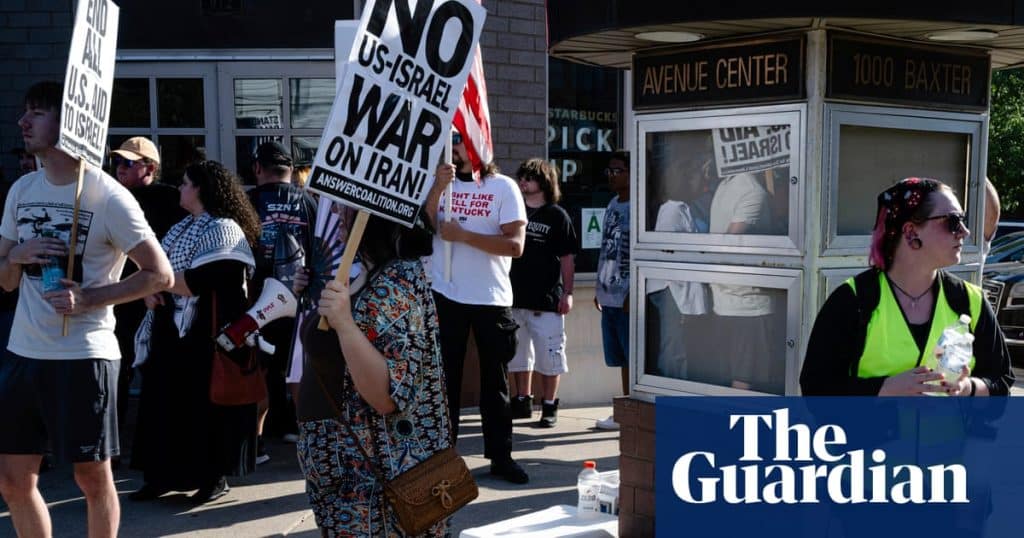
Protests have erupted in Kentucky against the U.S. military’s recent actions targeting Iranian nuclear facilities, reflecting widespread anger in a state deeply affected by poverty and economic decline. According to The Guardian, the war’s financial burden has sparked questions about prioritizing military spending over pressing local needs.
Eastern Kentucky, a region struggling with high poverty rates and cuts to social services, has witnessed a growing discontent among its residents regarding the ongoing conflict. With two of the 13 American military members killed in the Iran war so far from Kentucky, many are challenging the justification for what they see as a needless conflict. Early estimates indicate that the first 12 days of the war cost U.S. taxpayers approximately $16.5 billion, prompting criticism from community leaders who argue that these funds could better serve local educational and welfare needs.
Local voices, including McKenna Brashear, acting president of the Perry County Young Democrats, have expressed frustration over the lack of congressional approval for the war, emphasizing the dire situation faced by families in the region. “There are so many things that that money could be better allocated for,” Brashear stated, highlighting the challenges of rising utility costs and cuts to essential support programs.
While some residents support military action as a necessary intervention against the Iranian regime, others, like Brandon La Voie, express conflicted feelings about the war’s implications for their community. La Voie, who voted for Trump in the last election, recognizes the need for action but also acknowledges the pressing local issues that remain unaddressed.
Political figures in Kentucky, including both Democrats and Republicans, have criticized Trump’s approach to the conflict. Governor Andy Beshear has pointed out the president’s failure to acknowledge the loss of local service members during his visits, while Senator Rand Paul has warned that the war could negatively impact the Republican Party amid rising gas prices. Congressman Thomas Massie has also voiced concerns, suggesting that the conflict may create further instability and resentment among local families.
As Kentucky grapples with the economic fallout from the war, residents are left questioning their leaders’ priorities. The region’s history of economic extraction and its current struggles with unemployment and poverty underline a growing sense of betrayal felt by many in eastern Kentucky, who continue to seek solutions to their pressing challenges.