












Arabic version: المستثمرون الأفراد الكوريون يتحولون نحو الأسهم الأميركية
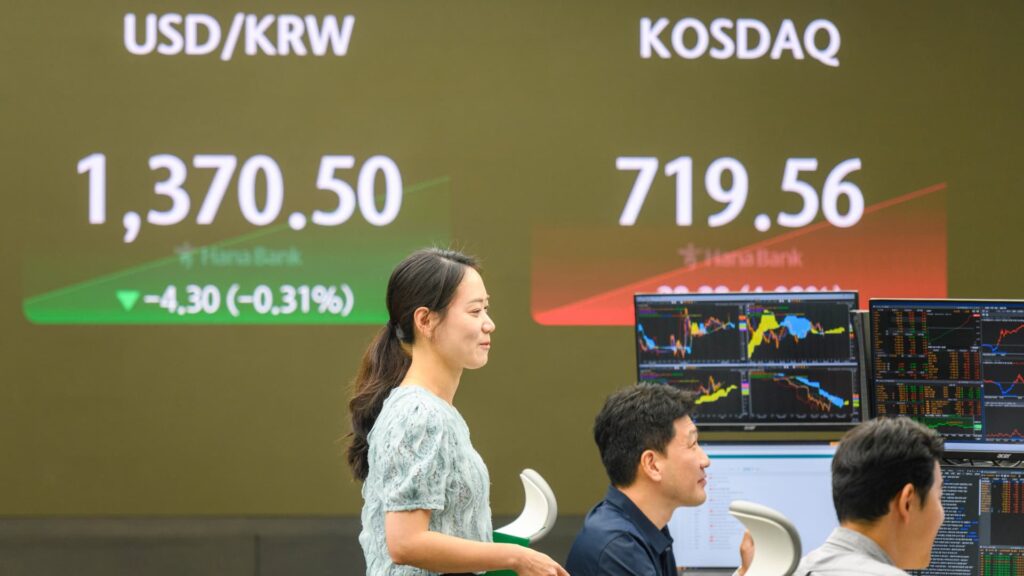
According to Cnbc, South Korean retail investors net bought about $4.5 billion of U.S. stocks in July while their domestic market corrected. Korea Securities Depository data showed the buying was a sharp increase from June and close to the $5 billion in net purchases recorded in January. Korean retail investors sold domestic stocks for most of last week, even as the benchmark index entered bull market territory, while overseas investors turned into net buyers.
The shift included purchases of U.S.-listed depositary receipts for SK Hynix. About $840 million of the July U.S. stock purchases went into the chipmaker’s ADRs, making them the second most net-purchased U.S. securities despite Korean investors being able to buy the company’s shares directly at home. Owen Lamont, senior vice president of Acadian Asset Management, said the U.S. receipts had recently traded at roughly a 10% premium to the Korean shares and showed greater volatility. He said such discrepancies can signal speculative excess.
Investors also maintained interest in leveraged products. Four of the 10 most net-purchased U.S. stocks in July were leveraged products, led by the Direxion Daily Semiconductor Bull 3X Shares ETF, or SOXL. The ProShares UltraPro QQQ and ProShares Ultra QQQ ranked fourth and sixth, while ProShares Ultra QQQ ranked seventh among the most popular U.S. stocks this month. Phillip Wool, head of research at Rayliant Global Advisors, said much of the buying remained linked to the same AI hardware theme that had been selling off in Korea.
Jung In Yun, founder of Fibonacci Asset Management, said traders affected by losses in Korean semiconductor shares or leveraged ETFs may be moving into U.S. AI stocks viewed as higher-quality or more liquid, rather than cutting AI exposure. Margin loan balances in Korea stood at about 37 trillion won, or $26 billion, at the end of June before falling to 27 trillion won earlier this month, the lowest level this year. Wool said Korean flows were unlikely to alter broad U.S. market volatility, though Lamont said they could distort prices in individual stocks and thinner retail-favored trades.