











Arabic version: انجراف قناديل زرقاء كبيرة إلى شواطئ غولد كوست
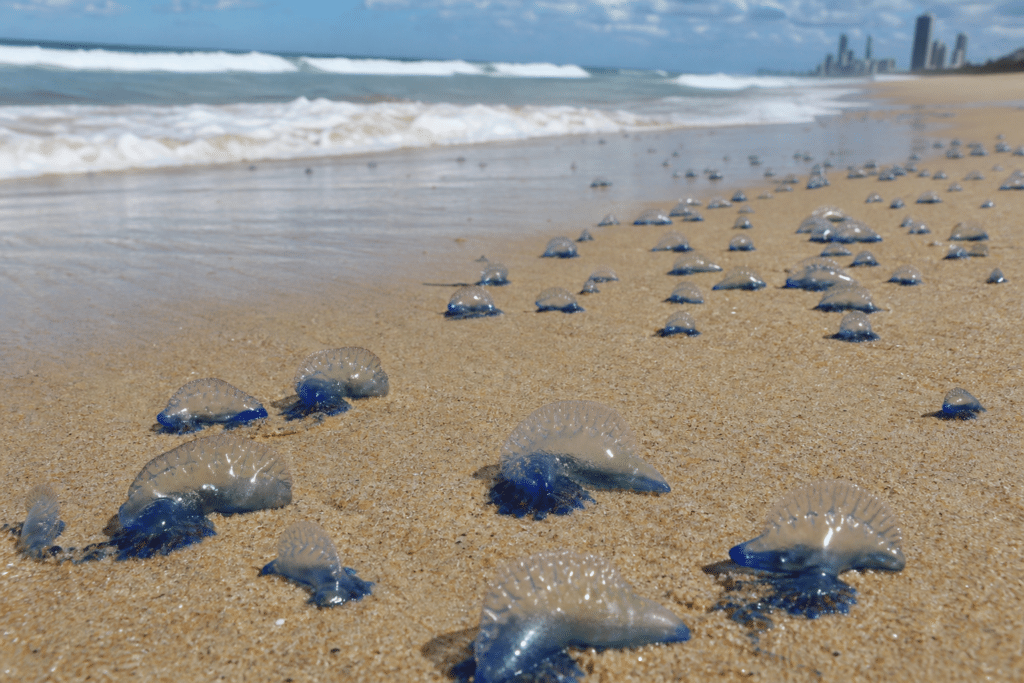
According to ABC News, bluebottles up to three times the size usually seen in Queensland waters are washing ashore on Gold Coast beaches. The larger animals have surprised residents, while scientists say there is limited information about the potency of their venom.
Griffith University marine ecologist Kylie Pitt identified the species as Physalia megalista, one of five bluebottle species found in Australian waters. Professor Pitt said it was among the biggest species and did not appear on Gold Coast beaches often, as it was usually found further south. She estimated its surface float or sail could be about 10 centimetres long, while its stinger could extend for several metres.
Professor Pitt said different bluebottle species were likely to have slightly different venom. She said reactions depended on the dose received, which in turn depended on how much tentacle contacted a person’s skin. Researchers concluded only last year that five different bluebottle species existed, and she said warmer El Niño conditions this season could help larger stingers survive.
Gold Coast City Council lifeguard supervisor Scott Franzmann said 20 stings had been reported across 39 patrolled beaches during the school holidays, describing the impact as relatively minor despite busy beaches. He said bluebottles were a little early, as they were generally seen around December and January. The Australian Marine Stinger Advisory Service describes bluebottle stings as instant and sharp but not life-threatening. The Royal Australian College of General Practitioners recommends removing tentacles with gloves or tweezers before washing the sting with seawater.