
Arabic version: خلية فائقة في لوغان تسلط الضوء على مخاطر العواصف في جنوب شرق كوينزلاند
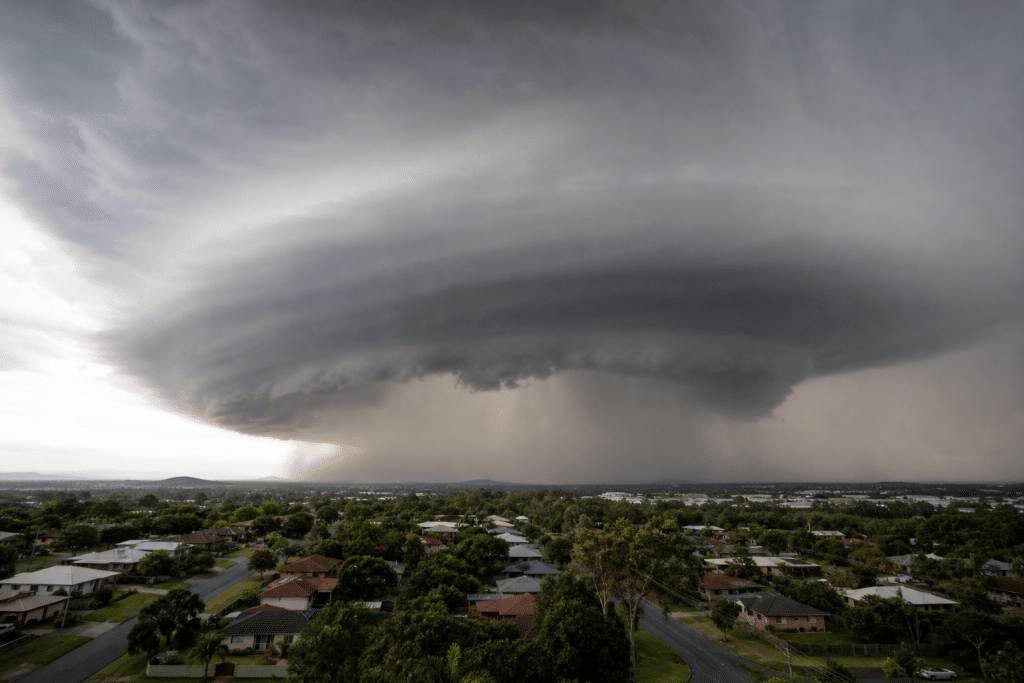
According to ABC News, residents in parts of south-east Queensland are assessing damage after an intense supercell thunderstorm cut a destructive path across Brisbane’s south this week. More than 80,000 households lost power, with the vast majority in the Logan area, after trees were uprooted, roofs were torn from homes and more than 400 powerlines were downed.
More than 24 hours later, tens of thousands of homes were still without electricity. Senior meteorologist David Crock described Wednesday’s conditions as a “classic spring thunderstorm outbreak” for south-east Queensland. The storm that later hit Logan formed south of the border, tracked north and developed into a supercell.
Mr Crock said supercells can last longer than ordinary thunderstorms because they begin rotating. The rotation separates the storm’s updraft, which draws in moist, humid and warm air, from its downdraft, where rain falls and wind descends. In a typical storm, a descending downdraft can cause the thunderstorm to weaken, but the separation in a supercell allows it to keep developing and reach greater intensity.
Supercells can bring destructive wind gusts, heavy rainfall, large to giant hail and tornadoes. Mr Crock said south-east Queensland is a hotspot, particularly the Scenic Rim corridor from Toowoomba to Tamborine, where hills and rich moisture can help conditions line up for dangerous storms. He said there was also an element of luck in determining which suburbs receive the strongest impacts.
The SES advises residents to prepare when storms are forecast by clearing leaves and debris from roof drainage channels, cleaning gutters, drains and downpipes, and tidying overgrown gardens. It also recommends learning how to safely turn off electricity, water and gas, and securing or bringing inside items such as outdoor furniture and trampolines.