












Arabic version: منشأة أفوكادو في مانجيموب تقلّص العمالة المؤقتة إلى النصف بالروبوتات
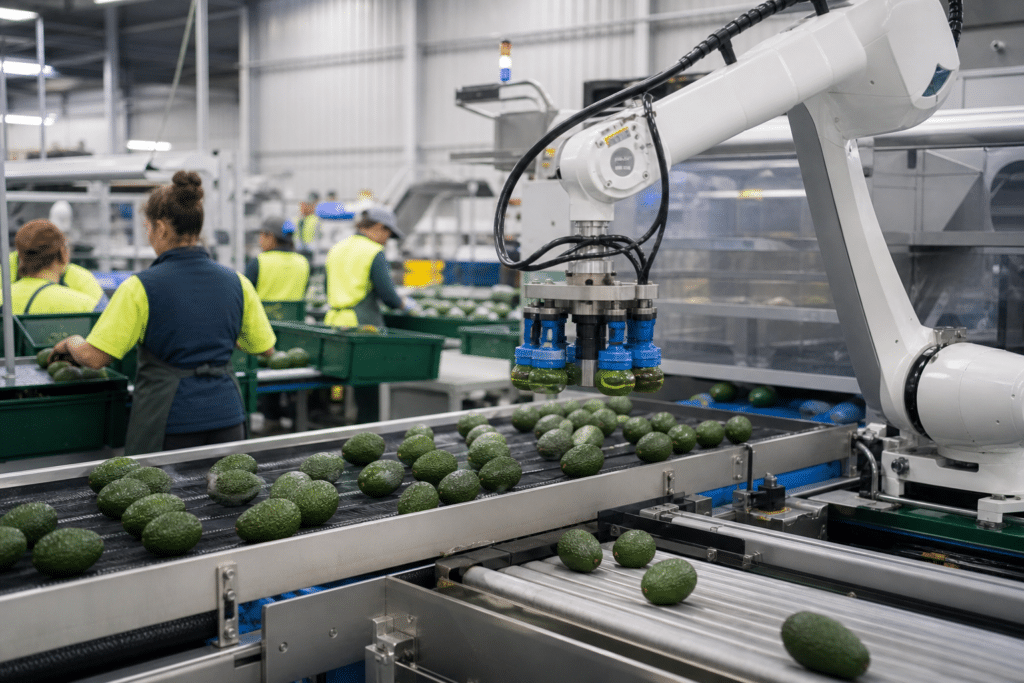
According to ABC News, the Avocado Collective in Manjimup, Western Australia, has replaced between 40 and 50 workers with nine Japanese-made robots as part of a broader $20 million investment in automation. The facility, 300 kilometres south of Perth, processes millions of avocados each year and describes itself as Australia’s largest packing facility.
The machines scan, stack and shift avocado pallets, taking over work previously carried out by people who hand-stacked pallets, scanned fruit and drove forklifts. Operations manager Craig Boyce said the robots had improved reliability and workplace safety. The collective said three quarters of its operations were now automated, lifting potential weekly output from 1 million kilograms to 2.52 million kilograms. The nine robots can process 2.5 million kilograms of avocados a week.
Mr Boyce said automation was intended to reduce costs as labour costs rose, while maintaining a need for management and maintenance staff. He said some local workers had moved from forklift-driving roles to becoming robotic technicians. Pemberton grower and collective director Dean French said the change reduced reliance on overseas workers because finding local staff was difficult.
Manjimup has an estimated 400 workers employed through the federal Pacific Australia Labour Mobility scheme. Growers said PALM workers remained valued, but expressed concern about possible changes to labour arrangements. Fellow grower George Ipsen said the industry imported labour from the Pacific Islands and East Timor because it could not get enough workers.
UnionsWA secretary Rikki Hendon called for stronger worker protections, while University of Sydney work and labour market professor Chris Wright said automation could address safety issues but also eliminate jobs and affect livelihoods. Avocados Australia chairman Brad Rogers said the PALM scheme would remain important and that physical labour would continue to be part of avocado production. The Australian government said it remained committed to the scheme and to worker safety, welfare and wellbeing.