











Arabic version: آثار أقدام الحيوانات الضخمة تعمّق تعلّم طلاب كونيبّا
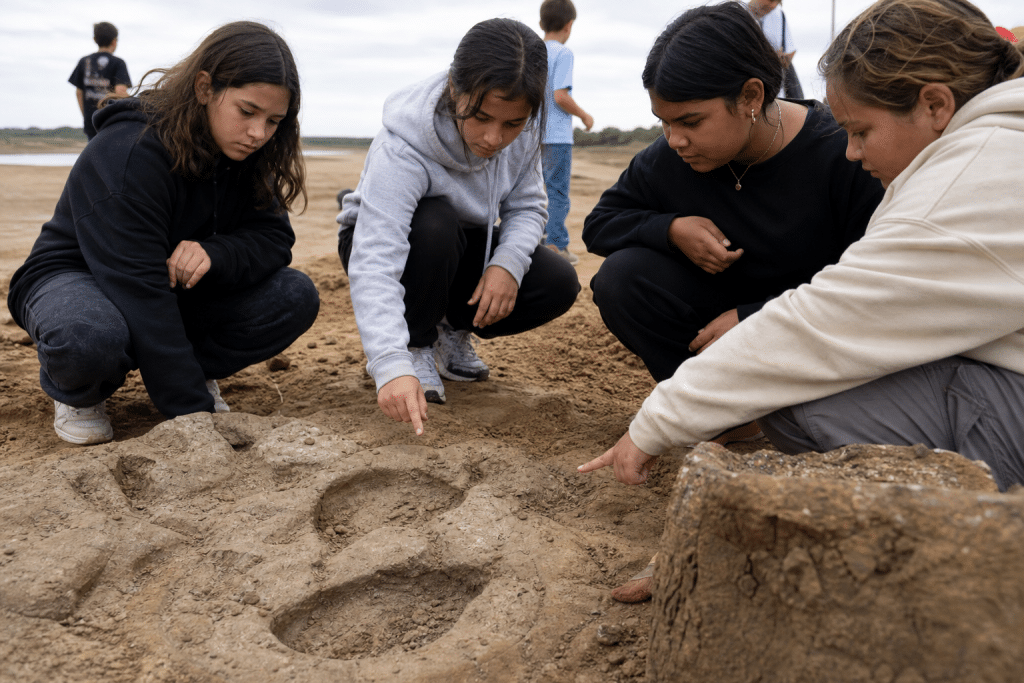
According to ABC News, Koonibba Aboriginal School students in South Australia have extended classroom learning through field trips to the Flinders Ranges and Fowlers Bay, where they searched for evidence of megafauna. Their studies connected books and videos with camping, ancient rock art and the mapping of coastal footprints.
At Fowlers Bay, 10-year-old Reece discovered a previously undocumented trace fossil, described as most likely belonging to a Procoptodon, or short-faced kangaroo. The marsupial giant became extinct at least 15,000 years ago; the largest stood 2.7 metres tall and weighed about 240 kilograms. Students also learned about traces associated with giant kangaroos, Diprotodon and large birds.
Flinders Ranges Wadna tour operator and Adnyamathanha man Kristian Coulthard took the group to the Yura Mulka petroglyph site, explaining that the engravings depicted his ancestors’ interactions with megafauna. School principal Mark Prince said 21 students took part in the field trips and learning activities. The discovery that their ancestors could have walked alongside the giant animals tens of thousands of years ago was a central lesson.
Palaeontologist Aaron Camens hosted the students at Fowlers Bay after the school contacted Flinders University about evidence of megafauna near Koonibba. He said coastal footprints were preserved as layers of sand hardened, though storms and erosion could bury, destroy or expose them. The fossils were probably from the last interglacial period, about 120,000 to 130,000 years ago. Students used quadrants to map footprints and analysed trackways, while two students later presented their learning at the 2026 Aboriginal STEM Congress in Adelaide.